
About Edward Moulton
Lived 1849 – 1922 (aged 72–73). Edward Moulton was an American athletics competitor.
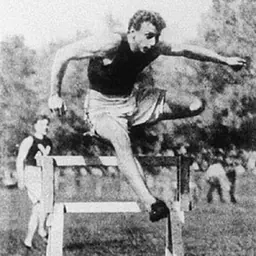
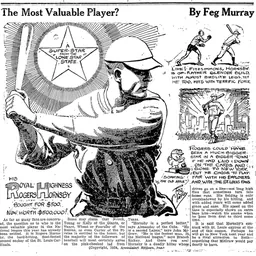
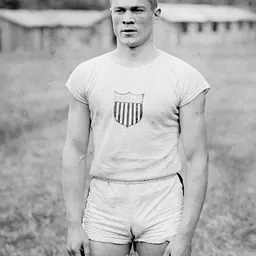
Edward W. "Dad" Moulton (1848 – July 19, 1922) was an American sprinter, athletic trainer, and coach. He was a professional sprinter who won more than 300 races and was regarded as the American sprinting champion from 1872 to 1878. Moulton later worked as a trainer of sprinters, wrestlers, boxers, and bicyclists. He trained many well-known track and field athletes from the 1880s through the 1910s, including the original "world's fastest human," Al Tharnish, and Olympic medalists Alvin Kraenzlein (four gold medals in 1900), Charlie Paddock (two gold medals and one silver in 1920), Morris Kirksey (one gold and one silver in 1920), George Horine (bronze medal in 1912), and Feg Murray (bronze medal in 1920).
In the 1890s, Moulton was also employed as a trainer and coach of American football, including one year as the head football coach at the University of Minnesota. Moulton also coached athletics and worked as a trainer at other schools, including the University of Michigan, the University of Iowa, and the University of Wisconsin. He spent most of the last 22 years of his life working as a coach and trainer of track and field, football and baseball at Stanford University.
Early years Moulton was born in 1848 at Saint Anthony Falls, Minnesota, now part of Minneapolis. He was reported to be "the second white boy born in the place". During the American Civil War, he enlisted in the 1st Minnesota Heavy Artillery Regiment at age 14 or 15. He participated in Sherman's March to the Sea and later became a scout and participated in "skirmishes" with the Indians during a mission blazing a trail to Helena, Montana. He first won acclaim as the trainer for Al Tharnish, who became known in the 1880s as the "world's fastest human." In 1971, Sports Illustrated published a feature story on Tharnish. According to the article, Moulton discovered Tharnish performing in a circus and persuaded him to leave the circus. There were no open track-and-field events in the 1880s, and Tharnish ran in college meets, professional races and head-to-head challenges. According to the 1971 Sports Illustrated story, "For four years Tharnish and Moulton were never in a town longer than two days, but during that time they managed to clean the local sports of money, medals and most of the simpler satisfactions of winning."
Over the next four decades, Moulton also trained other well-known track and field stars, including world champion sprinter Harry M. Johnson, Sheffield handicap champion James "Cuckoo" Collins, Olympic gold medalists Alvin Kraenzlein and Charlie Paddock, From 1892 to 1893, Moulton was affiliated with the University of Iowa. While at Iowa, he trained John V. Crum. In 1894, he trained the University of Iowa football team. In January 1897, Moulton was hired as the track and field coach at the University of Wisconsin. Moulton also reportedly worked as a trainer at the University of Missouri, Vanderbilt University, and Notre Dame University. He also began training the track and baseball teams in approximately 1902. From 1903 to 1913 and again in 1916, Moulton was Stanford's track coach. In 1905, he rejected offers from Eastern universities, including Yale, to become a trainer at those institutions. He survived a bout with typhoid fever in 1910. Moulton transformed Stanford into one of the country's leading track and field programs. The track stars developed by Moulton at Stanford include Morris Kirksey (silver medalist in the 100-meter dash at the 1920 Olympics), Norman Dole (set world record in the pole vault in 1904), George Horine (bronze medalist in the high jump at the 1912 Olympics), Fred Crawford, Feg Murray (bronze medalist in the 110-meter hurdles at the 1920 Olympics), Leland Scott (pole vaulter), and the Templeton brothers (Rick and Dink). However, by the summer of 1912, the Los Angeles Times reported that students had concluded that greater success could be achieved with a younger trainer, although Moulton would likely be permitted to remain at Stanford for as long as he wished. With the exception of a year in 1915 when Moulton worked on the Panama–Pacific International Exposition, Moulton remained affiliated with Stanford until his death in 1922.
Moulton also won acclaim as a designer and builder of tracks. He built the tracks used for the 1915 Panama–Pacific International Exposition and managed the track during the exposition. He also built tracks at Stanford University, University of Minnesota, Iowa State University, Vanderbilt University, University of Tennessee, University of Wisconsin, Manchester, England, Notre Dame, Willamette College, and Pacific University.
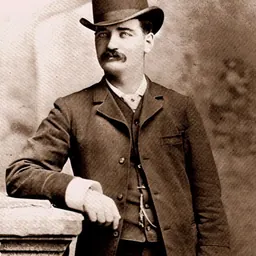
Family and death As a young man Moulton married 15-year-old Emma Walter, in Philadelphia, on January 13, 1873. Emma later became an Indian Club swinger and toured theatres, also clog dancing and singing. The couple's engagements meant they were often apart and Emma filed for a divorce at Denver on June 29, 1893. The marriage was dissolved on November 9, 1893. By then Emma had become acquainted with William B. Masterson, the noted lawman, gambler and sporting man, and lived as Mrs. Bat Masterson for the rest of his life. Moulton married cyclist Ida Peterson on September 5, 1901. and at the time of the 1910 United States census, he was living in Palo Alto, California, with his wife Ida, a Minnesota native who was 26 years younger than Moulton, and their adopted son Edwin, who was born in approximately 1906. His occupation was listed as an athletic trainer. At the time of the 1920 United States census, Moulton was still living in Palo Alto with his wife Ida and son Edwin. His occupation at that time was listed as a custodian. Moulton died on July 19, 1922, at his home in Palo Alto. He was survived by his wife and son. He was reportedly in good health up to the day of his death when an "attack of indigestion caused heart dilation".
Head coaching record Football
Don’t just read it —
keep it.
Full-length biographies made to live with: read them, listen on the way to work, watch them tonight.
- E-book
- Audio
- Video
Instant download · yours to keep · every purchase keeps this site free
Important facts
People in Edward Moulton's life
Named in this biography and alive at the same time




Related people
Same field, nearest in time


Contemporaries
People whose lives overlapped Edward Moulton's



Frequently asked questions
Who was Edward Moulton?
American sprinter, trainer and coach (1849–1922)
When was Edward Moulton born?
Edward Moulton was born in 1849 in Minneapolis.
When did Edward Moulton die?
Edward Moulton died on 19 July 1922 in Palo Alto.
What was Edward Moulton's occupation?
Edward Moulton was an athletics competitor.
What nationality was Edward Moulton?
Edward Moulton was American.
Sources & further reading
Cite this page
APA: Biography.guide. (2026). Edward Moulton. https://biography.guide/edward-moulton/
MLA: "Edward Moulton." Biography.guide, https://biography.guide/edward-moulton/.
Chicago: "Edward Moulton." Biography.guide. https://biography.guide/edward-moulton/.
Data last updated: 2026-09-20 · Spot an error? Report a correction.
Page generated 2026-09-27 05:33 UTC