
About Edward Maene
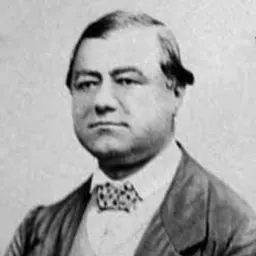
Lived 1852 – 1931 (aged 79). Edward Maene was a sculptor.
Edward Maene (21 April 1852, Bruges, Belgium – 4 December 1931, Philadelphia, Pennsylvania) was a Belgian-American architectural sculptor, woodcarver and cabinetmaker.
Based in Philadelphia, Pennsylvania, he was a master carver in wood and stone, and executed designs by architects such as Wilson Eyre, Willis G. Hale, Cope and Stewardson, William Lightfoot Price, Horace Wells Sellers, and Milton B. Medary.
Maene's choir stalls and reredos for the Washington Memorial Chapel at Valley Forge, Pennsylvania, have been described as "the finest examples of hand carved wood in this country."
Career Maene learned the stone- and wood-carving trade in his native Belgium, and studied in Paris. He immigrated to the United States in 1881, and settled in Philadelphia in 1883. He opened his own workshop at what is now 239 South Lawrence Court, a half-block east of Pabst's workshop at 269 South 5th Street. John J. Maene (1863–1928) was hired by architect/designer William Lightfoot Price as foreman for the Rose Valley furniture shop.
Wilson Eyre
Maene executed designs by architect Wilson Eyre, working on local projects such as the Dr. Henry Genet Taylor House and Office (1884), in Camden, New Jersey; a new Dutch Colonial façade and interiors for the Rowley-Pullman House (altered 1886, demolished 1963), at 238 S. 3rd Street, Philadelphia; the William H. Walmsley Building at 1022 Walnut Street, Philadelphia (1887, demolished); A 24-year-old Charles Grafly worked with Maene on the Rowley-Pullman House. Maene's frieze for the Walmsley Building vestibule was exhibited alongside Grafly's spandrel for a Rowley-Pullman House doorway at the 58th annual exhibition of the Pennsylvania Academy of the Fine Arts, in 1887.
For the Charles Lang Freer House (1892), in Detroit, Michigan, Maene modeled in clay Eyre's free-form chandeliers of dangling vines, the whimsical front doorbell surround, and other detail work, all later cast in bronze.
Maene's shop carved exterior stonework for Eyre's City Trust Building (1888, demolished c.1923), at 927-29 Chestnut Street, Philadelphia; Critic Montgomery Schuyler, writing in the magazine Architectural Record, pronounced it an "architectural aberration": "Absurd ... irrational, incongruent and ridiculous," one of "the monstrosities of Chestnut street." "Perhaps the most bizarre-looking skyscraper of the nineteenth century," it is now beloved by many for its funky awkwardness. Although the first story of its Chestnut Street façade has been altered repeatedly, much of the rest of its exterior remains intact.
Hale designed, and Maene's shop carved exterior stonework for the Peter A. B. Widener city house (1887–88), at the northwest corner of Broad Street and Girard Avenue, Philadelphia. The Wideners occupied this for barely a decade—architect Horace Trumbauer soon designed them a Neoclassical palace, Lynnewood Hall (1897-1900), just outside the city. In 1900, the city house became the Widener Branch of the Free Library of Philadelphia. It was destroyed by fire in 1980.
Frank Miles Day Frank Miles Day won the 1888 architectural competition to design the Art Club of Philadelphia, at 220 South Broad Street. Completed in 1889, Maene executed its interior woodcarving:A most remarkably effective use of white pine has been made in many of the mantels throughout the house. In the cafe and other apartments this ordinary wood has been so treated and finished that it has all the elegant effects of the richest and rarest grains of tropical forests, and moreover the genuinely artistic carvings lend an air of the greatest elegance. The carvings of the mahogany mantels in the dining room are particularly fine. For its wood carving the club has been fortunate in having the services of Edward Maene. The building was demolished in 1976. Architect and author Ralph Adams Cram later described it as "one of the best pieces of ecclesiastical wood-carving in America."
Charles Custis Harrison became University of Pennsylvania provost in 1894, and immediately removed Frank Furness as unofficial campus architect, replacing him with the young firm of Cope and Stewardson. Beginning with the Quadrangle Dormitories, Harrison and his architects remade the campus in an exuberant Neo-Jacobean Collegiate Gothic style. Maene's workshop provided expert architectural carving for the exteriors of the new buildings, including 69 grotesques (bosses) for the Quadrangle. These caricatures of people and animals were carved in situ—blank limestone blocks had been mortared in above the second story, and his crew stood upon scaffolding to carve them:
Take, for instance, a boss of a man holding a tankard. The architect makes a rough charcoal sketch of the figure and sends the sketch to the sculptor. The sculptor models it in clay. He makes, in clay, a boss of the same size and the same relief as the real stone boss on the dormitory building is to be. Of course, the charcoal sketch is not much to go by. The sculptor must use his brain in his work. It is not mechanical; it is real creative work on his part, this making of a model from a sketch. After the model has been finished and approved by the architect it is sent out to the University, and the carver sets it up beside him and gets to work on the stone. He measures here and there, makes nicks here and there, and then he proceeds to copy his model. It takes him three or four days to finish one of the fourteen inch bosses. The work must be done with care, delicacy and tact. Only the most skillful carvers are fit to do such jobs. Maene's team for the Quadrangle grotesques comprised Henry F. Plasschaert (of the Philadelphia School of Industrial Art), who modeled the figures in clay; William John Kaufmann and August Zeller (a former student of Thomas Eakins), who carved most of the grotesques; and Edmund T. Wright, who oversaw the carving and added finishing touches.
Cope and Stewardson also contracted with Maene to carve exterior ornament for the University of Pennsylvania Law School (1900), and for the Quadrangle's War Memorial Tower (1901) and Provost's Tower (1911).
William Lightfoot Price
Architect William Lightfoot Price designed "Woodmont" (1891-1894), for Congressman Alan Wood, Jr. The chateau-like mansion overlooked the Schuylkill River and the Alan Wood Steel mills in Conshohocken, Pennsylvania. Maene and his shop carved its exterior and interior architectural sculpture.
Maene executed cabinetry and furniture work for Price from the mid-1890s to the mid-1910s.
Shakespeare cabinet William Welsh Harrison, heir to a sugar-refining fortune (and brother of the University of Pennsylvania provost), commissioned an elaborate Gothic Revival cabinet to house his First Folio of Shakespeare plays.
Warren Powers Laird, director of the University of Pennsylvania School of Architecture, described the Harrison Shakespeare Folio Cabinet as "the finest piece of furniture ever made in this country." Its current whereabouts are unknown. In 1908, Sellers increased the height of the church's apse by about 15 feet (4.6 m), raising the ceiling of the chancel within it. Maene's workshop carved a new red English sandstone altar, eight oak statues of saints, and a baldachin (canopy) high over the altar. Sellers designed a large painted altarpiece with folding doors for above the altar, and Maene executed the casework for it. The altarpiece's 7-panel mural, Christ Reigning from the Cross, was painted by artist Frederick Wilson.
Sellers designed and Maene executed St. Clement's Lady Chapel, which was dedicated in 1915. Its altar, reredos, and groin-vaulted ceiling are all carved from red English sandstone. The altar front has three arched niches, each with a relief figure of an angel. The reredos features three niches with statues of Saint Joseph and Saint Elizabeth flanking a central statue of the Virgin and Child. Executing Sellers's designs, Maene carved a new set of choir stalls, installed behind the rood screen he had carved for Cope and Stewardson 30 years earlier.
Milton Medary Washington Memorial Chapel
Architect Milton Bennett Medary designed the Washington Memorial Chapel (1908–20), built on the site of the Continental Army's 1777-78 encampment at Valley Forge. Executing Medary's designs, Maene created and carved the oak pews, choir stalls, reredos, and other church furniture. The first piece carved by Maene was the limestone and oak baptismal font. The building's ornate oak doors were executed by him in collaboration with master metalworker Samuel Yellin. Nicola D'Ascenzo created the chapel's stained glass windows.
St. Mark's Church
Medary designed the Fiske Portal (1922–23), a new doorway for St. Mark's Episcopal Church at 1607-27 Locust Street, Philadelphia. Executing Medary's designs, Maene created the doors and carved the polychromatic "Christ in Majesty" tableau above them; Yellin fashioned their highly ornate iron hinges and hardware; and Nicola D'Ascenzo installed stained glass between the figures of the tableau, turning the tympanum into a transom. The project was (patronizingly) celebrated as a harmonious collaboration among immigrant artists—"iron work by Samuel Yellin from Poland; wood-carving by Edouard Maene from Belgium; stained glass by Nicola D'Ascenzo from Italy."
Medary also designed, and Maene also carved, the Crucifixion tympanum over the church's rear door.
St. Andrew's Chapel Medary designed, and Maene created and carved, church furniture for the St. Andrew's Chapel (1926), of the Philadelphia Divinity School, at 42nd and Locust Streets. nly two memorials have so far been set in place within the structure. These are a lectern and a prie-dieu, or prayer desk and bench, to be used by the priest during the services. They are carved in wood and are the work of Ernest Maene. The lectern is covered with an intricate design of which the outstanding elements are delicately carved angels. It is so arranged that it can be turned and will hold a Bible with the epistle lesson on one side and on the other a second Bible opened at the lessons in the Gospel. The same artist is responsible for the desk, which, because of its several architectural elements, is possibly a more elaborate piece of work. The prayer desk is entirely carved, the chief motif being a choir of archangels in prayer. On the wall which forms the back of the desk is the legend of the memorial.
Architects Milligan & Webber designed The Memorial Church of the Holy Nativity (1898–99), in Rockledge, Pennsylvania. Maene executed its reredos, including a white marble high-relief tableau of The Last Supper (after Michelangelo) over the altar, carved by August Zeller.
Architect Edgar V. Seeler designed a new building for The Evening Bulletin, at the northeast corner of Juniper and Filbert Streets, Philadelphia, 1906-08. The façade carving by Maene's shop featured the newspaper's logo: a globe with wings, in high relief over the main entrance.
Maene modeled a portrait medallion of Pauline Elizabeth Henry (1907), for the Memorial Church of St. Luke the Beloved Physician in Bustleton, Philadelphia.
Architect Herbert J. Wetherill altered the interior of Grace Episcopal Church, in the Mount Airy section of Philadelphia, 1908-09. Executing Wetherill's designs, Maene carved the white marble altar, reredos and a 23-foot (7 m) tall rood screen.
Architect George T. Pearson designed a new building for St. Alban's Church (1915), in the Olney section of Northeast Philadelphia. John Barber executed its French Gothic woodwork, for which Maene did the figural carving. The oak rood screen features a large Crucifix, flanked by separate figures of Mary and St. John, all carved by Maene. Above the altar, the centerpiece of the reredos is a high relief sculpture of "Christ blessing, vested as a priest and surrounded by adoring angels." Henry F. Plasschaert modeled this Benediction bas relief in clay, and Maene carved it in white marble. Maene was part of the team that restored the church's interior.
The Given Memorial rood screen (1922), at St. Paul's Episcopal Church, Columbia, Pennsylvania, was "designed by Fowler, Seaman & Company, ecclesiastical architects, and the work wrought by E. Maene, Italian wood sculptor. … The entire screen is beautifully carved and sculptored, and is twenty-one feet high, and thirty feet wide."
Edward Maene's December 5, 1931 obituary in The Philadelphia Inquirer listed work on the University of Pennsylvania Museum of Archaeology and Anthropology.
The T-Square Club, an association of Philadelphia architects, elected Maene an honorary member. His advertisement in the club's 1896-97 catalogue shows that he had moved his workshop about a half-block, to south of Pine Street:
The listing in a 1900 directory shows his business at the same addresses (although Griscom St. had been renamed Lawrence St.), and his residence in the Bustleton section of Philadelphia.
The T Square Club's 1922 exhibition featured works by Philadelphia master craftsmen: Samuel Yellin (iron work), Nicola D'Ascenzo (stained glass), John H. Bass (decorative sculpture), and Edward Maene (furniture).
Personal
Maene married Susanne Menegaux (1856–1916) in 1883, and they had two children, Claire (1887–1967) and Victor (1892–1962).
Nephews Victor and Armand Maene were working as wood carvers in Wilmington, Delaware in 1893. Nephew Louis A. Maene became a ceramics artist and teacher. Following the 1906 closure of the Rose Valley furniture shop, nephew John J. Maene taught wood carving and modeling in clay at the Drexel Institute.
Bustleton, Philadelphia was the site of an airport used for air mail. Son Victor A. Maene became an airplane mechanic for the U.S. Postal Service. Daughter Claire Maene married Dr. John P. O'Brien, and their descendants still live in the Philadelphia area. Maene and his wife are buried in the cemetery of Pennepack Baptist Church, Bustleton, Philadelphia. He carved the stone angel holding a lily that marks her grave.
Don’t just read it —
keep it.
Full-length biographies made to live with: read them, listen on the way to work, watch them tonight.
- E-book
- Audio
- Video
Instant download · yours to keep · every purchase keeps this site free
Important facts
People in Edward Maene's life
Named in this biography and alive at the same time





Related people
Same field, nearest in time



Contemporaries
People whose lives overlapped Edward Maene's

Frequently asked questions
Who was Edward Maene?
belgian-American sculptor
When was Edward Maene born?
Edward Maene was born on 21 April 1852.
When did Edward Maene die?
Edward Maene died on 4 December 1931.
What was Edward Maene's occupation?
Edward Maene was a sculptor.
Sources & further reading
Cite this page
APA: Biography.guide. (2026). Edward Maene. https://biography.guide/edward-maene/
MLA: "Edward Maene." Biography.guide, https://biography.guide/edward-maene/.
Chicago: "Edward Maene." Biography.guide. https://biography.guide/edward-maene/.
Data last updated: 2026-09-20 · Spot an error? Report a correction.
Page generated 2026-09-27 05:10 UTC