
About Edward Luttwak
Born 1942. Edward Luttwak is a Romanian and American economist, geopolitical analyst, historian, writer and political scientist, known for Coup d'État: A Practical Handbook.
Edward Nicolae Luttwak (born 4 November 1942) is an American author known for his works on grand strategy, military strategy, geoeconomics, military history, and international relations. He is best known for being the author of Coup d'État: A Practical Handbook. His book Strategy: The Logic of War and Peace, also published in Chinese, Russian and ten other languages, is widely used at war colleges around the world. His books are currently published in 29 languages besides English.
Early life Luttwak was born into a Jewish family in Arad, Romania which fled just before the advent of the Communist regime, in the summer of 1948.
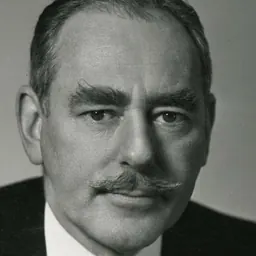
Career After attending Carmel College, a boarding school in Wallingford Berkshire, where he joined the British Army cadet corps in which he was trained in basic infantry tactics by El Alamein veterans of the Oxfordshire and Buckinghamshire Light Infantry, the later Green Jackets, Luttwak moved to London at the age of 16 and went to the Quintin Grammar School,but kept up his Cadet Corps attendance. From 1961,he studied analytical economics and the Logic of Science with Karl Popper at the London School of Economics. After receiving his BSc (Econ) degree in 1964, he taught Economics at the University of Bath. In 1968, when he was 26 and working in London as a consultant for the oil industry, he published the book Coup d'État: A Practical Handbook, a pastiche of a military manual. The book explains in detail how to overthrow the government of a state, looking in particular at coups d'état on the African continent and in the Middle East. The spy fiction author John le Carré praised the book and compared Luttwak to Machiavelli. Luttwak graduated from the London School of Economics in 1969. Earlier, during a two-month visit to Washington, D.C. in 1969, Luttwak and Richard Perle, his former roommate in London, had joined the Committee to Maintain a Prudent Defense Policy, assembled by Dean Acheson and Paul Nitze to lobby Congress for the Safeguard anti-ballistic missile systems.
In late 1974 and into 1975 a series of articles was published by neoconservative intellectuals discussing whether the US military should seize the oilfields in Saudi Arabia. In March 1975, Harper's Magazine published an article that Luttwak had written under the pseudonym "Miles Ignotus" with the title "Seizing Arab Oil." Luttwak had previously published the gist of his argument on how to break Arab power under the title "Obsolescent Elites", using his real name, in The Times Literary Supplement. He suggested that U.S. Marines, assisted by the 82nd Airborne Division, should storm the eastern beaches of Saudi Arabia. The article and the author attracted considerable attention, but there is no evidence that the Ford administration ever considered such an intervention. James Akins, then U.S. Ambassador to Saudi Arabia—and immediately afterwards a paid consultant for Saudi Arabia, publicly denounced the "invasion scenario" as a product of "sick minds." In 2004 Luttwak told the Wall Street Journal that he had written the article "after discussion with several like-minded consultants and officials in the Pentagon."
In 1976 Luttwak published his dissertation, The Grand Strategy of the Roman Empire from the First Century AD to the Third, which generated controversy among professional historians who saw Luttwak as an outsider and a non-specialist in the field. However, the book is recognized as seminal because it raised basic questions about the Roman Army and its defense of the Roman frontier. Kimberly Kagan, writing in the Journal of Military History, states "Ancient historians have demonstrated that Edward Luttwak's The Grand Strategy of the Roman Empire does not accurately describe Roman grand strategy, and many conclude that there was no Roman imperial grand strategy." Tanner Greer writes "So conclusively wrong is this book that I do not think it should be included on any syllabus. Since Luttwak published that book in 1976, a dozen studies of Roman frontier deployments, Roman strategic culture, and Roman decision making have been published. All offer a steady refutation of Luttwak’s work. However, not one of those books or articles would have been written without Luttwak’s work. Luttwak was wrong in every particular except the questions he asked—but those questions were good enough to create an entire subfield of research."
While writing his dissertation, he was hired as a consultant by Secretary of Defense James Schlesinger at the initiative of his Assistant Francis J West (USMC ret). He met Andrew W. "Yoda" Marshall founding Director of Office of Net Assessment in 1974, intermittently researching strategic subjects for ONA for the next 39 years. Later Luttwak started researching the Byzantine empire, beginning with its earliest surviving texts, printed in unedited, untraslated Greek texts .
In 1987 Luttwak published Strategy: The Logic of War and Peace. Luttwak became known for his innovative ideas. He suggested, for example, that attempts by major powers to quell regional wars actually make conflicts more protracted.
Luttwak went on to provide consulting services for many years to the Toyota Motor Corporation in Japan, till abruptly fired when he became an occasional consultant to Prime Minister Shinzo Abe (albeit with a Japan Foreign Ministry contract) from the start of his premiership till his retirement. At tines he also worked as a consultant for Northrop Corporation and government entities, including the State Department various branches of the U.S. armed forces.
Luttwak has served on the editorial boards of Géopolitique (France), the Journal of Strategic Studies, The European Journal of International Affairs, and the Washington Quarterly. He speaks English, French, Hebrew, Italian, and Spanish, in addition to rusty juvenile Hungarian and Romanian. In 1997, with three partners, he purchased 19,000 hectares of land in the far west of the Bolivian Amazon, where he raised cattle on the natural grassland between rainforest "islas", returning each year for the working season. cattle ranch. In 2004 Luttwak was awarded an honorary doctorate degree (LLD) from the University of Bath. He has also received honorary degrees from a university in Arad, Romania and another from Timisoara's University as well as the University of Bucharest. His book The Grand Strategy of the Byzantine Empire was published in late 2009.
In the 1999 book Turbo-Capitalism: Winners and Losers in the Global Economy Luttwak predicted that dynamic economic growth would increase ugly social phenomena such as higher crime rates and job insecurity, as anticipated in his London Review of Books article "Why Fascism is the Wave of the Future". New York Magazine described Luttwak's article as forecasting the rise of Donald Trump to the American presidency, citing his article's predictions about a political vacuum emerging from the neglect of workers from political party establishments.
In 2009, Richard Posner analyzed intellectuals with a public profile in the U.S. Posner claimed that Luttwak sees many affinities between the United States and the declining Roman Empire, leading Luttwak to predict a dark age in which the U.S. population will experience decline into third world status. According to Posner, Luttwak retained his economic pessimism when the economy of the United States stood at the turn of the century.
Luttwak predicted in a 2016 op-ed in The Wall Street Journal that the Trump administration would pursue a foreign policy "unlikely to deviate from standard conservative norms", withdrawing troops from Afghanistan and Iraq, avoiding involvement in Syria and Libya, eschewing trade wars, and modestly reducing spending — in short, "changes at the margin". In fact, Trump initiated his first trade war during his first term in office in January 2018, and his second trade war in February 2025.
On grand strategy
Luttwak has long insisted on the necessity of a grand strategy, but he moved beyond preoccupation with military intervention, and started to theorize diplomacy and military alliances. His Grand Strategy of the Soviet Union (1983) was the first English-language text that recognized the different nationalities that were re-emerging in the USSR and were ignored by both "Kremlinologists" and U.S. intelligence. Luttwak concluded that the Soviet Union relied entirely on military instruments for its grand strategy.
Luttwak argued that Carl von Clausewitz's warning against aggressive wars was no longer relevant in the post-World War II era. He reasoned that when confronted with weapons of mass destruction, statecraft needed a grand strategy, that is, "the firm subordination of tactical priorities, material ideals, and warlike instincts to political goals". For Luttwak, grand strategy was no longer a military doctrine, but a political issue, and diplomacy was needed to achieve the security of the state.
Writing in 2007 for the National Review, former George W. Bush's speechwriter David Frum said of Luttwak: "His book on the grand strategy of the Roman Empire was terrific, and his Coup d'État is that astounding thing: a great work of political science that is also a hilarious satire."
Personal life Luttwak describes himself as a "fanatical snorkeler" and exercises every day. He lives with his wife in Maryland.
Works
Several of his books as listed below have also been published in other English-language editions in the UK, US, and India, and in foreign languages: Arabic, Bahasa, Chinese simplified, Chinese traditional, Czech, Danish, Dutch, Estonian, Finnish, French, German, Greek, Hebrew, Hungarian, Bahasa Indonesia, Italian, Japanese, Korean, Mongolian, Norwegian, Polish, Portuguese (and Brazilian Portuguese), Romanian, Russian, Spanish (in Spain, Argentina and Venezuela), Swedish, Thai, and Turkish. He has also published other books in Italian and in Japanese only.
Books Coup d'État: A Practical Handbook (London, Allen Lane, 1968; Revised Edition: Cambridge, MA, 1979; London, 1979; Sydney, 1979) A Dictionary of Modern War (London, Allen Lane, 1971; revised edition in 1991 with Stuart L. Koehl; new edition in 1998) The Strategic Balance, 1972 (New York, Library Press, 1972) The Political Uses of Sea Power (Baltimore, Johns Hopkins University Press, 1974) The US–USSR Nuclear Weapons Balance (Beverly Hills, Sage Publications, 1974) The Israeli Army: 1948-1973 (with Daniel Horowitz) (New York, HarperCollins and London, Allen Lane, 1975) The Grand Strategy of the Roman Empire from the First Century AD to the Third (Baltimore, Johns Hopkins University Press, 1976) ; Strategic Power: Military Capabilities and Political Utility (California, 1976) Sea Power in the Mediterranean: Political Utility and Military Constraints (California, 1979) Strategy and Politics: Collected Essays (New Brunswick, Transaction Publishers, 1980), The Grand Strategy of the Soviet Union (New York, St. Martin's Press, 1983) The Pentagon and the Art of War: The Question of Military Reform (New York, Simon & Schuster, 1985) Strategy and History: Collected Essays, Volume Two (New Brunswick, Transaction Publishers, 1985) On the Meaning of Victory: Essays on Strategy (New York, Simon & Schuster, 1986), Strategy: The Logic of War and Peace (Cambridge, Massachusetts, 1987) The Paradoxical Logic of Strategy Nimitz Memorial Lectures (Institute of International Studies, University of California, Berkeley, 1987) The Endangered American Dream: How To Stop the United States from Being a Third World Country and How To Win the Geo-Economic Struggle for Industrial Supremacy (New York, Simon & Schuster, 1993) Turbo-Capitalism: Winners and Losers in the Global Economy (London, Weidenfeld & Nicolson, 1998), Strategy: The Logic of War and Peace, Revised and Enlarged Edition (Cambridge, Massachusetts, 2002) The Middle of Nowhere: Why the Middle East Is Not Important (London, Atlantic Books, 2008) The Grand Strategy of the Byzantine Empire (Cambridge, Massachusetts, 2009) The Virtual American Empire: War, Faith, And Power (New Brunswick and London, Transaction Publishers, 2009) The Rise of China vs. the Logic of Strategy (Cambridge, Massachusetts, 2012) with Eitan Shamir, catalog entry at Harvard U. Press
In Japanese only: "China 4.0" (Tokyo, 2016) "Japan 4.0" (Tokyo, 2018) "Japan 4.0" in Mongolian only (Cyrillic) (Ulaan Baatar, 2019) [Rejuvenating Japan: A National Strategy] (Tokyo: Asuka Shinsha, 2019) [co-authored with Dr. Okuyama Masashi].
In Italian only: (What really is democracy) with Susanna Creperio Verratti (Milan, Arnoldo Mondadori, 1995) (The ghost of poverty: a new policy to defend the wellbeing of citizens) with Carlo Pelanda and Giulio Tremonti (Milan, Arnoldo Mondadori, 1995) (Where is Italy going? Interview with Edward Luttwak) with Gianni Perrelli (Newton Compton, 1997) (The book of liberties. The citizen and the state: rules, rights and duties in a democracy) with Susanna Creperio Verratti (Arnoldo Mondadori, 2000) (The new leaders. Winning in the 21st century) with Arduino Paniccia (Padua, Marsilio, 2000)
As contributor: Vietnam: Four American Perspectives edited by Patrick J. Hearden with The Impact of Vietnam on Strategic Thinking in the United States (Purdue University Press, 1990) The Tanner Lectures on Human Values, 1991 edited by Grethe B. Peterson with Strategy: A New Era? (University of Utah, 1991) Feeding Mars: Logistics in Western Warfare from the Middle Ages to the Present edited by John A. Lynn with Logistics and the Aristocratic Idea of War (Boulder, Westview Press, 1994) Voluntary Simplicity: Responding to Consumer Culture edited by Daniel Doherty and Amitai Etzioni with Consuming For Love (Lanham, Rowman & Littlefield Publishers, 2003)
Preface, foreword: The Parameters Of War: Military History from the Journal of the U.S. Army War College edited by Lloyd J. Matthews and Dale E. Brown (Washington, Pergamon-Brassey's, 1987) Strategic Air Power in Desert Storm by John Andreas Olsen (London, Routledge, 2003) Free Trade Doesn't Work by Ian Fletcher (U.S. Business & Industry Council, 2010; revised edition in 2011) La Repubblica dei mandarini. Viaggio nell'Italia della burocrazia, delle tasse e delle leggi inutili (The Republic of mandarins. Travel in the Italy of bureaucracy, taxes and unnecessary laws) by Paolo Bracalini (Padua, Marsilio, 2014)
Selected book reviews Luttwak has written book reviews for publications such as The American Spectator, Commentary Magazine, London Review of Books, The New Republic, and The New York Times.
Selected articles
"Why China Will Not Become the Next Global Power… But It Could”. Infinity Journal, Fall 2011
Don’t just read it —
keep it.
Full-length biographies made to live with: read them, listen on the way to work, watch them tonight.
- E-book
- Audio
- Video
Instant download · yours to keep · every purchase keeps this site free
Important facts
People in Edward Luttwak's life
Named in this biography and alive at the same time






Related people
Same field, nearest in time


Contemporaries
People whose lives overlapped Edward Luttwak's


Frequently asked questions
Who is Edward Luttwak?
American writer and military strategist
When was Edward Luttwak born?
Edward Luttwak was born on 4 November 1942 in Arad.
What is Edward Luttwak's occupation?
Edward Luttwak is an economist, geopolitical analyst, historian, writer and political scientist.
What is Edward Luttwak known for?
Edward Luttwak is known for Coup d'État: A Practical Handbook.
What nationality is Edward Luttwak?
Edward Luttwak is Romanian and American.
Sources & further reading
Cite this page
APA: Biography.guide. (2026). Edward Luttwak. https://biography.guide/edward-luttwak/
MLA: "Edward Luttwak." Biography.guide, https://biography.guide/edward-luttwak/.
Chicago: "Edward Luttwak." Biography.guide. https://biography.guide/edward-luttwak/.
Data last updated: 2026-09-20 · Spot an error? Report a correction.
Page generated 2026-09-27 05:31 UTC