
About Edward Littleton
Lived 1577 – 1629 (aged 51–52). Edward Littleton was an English politician.
Effigy of Sir Edward Littleton (died 1629): part of a double monument in the north nave aisle of St Michael's church, Penkridge, Staffordshire.
Sir Edward Littleton (c. 157725 July 1629) was a politician from the extended Littleton/Lyttelton family and an important Staffordshire landowner of the Jacobean era and the early Caroline era. Although loyal to the monarchy, he seems to have been of Puritan sympathies and was a close ally of Robert Devereux, 3rd Earl of Essex. He represented Staffordshire in the English parliament of 1624.
Background Littleton's mother and father: the elder Sir Edward Littleton and Margaret Devereux. Sons of Sir Edward Littleton and Margaret Devereux, from the double tomb in St. Michael's church, Penkridge. The younger Edward Littleton is pictured at the head of his brothers.
Littleton's parents were Sir Edward Littleton (died 1610) of Pillaton Hall, near Penkridge, Staffordshire, and Margaret Devereux, the daughter of Sir William Devereux of Merevale Hall, Warwickshire .
The elder Sir Edward Littleton was an important and politically active member of the Staffordshire landed gentry. He was a partisan of Robert Devereux, 2nd Earl of Essex in the turbulent final decade of Elizabeth I. Margaret Devereux was Essex's first cousin, once removed. Sir Edward was the earl's agent in his home county of Staffordshire and played a part – tangential, he claimed – in the Essex Rebellion of 1601. He was lucky to escape with his life but his fortunes recovered quickly, especially after the accession of James I. He represented his county in Parliament from 1604 until a month before his death.
Early life and education Littleton was admitted to Balliol College, Oxford in 1594, aged 17 – evidence for his birth date. He left after a year for a year of legal training – a common practice in the period, when the Inns of Court were often used as finishing schools for the landed gentry – at the Inner Temple, his father's Inn of Court. He was admitted on 23 November 1595, free of charge, on the orders of the parliament of that year, at the instance of Thomas Coventree, Autumn Reader for 1594. This Thomas Coventry was an important judge, father of Thomas Coventry, 1st Baron Coventry, and an ally of Edward Coke, the leading jurist of his day and another Inner Temple man. These connections with some of the key figures in the Elizabethan state can only have helped when the elder Littleton was embroiled in the Essex rebellion, as Coke was one of those who conducted his interrogation.
Littleton married Mary Fisher, the daughter of a Warwickshire landowner: the marriage settlement is dated 15 January 1599.
This was special pleading, designed to get easy terms, but his son's allowance was certainly a substantial sum for him to find.
On his accession, James I distributed honours widely. The younger Littleton received his knighthood on 23 April 1603, This carried more power, but also more responsibility and potential for embarrassment.
Bowen created considerable enmity and numerous complaints were made by the parishioners of Penkridge. He was accused of nonconformity, which suggests that he was a Puritan, although he was also accused of fathering an illegitimate child. – unconnected to any major faction in the county and elected a total of five times between 1621 and 1640 – although he too was probably a moderate Puritan, like Littleton.
Littleton represented his county in what became known, sarcastically, as the Happy Parliament, following a coinage of Sir Edward Coke. It was the last of James's reign. Littleton's main contributions to the parliament were made through his work on three committees., This stemmed from the case of John Somervile, a Catholic landowner from Warwickshire, who had set off for London in 1583, openly threatening to kill the queen, and had attacked some bystanders with his sword. Apprehended, he incriminated others and was condemned to death, but was found dead in his cell. His Protestant daughters and his brother, Sir William Somerville, were able to recover parts of his estates, but his son, also Sir William, was now seeking a final settlement. Apparently, the issue threatened to lead to intimidation and violence, as the House was soon demanding the presence of "the Party that gave Warning to Sir Will. Somervile's Brothers to be here To-morrow Morning, to acquaint the House with the Manner of it."
The Egerton affair. This involved the important Staffordshire estate of Wrinehill, acquired by the prominent MP Sir John Egerton (died 1614) from his improvident cousin, Edward Egerton, but now the centre of a complex property dispute because of Sir John's disputed will. By this stage, Edward had gone so far as to introduce a bill to have the estate returned to him by John's son, Roland Egerton, who defended his own interests by getting himself elected to the parliament of 1624. The case proved almost intractable, although Sir Roland's family was ultimately to keep the estate.
The naturalisation of three Scotsmen.
On 27 April Littleton he named Sir William Powell, a Staffordshire magistrate, as a recusant officeholder.
Marriage and family
Edward Littleton married Mary Fisher. She was the daughter of a Warwickshire landowner, Clement Fisher of Packington and Mary Repington, daughter of Sir Francis Repington, also of Warwickshire gentry background. The Fishers, like the Littleton's, had risen in the world by acquiring ecclesiastical lands (mainly those of Kenilworth priory) and allying themselves to the most important local magnate (in their case, Ambrose Dudley, 3rd Earl of Warwick), so the couple were well-matched socially and politically. Fisher was used for several generations by the Littletons as a name for younger sons.
They had four sons and four daughters.
Sir Edward Littleton, 1st Baronet, married Hester Courten. They were the ancestors of the further three Littleton baronets of Pillaton and of the Barons Hatherton
Fisher Littleton married Anne Baynton of Wiltshire.
Sir Walter Littleton married Priscilla Pemberton of Rushden, Northamptonshire.
William Littleton married the daughter, name unknown, of John Webster, a resident of Amsterdam in the Netherlands.
Lettice Littleton married in turn two Worcestershire landowners: William Washbourne of Washbourne and John Clent of Knightwick.
Mary Littleton married Euseby Shuckburgh of Naseby, Northamptonshire.
Margaret Littleton married in turn two Warwickshire knights: Sir George Browne of Radford Semele and Sir Francis Fisher of Packington, her cousin.
Anne Littleton married Sir Thomas Holte of Aston Hall.
Don’t just read it —
keep it.
Full-length biographies made to live with: read them, listen on the way to work, watch them tonight.
- E-book
- Audio
- Video
Instant download · yours to keep · every purchase keeps this site free
Important facts
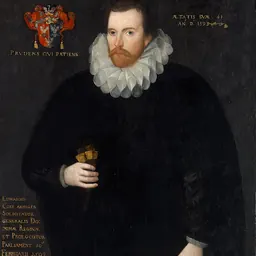
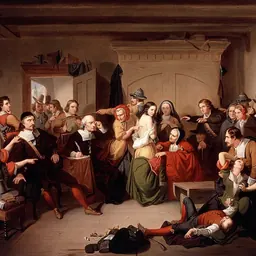
People in Edward Littleton's life
Named in this biography and alive at the same time





Related people
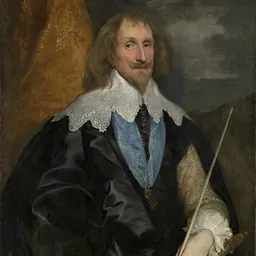
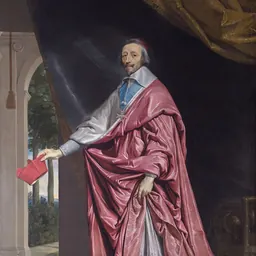
Same field, nearest in time

Contemporaries
People whose lives overlapped Edward Littleton's


Frequently asked questions
Who was Edward Littleton?
English politician, died 1629
When was Edward Littleton born?
Edward Littleton was born in 1577.
When did Edward Littleton die?
Edward Littleton died on 25 July 1629.
What was Edward Littleton's occupation?
Edward Littleton was a politician.
What nationality was Edward Littleton?
Edward Littleton was English.
Sources & further reading
· DBpedia: Edward Littleton (died 1629)
Cite this page
APA: Biography.guide. (2026). Edward Littleton. https://biography.guide/edward-littleton-politician-1577/
MLA: "Edward Littleton." Biography.guide, https://biography.guide/edward-littleton-politician-1577/.
Chicago: "Edward Littleton." Biography.guide. https://biography.guide/edward-littleton-politician-1577/.
Data last updated: 2026-09-20 · Spot an error? Report a correction.
Page generated 2026-09-27 05:08 UTC