
About Edward John Phelps
Lived 1822 – 1900 (aged 77). Edward John Phelps was an American lawyer, diplomat and jurist.
Edward John Phelps (July 11, 1822 – March 9, 1900) was a lawyer and diplomat from Vermont. He is notable for his service as Envoy to Court of St. James's from 1885 to 1889. In addition, Phelps was a founder of the American Bar Association, and served as its president from 1880 to 1881.
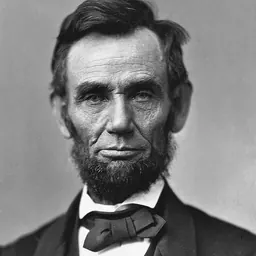
A prominent Democrat even as Vermont was trending towards the Republicans, Phelps was the son of Senator Samuel S. Phelps and his first wife, Francis (Shurtleff) Phelps. Edward Phelps graduated from Middlebury College in 1840, taught school in Virginia, and studied for a career as an attorney, first in the office of Middlebury attorney Horatio Seymour, then at Yale Law School. He practiced in Burlington, and served as Second Comptroller of the Treasury from 1851 to 1853. Phelps supported the Union during the American Civil War, but was a critic of what he regarded as the excesses of the Abraham Lincoln administration. He served as a delegate to the Vermont constitutional convention of 1870, and was one of the founders of the American Bar Association. He was educated in the schools of Middlebury and then began attendance at Middlebury College, from which he graduated in 1840. The Phelps and Smalley firm counted George F. Edmunds among the prospective attorneys who studied law under their tutelage. He received a federal appointment before assuming office, and Aaron B. Maynard filled the vacancy. From 1851 to 1853, Phelps served as Second Comptroller of the Treasury. He returned to Burlington in 1857 and resumed practicing law. Phelps served as a delegate to the state constitutional convention in 1870. From 1881 until his death he was Kent Professor of Law at Yale Law School.
In 1880 Phelps was the Democratic nominee for Governor of Vermont.
Phelps was Envoy to Court of St. James's in Britain from 1885 to 1889. In 1893, Phelps was elected a member of the American Antiquarian Society, a national research library of pre-20th Century American history and culture which was founded in 1876. Also in 1893, he served as senior counsel for the United States before the international tribunal in Paris which considered the Bering Sea Controversy. That same year, he was elected to the American Philosophical Society.
Phelps was a highly sought after speechmaker and delivered numerous public addresses, among them The United States Supreme Court and the Sovereignty of the People at the centennial celebration of the Federal Judiciary in 1890, and an oration at the dedication of the Bennington Battle Monument, unveiled in 1891 at the centennial of Vermont's admission to the Union.
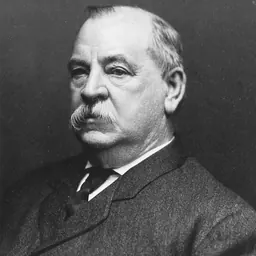
At the urging of Senator George F. Edmunds, President Grover Cleveland intended to appoint Phelps as U.S. Chief Justice in 1888. Phelps was concerned that his tenure as ambassador in London would cause the Democratic Party to lose the support of Irish Americans, who supported a growing movement for Irish independence, and Cleveland concurred. A funeral was held at Battell Chapel on the Yale campus; Theodore T. Munger officiated, and university president Timothy Dwight V delivered the eulogy.
A second service took place at the Cathedral Church of St. Paul in Burlington. They were the parents of four children: Edward Haight Phelps (1847–1884), Francis Shurtleff Phelps (1849-1863), Mary Haight Phelps (1855–1911) who married Horatio Loomis, and Charles Pierpont Phelps (1861–1912).
Honorary degrees In 1870, Middlebury College awarded Phelps the honorary degree of LL.D.
"Better a hundred times an honest and capable administration of an erroneous policy than a corrupt and incapable administration of a good one." Spoken at a dinner of the New York Chamber of Commerce.
Don’t just read it —
keep it.
Full-length biographies made to live with: read them, listen on the way to work, watch them tonight.
- E-book
- Audio
- Video
Instant download · yours to keep · every purchase keeps this site free
Important facts
Family & relationships
People in Edward John Phelps's life
Named in this biography and alive at the same time




Related people
Same field, nearest in time



Contemporaries
People whose lives overlapped Edward John Phelps's



Frequently asked questions
Who was Edward John Phelps?
American lawyer and diplomat (1822–1900)
When was Edward John Phelps born?
Edward John Phelps was born on 11 July 1822 in Middlebury.
When did Edward John Phelps die?
Edward John Phelps died on 9 March 1900 in New Haven.
What was Edward John Phelps's occupation?
Edward John Phelps was a lawyer, diplomat and jurist.
What nationality was Edward John Phelps?
Edward John Phelps was American.
Sources & further reading
· Wikipedia: Edward John Phelps
Cite this page
APA: Biography.guide. (2026). Edward John Phelps. https://biography.guide/edward-john-phelps/
MLA: "Edward John Phelps." Biography.guide, https://biography.guide/edward-john-phelps/.
Chicago: "Edward John Phelps." Biography.guide. https://biography.guide/edward-john-phelps/.
Data last updated: 2026-09-20 · Spot an error? Report a correction.
Page generated 2026-09-27 05:33 UTC