
Edward James Salisbury
British botanist, ecologist, university lecturer and director of Kew gardens
About Edward James Salisbury
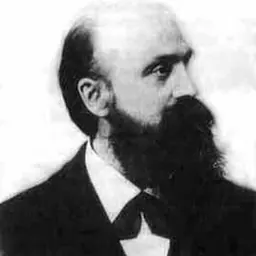
Lived 1886 – 1978 (aged 92). Edward James Salisbury was a British botanist, botanical collector, university teacher, director and ecologist.
Sir Edward James Salisbury CBE FRS (16 April 1886 – 10 November 1978) was an English botanist and ecologist. He was born in Harpenden, Hertfordshire and graduated in botany from University College London in 1905. In 1913, he obtained a D.Sc. with a thesis on fossil seeds and was appointed a senior lecturer at East London College. He returned to University College London as a senior lecturer, from 1924 as a reader in plant ecology and from 1929 as Quain Professor of botany.
Salisbury was director of the Royal Botanic Gardens, Kew from 1943 to 1956. He was responsible for the restoration of the gardens after the Second World War.
He was elected a Fellow of the Royal Society on 15 March 1933 and won the society's Royal Medal in 1945 for "his notable contributions to plant ecology and to the study of the British flora generally". In 1936, he was awarded The Veitch Memorial Medal of the Royal Horticultural Society in acknowledgement of his book The Living Garden (1935), which was enormously popular. In 1939, he received the Commander of the Order of the British Empire and in 1946 he was knighted.
At first, his research was focussed on forest ecology, particularly in his native Hertfordshire. Later, he pioneered investigations of seed size and reproductive output of plants in relation to habitat. He also investigated the ecology of garden weeds and of dune plants.
He was elected President of the Sussex Wildlife Trust in January 1962, where he remained in office until April 1967.
Popular science books The Living Garden. 1936 Flowers of the Woods. 1946
Scientific books
Selected scientific papers Salisbury, E.J. (1916) The emergence of the aerial organs in woodland plants. Journal of Ecology 4 (3–4): 121–128. Salisbury, E.J. (1920) The significance of the calcicolous habit. Journal of Ecology 8 (1): 202–215. Salisbury, E.J. (1922) Stratification and Hydrogen-ion concentration of the soil in relation to leaching and plant succession with special reference to woodlands. Journal of Ecology 9 (2): 220–240. Salisbury, E.J. (1925) The incidence of species in relation to soil reaction. Journal of Ecology 13 (1): 149–160. Salisbury, E.J. (1925) Note on the edaphic succession in some dune soils with special reference to the time factor. Journal of Ecology 13 (2): 322–328. Salisbury, E.J. (1925) Note on the edaphic succession in some dune soils with special reference to the time factor. Journal of Ecology 13 (2): 322–328. Salisbury, E.J. (1926) The geographical distribution of plants in relation to climatic factors. The Geographical Journal 67 (4): 312–335. Discussion on pp. 335–342 by H.N. Ridley a.o. Salisbury, E.J. (1927) On the causes and ecological significance of stomatal frequency with special reference to woodland flora. Philosophical Transactions of the Royal Society of London, series B 216 (1928): 1–65. Salisbury, E.J. (1929) The biological equipment of species in relation to competition. Journal of Ecology 17 (2): 197–222. Salisbury, E.J. (1930) Mortality amongst plants and its bearing on natural selection. Nature 125 : 817. Commented by Ronald A. Fisher (1930) in Nature 125: 972–973.; Reply by Salisbury in Nature 126: 95–96. Salisbury, E.J. (1971) The pioneer vegetation of exposed muds and its biological features. Philosophical Transactions of the Royal Society of London, Series B: Biological Sciences 259 : 207–255. Salisbury, E. (1974) Seed size and mass in relation to environment. Proceedings of the Royal Society of London Series B: Biological Sciences 186 (1083): 83–88. Salisbury, E. (1975) The survival value of modes of dispersal. Proceedings of the Royal Society of London Series B: Biological Sciences 188 (1091): 183–188. Salisbury, E. (1976) Seed output and the efficacy of dispersal by wind. Proceedings of the Royal Society of London Series B: Biological Sciences 192 (1108): 323–329.
Don’t just read it —
keep it.
Full-length biographies made to live with: read them, listen on the way to work, watch them tonight.
- E-book
- Audio
- Video
Instant download · yours to keep · every purchase keeps this site free
Important facts
People in Edward James Salisbury's life
Named in this biography and alive at the same time

Related people
Same field, nearest in time



Contemporaries
People whose lives overlapped Edward James Salisbury's


Frequently asked questions
Who was Edward James Salisbury?
British botanist, ecologist, university lecturer and director of Kew gardens (1886-1978)
When was Edward James Salisbury born?
Edward James Salisbury was born on 16 April 1886 in Harpenden.
When did Edward James Salisbury die?
Edward James Salisbury died on 10 November 1978 in Felpham.
What was Edward James Salisbury's occupation?
Edward James Salisbury was a botanist, botanical collector, university teacher, director and ecologist.
What nationality was Edward James Salisbury?
Edward James Salisbury was British.
Sources & further reading
· Wikipedia: Edward James Salisbury
· DBpedia: Edward James Salisbury
Cite this page
APA: Biography.guide. (2026). Edward James Salisbury. https://biography.guide/edward-james-salisbury/
MLA: "Edward James Salisbury." Biography.guide, https://biography.guide/edward-james-salisbury/.
Chicago: "Edward James Salisbury." Biography.guide. https://biography.guide/edward-james-salisbury/.
Data last updated: 2026-09-22 · Spot an error? Report a correction.
Page generated 2026-09-27 05:26 UTC