
About Edward Hutchinson Synge
Lived 1890 – 1957 (aged 66). Edward Hutchinson Synge was an Irish physicist, known for Near-field scanning optical microscope.
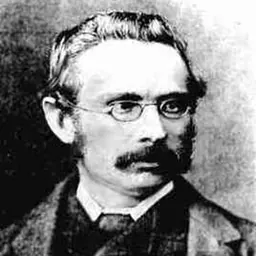
Edward Hutchinson Synge (1 June 1890 – 26 May 1957) was an Irish physicist who published a complete theoretical description of the near-field scanning optical microscope, an instrument used in nanotechnology, several decades before it was experimentally developed. He never completed university yet did significant original research in both microscopy and telescopy. He was the older brother of distinguished mathematician and theoretical physicist John Lighton Synge. to Edward Synge and Ellen Frances Price. He was familiarly known as "Hutchie". He was the nephew of playwright John Millington Synge and the brother of John Lighton Synge who edited the collected works of Sir William Rowan Hamilton at Hutchie's urging. He and brother John were great-great-great-grandsons of Irish bishop Hugh Hamilton. He is also the uncle of the mathematician Cathleen Synge Morawetz. Throughout his life Synge was very physically active, pursuing walking, cycling, swimming and sailing. In his later life, he took up painting and was good at it.
Career Starting in 1928, with encouragement from Albert Einstein, Hutchie launched on a period of intense productivity during which he laid the foundation for new kinds of microscopes and telescopes. Nobody, including his famous brother John, appreciated Hutchie's achievements at the time. His work was overlooked for decades, but is now better-known thanks to the book The Life and Works of Edward Hutchinson Synge
On 22 April 1928, Synge wrote to Albert Einstein about an idea he had for a new microscopic imaging method in which an optical field scattered from a tiny gold particle could be used as a radically new light source. Einstein replied that although Synge's method appeared essentially unworkable, the basic ideas seemed correct and he should publish his research. Remarkably, he did all of this work alone, without a laboratory, and while living at his home in Dundrum in the suburbs of Dublin.
The idea was ahead of its time. In 1956 a similar theory was developed by John A. O'Keefe and in 1972, Ash and Nicholls gave the first experimental demonstration of the technique using electromagnetic radiation. It was not until Synge's original papers re-emerged in the 1980s that his priority was finally recognised.
Synge proposed a design for very large astronomical telescopes, based on multiple mirrors, an idea realised much later in Tucson, Arizona, and elsewhere. He also invented a new kind of remote sensing technique using searchlights. Today this is known as Lidar and uses pulsed lasers.
Later life According to the people who knew him best, E. H. Synge suffered from what these days would be called Asperger syndrome. Becoming increasingly socially isolated, he dropped out of university in 1913 and worked alone without any support from the academic community until all work stopped in 1932.
Publications A suggested method for extending microscopic resolution into the ultra-microscopic region The London, Edinburgh, and Dublin Philosophical Magazine and Journal of Science, 1928, Series 7, Volume 6, Issue 35, pp. 356–362 A design for a very large telescope The London, Edinburgh, and Dublin Philosophical Magazine and Journal of Science, 1930, Series 7, Volume 10, Issue 63, pp. 353–360 A microscopic method The London, Edinburgh, and Dublin Philosophical Magazine and Journal of Science, 1931, Series 7, Volume 11, Issue 68, pp. 65–80 An application of piezo-electricity to microscopy The London, Edinburgh, and Dublin Philosophical Magazine and Journal of Science, 1932, Series 7, Volume 13, Issue 83, pp. 297–300
Don’t just read it —
keep it.
Full-length biographies made to live with: read them, listen on the way to work, watch them tonight.
- E-book
- Audio
- Video
Instant download · yours to keep · every purchase keeps this site free
Important facts
People in Edward Hutchinson Synge's life
Named in this biography and alive at the same time





Related people
Same field, nearest in time

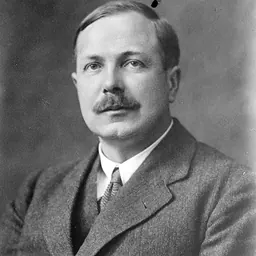
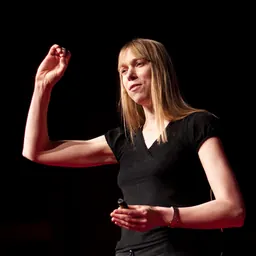
Contemporaries
People whose lives overlapped Edward Hutchinson Synge's
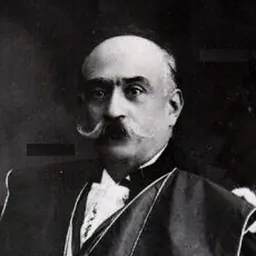
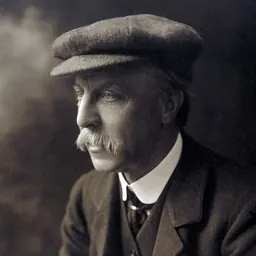
Frequently asked questions
Who was Edward Hutchinson Synge?
Irish physicist
When was Edward Hutchinson Synge born?
Edward Hutchinson Synge was born on 1 June 1890 in County Dublin.
When did Edward Hutchinson Synge die?
Edward Hutchinson Synge died on 26 May 1957 in Dublin.
What was Edward Hutchinson Synge's occupation?
Edward Hutchinson Synge was a physicist.
What was Edward Hutchinson Synge known for?
Edward Hutchinson Synge was known for Near-field scanning optical microscope.
What nationality was Edward Hutchinson Synge?
Edward Hutchinson Synge was Irish.
Sources & further reading
· Wikipedia: Edward Hutchinson Synge
· DBpedia: Edward Hutchinson Synge
Cite this page
APA: Biography.guide. (2026). Edward Hutchinson Synge. https://biography.guide/edward-hutchinson-synge/
MLA: "Edward Hutchinson Synge." Biography.guide, https://biography.guide/edward-hutchinson-synge/.
Chicago: "Edward Hutchinson Synge." Biography.guide. https://biography.guide/edward-hutchinson-synge/.
Data last updated: 2026-09-20 · Spot an error? Report a correction.
Page generated 2026-09-27 05:27 UTC