
About Edward Foxe
Lived 1496 – 1538 (aged 41–42). Edward Foxe was a presbyter.
Edward Foxe (c. 1496 – 8 May 1538) was an English churchman, Bishop of Hereford. He played a major role in Henry VIII's divorce from Catherine of Aragon, and he assisted in drafting the Ten Articles of 1536.
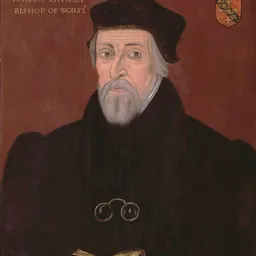
Early life He was born at Dursley in Gloucestershire, and may have been related to Richard Fox, Bishop of Exeter and Lord Privy Seal under King Henry VII. Foxe was educated at Eton College and at King's College, Cambridge. After graduating in 1520, he was made secretary to Cardinal Wolsey in 1527. In 1528 he was sent with Bishop Stephen Gardiner to Rome to obtain from Pope Clement VII a decretal commission for the trial and decision of the case between King Henry VIII and his first wife, Catherine of Aragon. After a brief mission to Paris in October 1529, Foxe in January 1530 befriended Hugh Latimer at Cambridge and took an active part in persuading the English universities to decide in the king's favour. He was sent to employ similar methods of persuasion at the French universities in 1530–1531, and was also engaged in negotiating a closer league between England and France. Various ecclesiastical preferments were now granted him, including the archdeaconry of Leicester (1531–1535), the archdeaconry of Dorset (1533–1535), the deanery of Salisbury (1533) and the bishopric of Hereford (1535). He was nominated to the See of Hereford on 20 August 1535, elected by the college of Hereford on 25 August, confirmed on 15 September, and ordained a bishop on 26 September 1535; he received the temporalities on 7 September and the spiritualities on 14 October 1535.
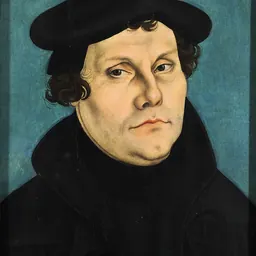
In 1535–36 he was sent to Germany to discuss the basis of a political and theological understanding with the Lutheran princes and divines, and had several interviews with Martin Luther, who could not be persuaded of the justice of Henry VIII's divorce. In 1536, Martin Bucer dedicated his Commentaries on the Gospels to Foxe.
Death and legacy Foxe died on 8 May 1538 and was buried in the church of St Mary Mounthaw, London. Foxe is credited with the authorship of several proverbial sayings, such as "the surest way to peace is a constant preparedness for war" and "time and I will challenge any two in the world." However, the former is a paraphrase of si vis pacem, para bellum, while the latter is more usually ascribed to Philip II of Spain.
Don’t just read it —
keep it.
Full-length biographies made to live with: read them, listen on the way to work, watch them tonight.
- E-book
- Audio
- Video
Instant download · yours to keep · every purchase keeps this site free
Important facts
People in Edward Foxe's life
Named in this biography and alive at the same time



Related people
Same field, nearest in time

Contemporaries
People whose lives overlapped Edward Foxe's

Frequently asked questions
Who was Edward Foxe?
British bishop
When was Edward Foxe born?
Edward Foxe was born in 1496 in Dursley.
When did Edward Foxe die?
Edward Foxe died on 8 May 1538.
What was Edward Foxe's occupation?
Edward Foxe was a presbyter.
Sources & further reading
Cite this page
APA: Biography.guide. (2026). Edward Foxe. https://biography.guide/edward-foxe/
MLA: "Edward Foxe." Biography.guide, https://biography.guide/edward-foxe/.
Chicago: "Edward Foxe." Biography.guide. https://biography.guide/edward-foxe/.
Data last updated: 2026-09-20 · Spot an error? Report a correction.
Page generated 2026-09-27 05:22 UTC