
About Edward Clark
Lived 1888 – 1962 (aged 73). Edward Clark was a British conductor, journalist, record producer, composer and music conductor.
Thomas Edward Clark (10 May 188830 April 1962) was an English conductor and music producer for the BBC. Through his positions in leading new music organizations and his wide-ranging contacts with British and European composers, he had a major impact on making contemporary classical music available to the British public for over 30 years. He was a leading figure in the BBC's Concerts of Contemporary Music between 1926 and 1939, and he played a significant role in the founding and early development of the BBC Symphony Orchestra. He held prominent positions in the International Society for Contemporary Music (ISCM) from its inception in 1922, and was its president from 1947 to 1952.
He was responsible for producing a number of important world and British premieres (some of which he also conducted), and he was associated with most of the important European and British composers, such as Arnold Schoenberg, Anton Webern, Alban Berg, Ferruccio Busoni, Igor Stravinsky, Béla Bartók, Paul Hindemith, William Walton, Arthur Bliss, Arnold Bax, Peter Warlock, John Ireland, Constant Lambert, Arthur Benjamin, Humphrey Searle, Denis ApIvor, Alan Rawsthorne, Benjamin Britten, Michael Tippett, Benjamin Frankel, Roberto Gerhard, Luigi Dallapiccola, Christian Darnton and others.
Edward Clark was described by some as Mephistophelean. He was outspoken, immensely erudite, and a visionary. But he was also a loose cannon when it came to administrative matters, tending to ruffle feathers with his too-individual approach, brooking no interference, and being distrustful of those who did not share his vision but often inadequately communicating that vision to them. In 1936 these matters contributed in large part to his premature departure from the BBC, and from the inner sanctum of the contemporary music scene, which he had helped to create as much as anyone, and more than most. His personal integrity in regard to the use of official funds also came under question more than once, in one instance leading to a public scandal and court case in which he sued Benjamin Frankel for slander.
Clark's ex-wife Dorothy Eckersley was jailed in 1945 for making anti-British broadcasts on a German radio station during World War II; their teenage son James Clark was also involved in this. His second wife was the composer Elisabeth Lutyens, with whom he had another son.
Early life Thomas Edward Clark was born in Newcastle upon Tyne on 10 May 1888. His father, James Bowness Clark (1863–1934), was a coal exporter and amateur musician who supported his son's musical interests and for two decades was the secretary of the Newcastle and Gateshead Choral Union. He and his wife Elizabeth née Thirlaway (1858–1939) had three children.
Edward Clark was educated at the Royal Grammar School, Newcastle. Studying in Paris in 1907 and 1908, he met Claude Debussy, Albert Roussel and Maurice Ravel. He was profoundly impressed by this music, and he was introduced to Schoenberg and Anton Webern after the concert. He became Schoenberg's champion and, along with people like Artur Schnabel, Ferruccio Busoni, Oskar Fried and others, he convinced him to move from Vienna to Berlin, because of the greater opportunities and contacts there. which he also attended.
Clark attended the Leipzig premiere of Gurre-Lieder in January 1914 He had been considering settling permanently in Germany, and the matter was decided when he was offered a professional post in Stettin. In early August 1914 he was attending the Bayreuth Festival, on his way to take up that appointment, when World War I broke out. He was arrested at Bayreuth as an enemy alien, and interned at Ruhleben internment camp near Berlin; Edgar Bainton, his colleague from Newcastle, was also interned at that time, as were Ernest MacMillan, Arthur Benjamin and others. Clark was released in May 1918 through the offices of the Red Cross.
On his return to London, he became assistant conductor to Ernest Ansermet and Adrian Boult for Sergei Diaghilev's seasons of the Ballets Russes, and he became friendly with Diaghilev and Igor Stravinsky. In the winter and spring of 1921 he presented two series of concerts of new music, which proved very popular but made him little money. and two world premieres: Arnold Bax's The Bard of the Dimbovitza, song cycle with orchestra, with Ethel Fenton (mezzo-soprano)
British Broadcasting Corporation
Clark was hired by the BBC in August 1924 as Musical Director for their Newcastle station. His imagination, creativity and innovative approaches to programming were soon noted, attracting praise from local Newcastle musical circles; but so too were his administrative shortcomings. He also did a considerable amount of conducting during this period, sometimes of the works he was producing for the BBC, and sometimes on a freelance basis.
On 19 June 1927 he conducted the British premiere of Igor Stravinsky's Concerto for Piano and Wind Instruments, with the composer (in his British radio debut) and the Wireless Symphony Orchestra. (He had tried to have the premiere the previous year, on 14 April 1927, but these plans fell through.) Boult did not always support Clark's choices of repertoire, however. He refused to play the music of Alexander Scriabin that Clark programmed, calling it "evil music", and even issued a ban on Scriabin's music from broadcasts in the 1930s. It is also true that he had no personal sympathy with the music of the Second Viennese School, describing Alban Berg's Lyric Suite as "a Kensington drawing room apology for what Berg really meant", but Clark's influence was such that he was at least prepared to participate in performances of this music.
Clark played an even greater role in Walton's Belshazzar's Feast: he was its progenitor. On 21 August 1929 he asked Walton for a work suitable for broadcasting, written for a small choir, soloist, and an orchestra not exceeding 15 players. Walton later thanked Clark for bringing Belshazzar's Feast to the attention of Sergei Prokofiev, who showed some interest in it.
On 3 March 1930, Edward Clark played a major part in the first complete broadcast (18 poems) of Walton's Façade, at the Central Hall, Westminster, with Edith Sitwell and Constant Lambert (speakers), Leslie Heward conducting. There was no announcement of this world premiere and there is no extant documentation of the broadcast. Schoenberg was probably in attendance; he was in London to conduct the BBC Symphony Orchestra's world premiere (broadcast) performance of the Variations, Op. 31. He moved to Paris on 16 May, intending to remain there, but he had no luck in securing a French publisher or any conducting opportunities. On 8 February 1935 he conducted the first British broadcast of Kurt Weill's Die Dreigroschenoper. It received scathing reviews from Ernest Newman and other critics. But the most savage criticism came from Weill himself, who described it privately as "the worst performance imaginable ... the whole thing was completely misunderstood". But his criticisms seem to have been for the concept of the piece as a Germanised version of The Beggar's Opera, rather than for Clark's conducting of it, of which Weill made no mention.
Also in 1935 he chose Harriet Cohen to perform new Soviet music by Dmitri Shostakovich, Dmitry Kabalevsky, Leonid Polovinkin and Georgy Kh. Mepurnov in London. The same year he was instrumental in arranging a series of BBC broadcasts, in which the émigré German composer and musicologist Ernst Hermann Meyer was engaged to present important revivals of 17th century consort music.
Clark was responsible for bringing Béla Bartók to Britain to perform his works at the Proms, such as the Piano Concerto No. 2 on 7 January 1936 under Sir Henry Wood. Through Clark's endeavours the world premiere concert performance of Schoenberg's Variations, Op. 31, took place in Vienna in 1936 under the BBC Symphony Orchestra. This led to Britten's score for Night Mail (1936).
Clark had planned to have the world premiere of Igor Markevitch's Cantique d'amour presented by the BBC in 1936, but perceptions about Markevitch's personal morality led to the plan being shelved, to Clark's chagrin.
Under the direction of Edward Clark and Constant Lambert, some of Bernard van Dieren's larger works were performed by the BBC in the composer's last years, and just after his death in 1936. The following day, from 11 am to 5 pm, Hindemith sat in an office made available to him by the BBC and wrote Trauermusik in homage to the late king. It, too, was written for viola and orchestra. It was performed that evening in a live broadcast from a BBC radio studio, with Boult conducting and the composer as soloist.
Resignation from the BBC
Clark resigned angrily and abruptly from the BBC on 16 March 1936. The immediate cause of this protest was some alterations to the concert programmes for the BBC Symphony Orchestra's forthcoming European tour, in which he had invested much time and great care. These changes were made without his knowledge and while he was on sick leave, and they included the complete removal of Béla Bartók's Four Orchestral Pieces from the Budapest programme.
However, this parting of the ways suited many people in the BBC, as it came in the wake of very strong criticism that had been building over a long time about Clark's poor work habits, his general inefficiency, his unpunctuality and missing of important deadlines, his administrative bungling and his unwillingness to communicate with his colleagues about what he was doing, thinking or planning. His dismissal had been considered more than once. His conducting was also the subject of criticism, on the basis that he could not quickly establish rapport with or give strong and unambiguous directions to his players, and he was discouraged from this activity. His personal integrity had also come under question: He took sick leave in 1928 due to severe rheumatism that necessitated having his affected arm in a sling, but while on leave he conducted orchestras in both London and Prague. Then there was a trip to Europe to negotiate with Arturo Toscanini about his involvement in the forthcoming BBC Symphony Orchestra's appearances at the Florence May Festival; Clark changed his travel arrangements at the last minute, he stayed a week longer than he was scheduled to, he still did not complete the task he was sent to do, and the rocky relationship Toscanini already had with the BBC was further soured. Clark never worked in a steady job again, although he was a consultant to the BBC on certain projects, and continued to conduct on a freelance basis for a few years until the work dried up.
After the BBC Edward Clark's departure had the effect of relegating Schoenberg, Webern, Berg and other members of the Second Viennese School to fringe composers as far as British audiences were concerned, and they were not brought back into the mainstream until William Glock's appointment in 1959. "Tonality had returned to the airwaves", to the relief of many.
But Clark himself remained busy with the ISCM and other activities. On 19 April 1936 he was at the ISCM Festival in Barcelona for the world premiere of Berg's Violin Concerto, played by Louis Krasner. He arranged for Krasner to come to Britain for the local premiere; in the event, it was a private studio performance on 1 May, with the BBC Symphony Orchestra. Anton Webern, who had gone to Barcelona to conduct the world premiere but withdrew at the last minute, fortunately proved up to the task on this occasion.
Clark's influence was not confined to Britain and Europe. The Australian pianist and composer Roy Agnew heard some of Clark's broadcasts while he was in Britain in the 1920s. He was part of the network of like-minded people who spread the word about emerging compositions throughout the English-speaking world. Between 1937 and 1942 Agnew broadcast his own radio programme, "Modern and Contemporary Music", for the Australian Broadcasting Commission. This was no doubt strongly influenced by Clark's programmes.
Clark produced concert versions of Ferruccio Busoni's Doktor Faust (1937) and Arlecchino (1939), many years before the British stage premiere of either work.
Elisabeth Lutyens In 1938 Edward Clark met the composer Elisabeth Lutyens. In quick succession they became lovers, she left her husband Ian Glennie, she and Clark had a child (her fourth), and they married in 1942. They spent the war years in Newcastle, where he founded the North East Regional Orchestra (NERO).
Lutyens was equally well connected with the musical establishment, and was also a friend of Igor Stravinsky. Clark's influence may have been a decisive factor in her adopting serial techniques.
But because he was mostly unemployed now, this meant that Lutyens was the main bread winner for the family of six, and she took on certain commissions she might otherwise have declined. These included her film scores, which have received latter-day recognition as among her finest creations. She was also prepared to scrub floors to help make ends meet; but Clark would consider nothing but conducting, even though all offers dried up early. He was essentially unemployed for the last 23 years of his life. Lutyens said that she hated writing her 1972 autobiography A Goldfish Bowl, and only did so to record Clark's earlier achievements. Clark conducted The Pit at the 1946 ISCM Festival in London, along with her Three Symphonic Preludes.
Later life Poster for Edward Clark concert, Moscow If not a communist, Clark was always a dedicated socialist, and he was a member of the Society for Cultural Relations with the USSR (now the Society for Co-operation in Russian and Soviet Studies, SCRSS). It was in this capacity that in March 1940 he approached firstly Clifford Curzon, who declined, and then Moura Lympany, who agreed, to be the soloist at the UK premiere of Aram Khachaturian's Piano Concerto in D-flat. The work was still in manuscript, and there was only one month in which to learn it. The concert was at the Queen's Hall on 13 April 1940, and the orchestra was conducted by Clark's friend and committed communist Alan Bush.
In 1945–46 he presented three concerts at the Wigmore Hall in London, of music by British and European composers. and music adviser to the Institute for Contemporary Arts from its inception in 1948. It was through Clark that ApIvor became interested in serialism.
His administrative skills never improved. In 1947, Peggy Glanville-Hicks, President of the United States branch of the ISCM, was forced to write sharply to him to protest about unanswered correspondence in which the Americans had asked that the ISCM Festival scheduled for June 1948 in Amsterdam be held as late as possible in the month, in order to allow them the chance to attend, given their existing university teaching commitments. In the event, the US branch withdrew from the festival, but Glanville-Hicks attended in her personal capacity.
In 1948, for the BBC's Third Programme, Clark presented "Turning Points in Twentieth-Century Music", a series of eight programmes of his own creation, which looked at the composers Schoenberg, Stravinsky and Bartók.
In 1953 Sir William Walton used his contacts to secure a Civil List pension for Clark. In 1955 issues arose about certain expenses Clark had claimed while he was Chairman. Clark alleged that Frankel had falsely accused him of fraud. Frankel denied he had ever made any such claim, but nevertheless said that such a claim, had he made it, would have been true. This amounted to slander as far as Clark was concerned, and he sued Frankel in the High Court. As part of the arguments, various allegations of communist sub-plots were given an airing. While Frankel's alleged slander itself was unproven, the jury exonerated Clark of any wrongdoing and he felt this meant his integrity was intact.
In 1960 and 1961 he used his influence to have Denis ApIvor's opera Yerma broadcast by the BBC after the Sadler's Wells Theatre refused to mount the production (even though it had been commissioned by the Sadler's Wells Trust). in London on 30 April 1962, aged 73. Stravinsky wept on hearing of Clark's death.
Clark is one of a select band of Honorary Members of the ISCM.
Works dedicated to Edward Clark John Ireland's Piano Sonatina (1926–27) and a number from his cycle Songs Sacred and Profane (1929). Alan Bush's Dance Overture for Military Band (1930). Józef Koffler, the first Polish twelve-tone composer, dedicated his "Variations on a Waltz by Johann Strauss", Op. 23 (1935) "À mon ami Edward Clark". Anton Webern's orchestration of the Ricercare from Johann Sebastian Bach's The Musical Offering Elisabeth Lutyens' first truly serial composition, the Chamber Concerto No. 1, was completed in 1939, the year after she and Clark became partners, and she dedicated it to him. Constant Lambert's Trois pièces nègres pour les touches blanches, for piano 4-hands (1949). After his death, Elisabeth Lutyens dedicated Music for Orchestra II (1962) to his memory. However, it had been sketched well before Clark's death, and she denied the chorale ending was in any way a tribute to him. But she did acknowledge she had made an annotation at bars 184–185 of the score, marking the moment of Clark's death.
Personal life Dorothy Stephen On 10 August 1921 he married Frances Dorothy ("Dolly") Stephen (18 December 1893 – 1971), Eckersley was married, but although he and Dolly made no secret of their liaison, his wife Stella was unaware. It was Muriel Reith, the wife of the BBC Director-General John Reith, who broke the news to her. However, Eckersley was not sacked immediately, as he undertook to end the affair with Dolly Clark and return to his wife. But nature took its course, he and Dolly reunited, and he resigned in April 1929. and she and Peter Eckersley were married on 25 October 1930. Peter Eckersley himself held similar opinions. After they met Sir Oswald Mosley, he became involved in his New Party, chairing its London Central Committee. He travelled throughout Europe constantly in a quest to expand the reach of international radio broadcasts; he claimed there were no sinister political motives behind his activities, but that they were simply his attempt to make himself very rich. From November 1939 the transmitter he had arranged to put in place at Osterloog transmitting station, which became the vehicle for William Joyce's broadcasts to Britain and Europe. Joyce was later hanged for treason, and Eckersley has been described as "at best a foolish Fascist fellow traveller and at worst a traitor". She was initially employed as an English-language announcer and later on office duties. James, although only aged 16, was taken out of school to also be a newsreader there. He changed his name to Richard, to sound less Jewish and more Wagnerian. They were liberated by the British, but promptly re-arrested. They were both tried in London in October 1945 for assisting the enemy by broadcasting. Dorothy was found guilty and sentenced to one year in prison. James, still only 22, pleaded he had been hypnotised as an impressionable youth by the trappings and tricks of Nazi propaganda; this was accepted, and he was bound over for two years. James Clark became an editor and translator and died in 2012.
Elisabeth Lutyens In 1938 Edward Clark met the composer Elisabeth Lutyens, who was married to the baritone Ian Glennie. She and Clark quickly became lovers, and later that year she left Glennie for Clark, taking her and Glennie's three children (a son and twin daughters) with her. In 1941 Clark gave her a fourth child (a son, Conrad) before marrying her on 9 May 1942. became a sculptor, designer and painter; he moved to Australia and now lives in Melbourne.
Premieres conducted by Edward Clark World premieres Arnold Bax: The Bard of the Dimbovitza, song cycle with orchestra, original version, 8 April 1921, Queen's Hall, Ethel Fenton (mezzo-soprano) Rout, soprano and orchestra, 6 May 1921, Aeolian Hall Frederick Delius: first broadcast performance of In a Summer Garden first broadcast performance of North Country Sketches first broadcast performance of Legende for violin and orchestra (1924; one of only 4 performances ever given to the work up till 1983) Manuel de Falla: Nights in the Gardens of Spain, 20 May 1921, Queen's Hall, composer (piano) Arthur Honegger: Pastorale d'été, first British broadcast performance, 11 October 1925, BBC Newcastle station Clark had planned to conduct the first British concert performance on 20 April 1921, but this did not eventuate, and Eugene Goossens premiered it in the Queen's Hall on 27 October 1921 Chant de Joie (1923), first British broadcast performance, Newcastle station, 1 November 1926 Kurt Weill Die Dreigroschenoper, first British broadcast, 8 February 1935
Other premieres he was associated with
World premieres Denis ApIvor: Opera Yerma, two BBC broadcasts between 1960 and 1962, Sir Eugene Goossens conducting (the opera has never received a stage performance) Benjamin Britten: Ballad of Heroes, Op. 14, for tenor, chorus and orchestra, 5 April 1939, Festival of Music and the People, Queen's Hall, Dennis Noble, London Symphony Orchestra, Constant Lambert (conductor) Arthur Bliss Conversations for string quartet, 20 April 1921, Aeolian Hall (At Edward Clark's invitation, Schoenberg made his British conducting debut in the same work on 17 January 1914.) Variations, Op. 31: February 1933, London, BBC Symphony Orchestra, composer conducting; this radio broadcast was the world premiere public performance 1936, Vienna, BBC Symphony Orchestra; world premiere concert performance William Walton: Viola Concerto, 3 October 1929, Queen's Hall, Paul Hindemith, viola, Henry Wood Symphony Orchestra, composer conducting (On 21 August 1929 Clark had asked Walton for a work suitable for broadcasting, written for a small choir, soloist, and an orchestra not exceeding 15 players, and Belshazzar's Feast was the result.) Anton Webern: First Cantata, Op. 29, 1946 ISCM Festival, London, Emelie Hooke, soprano, Karl Rankl conductor
British premieres Denis ApIvor: The Hollow Men, 1950, Redvers Llewellyn (baritone), Constant Lambert conducting, Broadcasting House
Don’t just read it —
keep it.
Full-length biographies made to live with: read them, listen on the way to work, watch them tonight.
- E-book
- Audio
- Video
Instant download · yours to keep · every purchase keeps this site free
Important facts
Family & relationships
People in Edward Clark's life
Named in this biography and alive at the same time

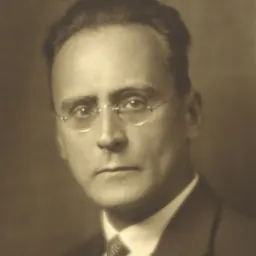


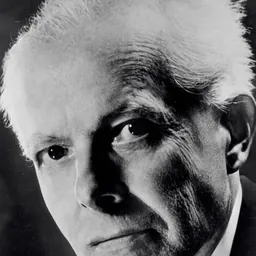
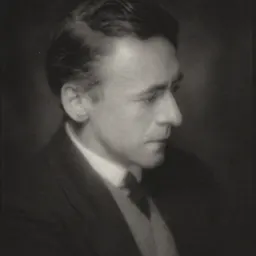

Related people
Same field, nearest in time


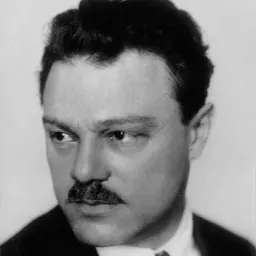
Contemporaries
People whose lives overlapped Edward Clark's


Frequently asked questions
Who was Edward Clark?
English conductor
When was Edward Clark born?
Edward Clark was born on 10 May 1888 in Newcastle upon Tyne.
When did Edward Clark die?
Edward Clark died on 30 April 1962 in London.
What was Edward Clark's occupation?
Edward Clark was a conductor, journalist, record producer, composer and music conductor.
What nationality was Edward Clark?
Edward Clark was British.
Sources & further reading
· DBpedia: Edward Clark (conductor)
Cite this page
APA: Biography.guide. (2026). Edward Clark. https://biography.guide/edward-clark-conductor/
MLA: "Edward Clark." Biography.guide, https://biography.guide/edward-clark-conductor/.
Chicago: "Edward Clark." Biography.guide. https://biography.guide/edward-clark-conductor/.
Data last updated: 2026-09-22 · Spot an error? Report a correction.
Page generated 2026-09-27 05:26 UTC