
About Edward Both
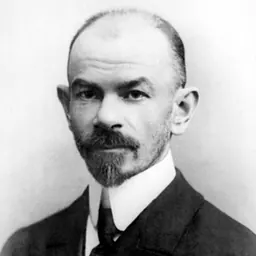
Lived 1908 – 1987 (aged 79). Edward Both was an Australian inventor.
Edward Thomas "Ted" Both, OBE (26 April 1908 – 18 November 1987) was an Australian inventor credited with the development of a number of medical, military, and general-purpose inventions. He was assisted by his brother, Donald Both, and together the brothers ran their company Both Equipment Limited, located in Adelaide, South Australia. These included a low-cost "iron lung" which was dubbed the Both Cabinet Respirator, a humidicrib, the first portable electrocardiograph and the "visitel" – a forerunner to the modern fax machine. His inventions gained him an OBE in 1940, and his work led to Both being given the moniker "Edison of Australia".
Early life and education The son of James Alexander Both (1869-1952), known as "Alex", and Lucy Victoria Both (1875-1953), née Thomas, Edward Thomas Both was born at Caltowie, (near Jamestown) in South Australia, on 26 April 1908. His parents had five children, of which Edward (known as "Ted") was the eldest, and his brother, Donald James Ross Both (1914-2005), known as "Don", their third son, was the youngest of the five children.
Both was schooled in the local area, attending Caltowie Public and Jamestown High schools, and proved to be a good student, sufficiently so that when he was sixteen Both began studying at the Physics Department at the University of Adelaide. There he caught the attention of Kerr Grant, a physics professor, who subsequently appointed him as his personal assistant.
In 1932 an electrocardiograph (ECG) developed by Both impressed Grant, and as a result Grant had a facility installed next to the university where Both could design and produce medical equipment.
Both's cardiograph was an improvement on previous examples because it showed the heart's action instantly. a lightweight, comparatively inexpensive respirator made out of plywood (the name "iron lung" continued to be used by many, in spite of the wooden construction). The design proved effective, and the respirators were soon employed throughout Australia. Indeed, even as recently as 2003 there were several Both respirators still being used in private residences.
In 1938 Both was in England to sell his ECG machines when he heard a request over BBC Radio for an iron lung to assist an individual suffering from poliomyelitis. With the assistance of the South Australian Agent-General, Both set up shop in a hired workshop and produced a few of his "cabinets", one of which was featured in a film produced by the Nuffield Department of Anaesthetics at Radcliffe Infirmary. The film was viewed by William Morris (Lord Nuffield), who was inspired to construct the devices at his Morris Motors Limited factory and offer them, free of charge, to any hospital in the Commonwealth that requested one. In the years that preceded World War II, approximately 1800 Both-Nuffield respirators were supplied to hospitals around the world.
On his return from England Both created an ultracentrifuge for isolating very fine viruses. It was the first of its kind in Australia and could be used on the polio virus. and he was involved in work to develop guided torpedoes.
As a diversion during the war Both designed a Punch and Judy machine that showed Hitler being hit with an umbrella by Chamberlain whenever a coin was put in the slot. The money raised by the machine went to charity. With his brother he continued to work in medical equipment, developing a humidicrib, a new concept in design for blood transfusion equipment, and an electro-encephalograph. The electro-encephalograph designed and manufactured by Both Equipment Limited was used as an aid to the diagnosis of nervous disorders through its recording of the electrical activity of the brain.
They contracted with CSIRO Wool Textile Research Laboratories (W.T.R.L.) in Geelong to supply four pen recorders. Both had early demonstrated a revolutionary recorder for their electrocardiograph (ECG — see above) which employed a diamond stylus leaving a track on a glass plate, but these may have been the more conventional ink-and-paper variety. BWD Electronics were supplying suitable amplifiers concurrently.
Both also worked in other fields: amongst his post-war projects were the electric scoreboards for the 1952 Davis Cup and the 1956 Summer Olympics in Melbourne. The Olympic scoreboard was made up of 10,000 light bulbs and could show all of the letters of the alphabet along with numerals. Along with the scoreboards two versions of a pen recorder were developed and produced by Both: one was used at Woomera for weapons research and the other was used for Antarctic Research, CSIRO, universities, hospitals and medical and industrial research. and was considered to be the "foremost among designers of intricate tools of the medical trade in South Australia".
In 1940 Edward Both was awarded Order of the British Empire (OBE).
Personal life Both married Lily Eileen Maud Naughton, at Essendon, Victoria on 16 September 1937. Throughout his life Both enjoyed sports, especially swimming and tennis, although he had a reputation for possessing an "exhausting capacity for work".
The South Australian Museum holds a Both respirator in its store in Netley.
Don’t just read it —
keep it.
Full-length biographies made to live with: read them, listen on the way to work, watch them tonight.
- E-book
- Audio
- Video
Instant download · yours to keep · every purchase keeps this site free
Important facts
People in Edward Both's life
Named in this biography and alive at the same time




Related people
Same field, nearest in time



Contemporaries
People whose lives overlapped Edward Both's


Frequently asked questions
Who was Edward Both?
Australian inventor
When was Edward Both born?
Edward Both was born on 26 April 1908 in Caltowie.
When did Edward Both die?
Edward Both died on 18 November 1987 in Mount Beauty.
What was Edward Both's occupation?
Edward Both was an inventor.
What nationality was Edward Both?
Edward Both was Australian.
Sources & further reading
Cite this page
APA: Biography.guide. (2026). Edward Both. https://biography.guide/edward-both/
MLA: "Edward Both." Biography.guide, https://biography.guide/edward-both/.
Chicago: "Edward Both." Biography.guide. https://biography.guide/edward-both/.
Data last updated: 2026-09-22 · Spot an error? Report a correction.
Page generated 2026-09-27 05:18 UTC