
About Edvard Schiffauer
Born 1942. Edvard Schiffauer is a Czech composer.
Tomáš Edvard Schiffauer (born 26 March 1942), more commonly known as Edvard Schiffauer, is a Czech composer of contemporary classical music. Although his oeuvre consists largely of incidental music, along with a significant output in chamber music, ranging from duets to large wind ensemble works often characterized by unorthodox instrumental combinations, he is also recognized for his vocal works, including operas, an oratorio, and a mass.
Biography
Edvard Schiffauer was born in Ostrava in the Protectorate of Bohemia and Moravia (now the Czech Republic) in an educated upper-middle-class family. However, the family's quality of life degraded after the communist 1948 Czechoslovak coup d'état. In 1960, Schiffauer started his studies at the Technical University of Ostrava, which he discontinued, instead completing his master's degree at the Pedagogical Institute of the University of Ostrava in 1964. He also began studying musical composition in the Academy of Performing Arts in Prague.
In 1961, Schiffauer and other students established the theatre Divadélko Pod okapem (Little Theatre under the Gutter), which became an Ostrava equivalent of the Semafor Theatre, in Prague. Furthermore, he was involved in the foundation of the Divadlo Waterloo (Waterloo Theatre), where his musical Syn Pluku (Son of the Regiment) was performed in 1968. Later, the Waterloo Theatre was banned by authorities in the normalization era in Czechoslovakia, and a large-scale court trial against those involved in the theatre and specifically in this musical's production was held. As a result, Schiffauer was expelled from the Academy of Performing Arts and sentenced to nine months of imprisonment.
He served his sentence in the prison in Plzeň-Bory, where he drafted early versions of his children's opera Vrať nám, ptáku, hastrmana (Bring us Hasterman back, Bird) with author Ivan Binar, his friend and later Charter 77 signatory.
After the Velvet Revolution, Schiffauer was allowed to complete his university education, which he did at the Janáček Academy of Music and Performing Arts, and could fully dedicate his time to musical composition. During his career he taught in the Janáček Conservatory in Ostrava and in the Silesian University in Opava.
Original: Pamflety. Collection of scenic music and songs. Premiered on 14 January 1969 in the Theatre Waterloo.
Original: Syn Pluku. This satirical musical was the cause of Schiffauer's arrest in 1972. Also performed in churches of the Czech Republic, Poland, Slovakia, the Netherlands, and Denmark. This piece was also published on YouTube. Listen to this mass
Original: Vrať nám, ptáku, hastrmana!. This is an opera for kids. One of Schiffauer's best-known compositions. The outline for the opera was drawn with Ivan Binar in the prison of Plzeň-Bory. Released on a standalone CD titled Vrať nám, ptáku, hastrmana. This opera was premiered on 4 September 2015 in the Puppet Theatre of Ostrava. Under the title Zob, Zob, Zoban!, this opera was premiered in the National Moravian-Silesian Theatre (in Antonín Dvořák Theatre), on 24 September 2017. Also, under the name of "Nøkkemannen Lucian", this opera was premiered in Norway in the Ringsaker Opera Theatre, in Ringsaker, on 29 May 2019. Listen to a part of this piece.
Original: Škádlení. For three mixed choirs and capella.
Original: Jízlivosti. For male voice and harp. Premiered in 1982 in the Hudební současnost (Musical Contemporaneity) festival, in Ostrava.
Original: Malé večerní vstupné. For French horn quartet.
Original: Zoologická suita. For brass quintet. Premiered in 1985 in the Hudební současnost (Musical Contemporaneity) festival, in Ostrava.
Original: Hymnus Moravy. For fourteen brass instruments.
Original: Hudba k bílému vínu (Nejlépe sudové). This composition was published in a CD.
Original: ...a kytička zůstává. For flute, cello and piano. Written while grieving the composer's mother's death. The title refers to Schiffauer's memory of his mother's funeral, at which her coffin was adorned by a flower, the final ornament of her coffin (and thus indeed of her existence) that was perceived by the composer before she was ceremoniously taken away.
Original: Křížová výprava. Scenic oratorio buffo.
Original: Vánoční zpívání doma, i jinde. For mixed choir. Collection of carols from all over the world edited by Schiffauer, included in the CD titled Vánoce (Christmas) (also contains op.4 and op.21), released in 1998.
Original: Zajíc, zajíc!. Incidental music.
Original: Ondráš a Juráš, Pán Lysé hory. Tragic opera comedy.
Original: Šepoty. For female voice and string trio.
Original: Tři malé Vánoční pastorely. For wind octet. Included in the CD Vánoce (Christmas) (also contains op.4 and op.17) released in 1998.
Original: Chytrosti. For three female voices and magnetic tape.
Original: Zpívání o Rusalce. Incidental music.
Original: Hříšná toccata.
Incidental music.
Original: Návraty. For solo bayan.
Original: Úlety s lidovou písní. For female vocal trio, viola and guitar.
Original: Obrázky k vernisáži II, správně Hudba k vernisáži II. For harp.
Original: Výkřik. For string orchestra.
Original: Fragment neubarokní sonáty. For string orchestra and violin.
Original: "Moravský Suitek". For clarinet quartet. The Suitek is the name of a musical form invented by Schiffauer. The suffix "-ek" indicates a diminutive in Czech. "Suitek" thus roughly translates to "little suite."
Original: Slépky. For three flutes, string orchestra, and whip.
Original: Komorná v nesnázích. For soprano and violin.
Original: Za pět na pět. For cello, piano, and percussion instruments. A march composed of two movements.
Original: Třífletnové pelemele pro králíka Fialu. For three flutes and various percussion instruments. Composed of six movements, each corresponding to a chapter of a tale written by Ivan Binar (who also wrote, notably, the libretto for Op. 5), titled Králík Fiala (Fiala the Rabbit). This piece has been published on YouTube. Listen to this work.
Original: Serenáda transatlantická. For solo piano. Collaborative composition involving Schiffauer as well as his great-nephew Jakub Edward Schiffauer Medraj and his brother Leopold Jiří Schiffauer, whereby each composer wrote a continuation, however long as deemed natural, on material written by another participant prior. This was carried out in 2020–2021, the three composers sending each other their continuations back and forth across the Atlantic Ocean (hence the title) during the COVID-19 pandemic. Later, in 2022, the entirety of the work was revised and molded together by Schiffauer Medraj, filling gaps, rearranging, and adding more coherent transitions as suit a more natural flow of the music.
Unknown dates
Title Notes But I, I... Original: Ale já přece.... Dark grotesque opera. Just like Tree Trunks Original: Jako kmeny stromů. For symphonic orchestra. Sonata for Solo Cello Jotunheimen – Moravian Boy on a Crossing in Sydney Original: Kluk z Moravy na přechodu v Sydney. For solo piano. About Love with Us Original: O lásce u nás. For voice and piano. A Fairytale about Love, Fantasy in three Parts Original: Pohádka o lásce, fantazie ve třech částech. This piece appeared in a CD released in 2011 named Czech and Moravian Oboe Music. Performed on 11 January 2013 by Czech oboist Marlen Vavriková in the Madsen Recital Hall and was assisted by BYU faculty pianist Jeffrey Shumway. Seven Variations for Piano Original: Sedm variací pro klavír. The Happy Prince Original: Št'astný princ. For two female voices, recitation, violin, and guitar. Music to accompany the recounting of Binar's adaptation of Oscar Wilde's tale "The Happy Prince" from his collection The Happy Prince and Other Tales Monologue from Mrštík brothers' play for solo voice Maryša Premiered on 13 November 2019 in the Academy of Performing Arts in Prague Gallery. Also performed on 30 October 2009 in the Komorní Scéna Aréna (Aréna Chamber Theatre).
Don’t just read it —
keep it.
Full-length biographies made to live with: read them, listen on the way to work, watch them tonight.
- E-book
- Audio
- Video
Instant download · yours to keep · every purchase keeps this site free
Important facts
People in Edvard Schiffauer's life
Named in this biography and alive at the same time

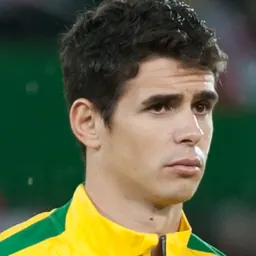
Related people
Same field, nearest in time
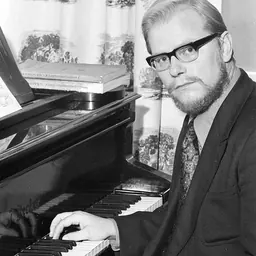
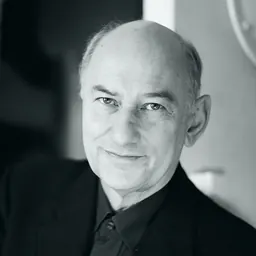


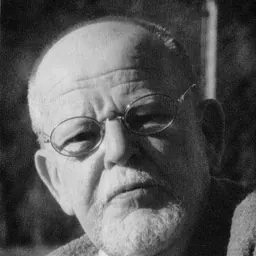

Contemporaries
People whose lives overlapped Edvard Schiffauer's

Frequently asked questions
Who is Edvard Schiffauer?
Czech composer of classical music
When was Edvard Schiffauer born?
Edvard Schiffauer was born on 26 March 1942 in Ostrava, Zábřeh.
What is Edvard Schiffauer's occupation?
Edvard Schiffauer is a composer.
What nationality is Edvard Schiffauer?
Edvard Schiffauer is Czech.
Sources & further reading
· Wikipedia: Edvard Schiffauer
Cite this page
APA: Biography.guide. (2026). Edvard Schiffauer. https://biography.guide/edvard-schiffauer/
MLA: "Edvard Schiffauer." Biography.guide, https://biography.guide/edvard-schiffauer/.
Chicago: "Edvard Schiffauer." Biography.guide. https://biography.guide/edvard-schiffauer/.
Data last updated: 2026-09-22 · Spot an error? Report a correction.
Page generated 2026-09-27 05:02 UTC