
About Eduardo Mendoza Garriga
Born 1943. Eduardo Mendoza Garriga is a Spanish linguist, screenwriter, novelist, translator, writer and playwright.
Eduardo Mendoza Garriga (born 11 January 1943) is a Spanish novelist, playwright, and essayist. His first novel, La Verdad sobre el Caso Savolta (The Truth About the Savolta Case), published in 1975, reflected the social changes as Spain transitioned to democracy, and was very successful. His 1986 novel, La Ciudad de los Prodigios (The City of Marvels), is widely acclaimed, and he is also known for his "mad detective" parody novels, in particular El Laberinto de las Aceitunas (The Olive Labyrinth, 1982).
Early life and education Eduardo Mendoza Garriga was born on 11 January 1943 in Barcelona. He currently lives in London.
Career In 1975, Mendoza published his very successful first novel, La Verdad sobre el Caso Savolta (The Truth About the Savolta Case), where he shows his ability to use different resources and styles. The novel is considered a precursor to the social change in the Spanish post-Franco society and the first novel of the transition to democracy. He describes the union fights at the beginning of the 20th century, showing the social, cultural and economic conditions of workers in Barcelona by that time.
His most acclaimed novel is probably La Ciudad de los Prodigios (The City of Marvels, 1986), about the social and urban evolution of Barcelona between the Universal Expositions of 1888 and 1929. It was adapted for film by Mario Camus in 1999.
In 1992, he published the novel, El Año del Diluvio (The Year of the Flood), which tells of the inner conflicts faced by Sister Consuelo after she meets and falls in love with Augusto Aixelâ, with evocative descriptions of the post-civil war prevailing deprivations in Spain by that time. In 1996, he published his third major Barcelona-related novel, this time set in the 1940s, Una Comedia Ligera (A Light Comedy).
Several of Mendoza's novels feature the "mad detective", a peculiar character, a nameless accidental-detective locked up in a mental hospital. The first of these novels, El Misterio de la Cripta Embrujada (The Mystery of the Enchanted Crypt, 1979) is a parody with hilarious moments mixing hard-boiled genre with Gothic narrative. The second novel of the saga, El Laberinto de las Aceitunas (The Olive Labyrinth, 1982) is one of his most successful works. The third novel of the saga, La Aventura del Tocador de Señoras (The Adventure of the Ladies' Dressing Table), and the fourth one, El Enredo de la Bolsa y la Vida (The Money and the Life Muddle), were published in 2001 and 2012, respectively. The 5th novel was released in 2015 under the title of El Secreto de la Modelo Extraviada (The Secret of the Missing Model) with great success.
The Spanish newspaper El País published two of his novels in instalments, Sin Noticias de Gurb (No Word from Gurb, 1990) and El Último Trayecto de Horacio Dos (The Last Journey of Horatio Dos, 2001), both of them science fiction comedy novels.
In 1993 he published his first play, Restauració (Restoration), written in Catalan and later translated into Spanish by Mendoza himself. This was followed by two other plays, with the three works published together in 2017.
In 2018 he published the novel El Rey Recibe (The King Receives), the first book in the Three Laws of Motion trilogy, which explores the major developments of the second half of the 20th century.
Critical appraisal Mendoza's narrative studies divide his work into serious or major novels, and humorous or minor ones, although recent studies have shown the seriousness, criticism and transcendence in his parodic novels, as well as the humour present in his serious ones, due to the influence of the characteristics of the postmodern novel.
Recognition and awards Mendoza is considered among the most important Spanish living writers. He is included in the so-called Spanish New Narrative.
He has won many awards, including: 1976: Critics Prize, for debut novel La Verdad sobre el Caso Savolta 2010: Premio Planeta de Novela, for his novel Riña de Gatos. Madrid, 1936 (An Englishman in Madrid) 2013: European Book Prize (fiction), also for An Englishman in Madrid 2015: Franz Kafka Prize, the first Spanish writer to win it 2016: Miguel de Cervantes Prize, the most prestigious prize for Spanish-written literature 2024: Premio Cultura (Culture Award) in the Premios Vanguardia 2025: Princess of Asturias Award in Literature.
Don’t just read it —
keep it.
Full-length biographies made to live with: read them, listen on the way to work, watch them tonight.
- E-book
- Audio
- Video
Instant download · yours to keep · every purchase keeps this site free
Important facts
People in Eduardo Mendoza Garriga's life
Named in this biography and alive at the same time
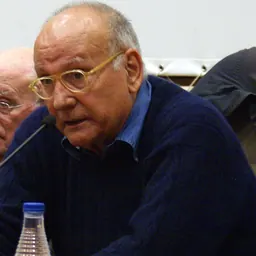
Related people
Same field, nearest in time

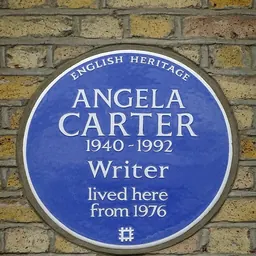


Contemporaries
People whose lives overlapped Eduardo Mendoza Garriga's



Frequently asked questions
Who is Eduardo Mendoza Garriga?
Spanish writer
When was Eduardo Mendoza Garriga born?
Eduardo Mendoza Garriga was born on 11 January 1943 in Barcelona.
What is Eduardo Mendoza Garriga's occupation?
Eduardo Mendoza Garriga is a linguist, screenwriter, novelist, translator, writer and playwright.
What nationality is Eduardo Mendoza Garriga?
Eduardo Mendoza Garriga is Spanish.
Sources & further reading
· Wikipedia: Eduardo Mendoza Garriga
· DBpedia: Eduardo Mendoza Garriga
Cite this page
APA: Biography.guide. (2026). Eduardo Mendoza Garriga. https://biography.guide/eduardo-mendoza-garriga/
MLA: "Eduardo Mendoza Garriga." Biography.guide, https://biography.guide/eduardo-mendoza-garriga/.
Chicago: "Eduardo Mendoza Garriga." Biography.guide. https://biography.guide/eduardo-mendoza-garriga/.
Data last updated: 2026-09-20 · Spot an error? Report a correction.
Page generated 2026-09-27 05:29 UTC