
About Eduardo Benot
Lived 1822 – 1907 (aged 84). Eduardo Benot was a Spanish linguist, writer, politician, romanist, grammarian and lexicologist.
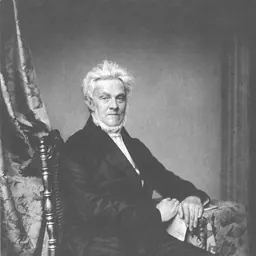
Eduardo Benot Rodríguez (26 November 1822 – 27 July 1907) was a Spanish lexicographer, academic, poet, educator and politician advocate of federal republicanism. Follower of Francisco Pi y Margall, he briefly served as Minister of Development during the First Spanish Republic.
Biography Early life Born in Cádiz on 26 November 1822, his father had Italian origin. He was a feeble child during infancy. He took studies at the Colegio de San Pedro and later the Colegio de San Felipe Neri.
Already writing as teenager for the newspaper El Defensor del Pueblo, he later wrote for La Alborada, as well he authored 3 theatre pieces. overcoming Juan Prim at the election, although Prim was elected anyway as he was candidate in another district.
He was one of the supporters of a manifesto promoted by Francisco Pi y Margall on 10 May 1870 which reaffirmed on "pactist" federalism, in response to the so-called "Declaration of the Republican Press" (published on 7 May 1870), which attempted to resignify federalism as a simple administrative decentralization. He was later elected Senator in representation of the province of Girona in the 1872–1873 period.
Following the proclamation of the First Spanish Republic in February 1873, he earned again a seat at the Congress of Deputies in representation of the district of Algeciras (Cádiz) at the May 1873 election. He was appointed as Minister of Development of the executive power presided by Pi y Margall in June 1873.
His short ministerial tenure, barely 17 days, delivered the creation of the (predecessor to both the National Geographical Institute and the National Statistics Institute), and the draft of the Ley de 24 de julio 1873, sobre el trabajo en los talleres y la instrucción en las escuelas de los niños obreros (published after his exit from government), the so-called "Benot Law" regulating child labour, entailing the first State intervention in labour relations ever in Spain. The law failed to be effectively enforced, however. He also forced ayuntamientos to pay for teachers' wage arrears. He was replaced by at the ministerial portfolio. he was later elected as numerary member, taking possession of the Chair Z on 14 April 1889, reading ¿Qué es hablar? a speech replied by Víctor Balaguer. His contributions to Spanish grammar have received diverse and lavish praises, but they tend to agree in pointing out the "modernity" of his approaches, sometimes even considered to be a "direct precursor" of "modern linguistics".
Benot would return to the Lower House, elected in representation of Madrid at the 1893 election.
He replaced Pi y Margall at the helm of the Federal Democratic Republican Party when the latter died. He could not however avoid the fracture of the party in May 1905. Catalanist republicans would reject from then on the insertion within the main stem of the Spanish left-wing.
Ill and progressively blind since 1901, he died poor at Calle del Marqués de Villamagna 6, Madrid, on 27 July 1907. The funeral procession that took place on the next day was attended by , , Azcárate, Salmerón and Labra and by an attendance formed chiefly by republican sympathizers.
Don’t just read it —
keep it.
Full-length biographies made to live with: read them, listen on the way to work, watch them tonight.
- E-book
- Audio
- Video
Instant download · yours to keep · every purchase keeps this site free
Important facts
People in Eduardo Benot's life
Named in this biography and alive at the same time

Related people
Same field, nearest in time

Contemporaries
People whose lives overlapped Eduardo Benot's




Frequently asked questions
Who was Eduardo Benot?
Spanish author (1822-1907)
When was Eduardo Benot born?
Eduardo Benot was born on 26 November 1822 in Cádiz.
When did Eduardo Benot die?
Eduardo Benot died on 27 July 1907 in Madrid.
What was Eduardo Benot's occupation?
Eduardo Benot was a linguist, writer, politician, romanist, grammarian and lexicologist.
What nationality was Eduardo Benot?
Eduardo Benot was Spanish.
Sources & further reading
Cite this page
APA: Biography.guide. (2026). Eduardo Benot. https://biography.guide/eduardo-benot/
MLA: "Eduardo Benot." Biography.guide, https://biography.guide/eduardo-benot/.
Chicago: "Eduardo Benot." Biography.guide. https://biography.guide/eduardo-benot/.
Data last updated: 2026-09-26 · Spot an error? Report a correction.
Page generated 2026-09-27 05:15 UTC