
About Eduardo Acevedo
Lived 1851 – 1921 (aged 70). Eduardo Acevedo was an Uruguayan writer, diplomat, journalist, politician, novelist and short story writer.
Eduardo Acevedo Díaz (20 April 1851 – 18 June 1921a), was an Uruguayan writer, politician and journalist.
Early life He was born in Villa de la Unión, Montevideo, the son of Fátima Díaz and Norberto Acevedo (brother of Eduardo Acevedo Maturana, whom Acevedo Díaz named "uncle Eduardo"). His maternal grandfather was General Antonio Díaz, who was a minister of the tenure of Manuel Oribe in the Gobierno del Cerrito. Between 1866 and 1868, he earned his baccalaureate degree and in the process became friendly with Pablo de Maria and Justino Jiménez de Aréchaga in the Greater University of the Republic.
In 1868, he was associated the University Club. He entered the Faculty of Law in 1869. On 18 September 1869, he published, in the Century, his first article, a tribute to his maternal grandfather who had died six days before. In April 1870, he left University to join the revolutionary movement of Timoteo Aparicio against the Colorado government of Lorenzo Batlle.
Politics He wrote of the aim of the Revolution of Lanzas, in an article entitled "a tomb in the forest" published in the newspaper the Republic in 1872. He signed the manifesto "Profession of a Rationalist Faith" in 1872, which asserted the immortality of the soul and the existence of the Supreme God in opposition to the Pope.
The three-month Revolutionary War was concluded in July 1872, and in Montevideo, Diaz began the militarization of the National Party. He wrote for Democracy in 1873, and started the Uruguayan Magazine in 1875.
From these organs of press, Varela attacked the Pedro government, and he was sent into exile. After the failure of the Tricolor revolution against the government, he settled in Argentina, where he continued his journalistic activities living in Plata and Dolores. He returned to Uruguay, but his critics (Lorenzo Latorre) from the Democracy forced him to flee to Buenos Aires. On his return to Montevideo, he founded the National (important in the history of the Uruguayan media).
He was made a senator by the National Party and took part in the second insurrection led by the nationalist Caudillo Aparicio Saravia, in 1897. He was a member of the Council of State in 1898, but moved away politically from Saravia in later years, deciding to support José Batlle y Ordñez. This distanced him from the National Party, which he explained in a Political Letter published in the National. Batlle sent him on diplomatic missions to various countries in Europe and to America, from 1904 to 1914.
Death and remembrance He did not return to Uruguay but died in Buenos Aires, Argentina, on 18 June 1921, requesting that his remains not be repatriated to his homeland.
One of the chairs of the National Academy of Letters of Uruguay was named in his honor, in recognition of his work.
Works Brenda (1886) Ismael (1888) Nativa (1890)b La boca del tigre (1890) La novela histórica (1890) Etnología indígena (1891) Grito de gloria (1893) Soledad (1894) Minés (1907) Lanza y sable (1914)
Stories Un sepulcro en los bosques El primer suplicio El combate de la tapera (1892) Desde el tronco de un ombú (1902)
Plays Carta política La civilización americana. Ensayos históricos La última palabra del proscrito Épocas militares en el Río de la Plata (1911) El libro del pequeño ciudadano
Don’t just read it —
keep it.
Full-length biographies made to live with: read them, listen on the way to work, watch them tonight.
- E-book
- Audio
- Video
Instant download · yours to keep · every purchase keeps this site free
Important facts
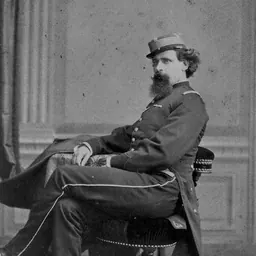
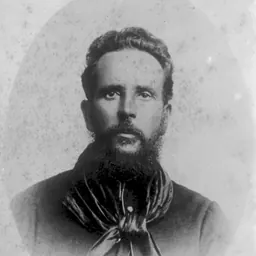
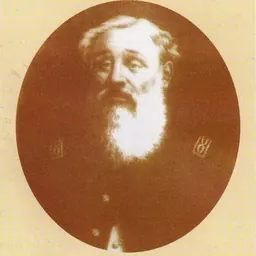
People in Eduardo Acevedo's life
Named in this biography and alive at the same time


Related people
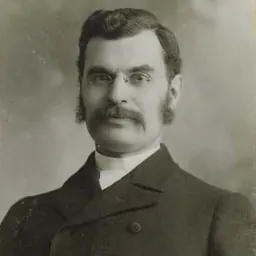
Same field, nearest in time

Contemporaries
People whose lives overlapped Eduardo Acevedo's



Frequently asked questions
Who was Eduardo Acevedo?
Uruguayan writer, politician and journalist (1853-1921)
When was Eduardo Acevedo born?
Eduardo Acevedo was born on 20 April 1851 in Montevideo.
When did Eduardo Acevedo die?
Eduardo Acevedo died on 18 June 1921 in Buenos Aires.
What was Eduardo Acevedo's occupation?
Eduardo Acevedo was a writer, diplomat, journalist, politician, novelist and short story writer.
What nationality was Eduardo Acevedo?
Eduardo Acevedo was Uruguayan.
Sources & further reading
· DBpedia: Eduardo Acevedo Díaz
Cite this page
APA: Biography.guide. (2026). Eduardo Acevedo. https://biography.guide/eduardo-acevedo-writer/
MLA: "Eduardo Acevedo." Biography.guide, https://biography.guide/eduardo-acevedo-writer/.
Chicago: "Eduardo Acevedo." Biography.guide. https://biography.guide/eduardo-acevedo-writer/.
Data last updated: 2026-09-20 · Spot an error? Report a correction.
Page generated 2026-09-27 05:24 UTC