
About Eduard von Keyserling
Lived 1855 – 1918 (aged 63). Eduard von Keyserling was a Russian writer, playwright and poet.
Johann Heinrich Eduard Nicolaus Graf von Keyserling (May 14, 1855 – September 28, 1918) was a Baltic German fiction writer and dramatist, an exponent of literary impressionism and associated with the historic region of Courland.
Biography
Keyserling was born at Schloss Tels-Paddern (now in Kalvene parish, South Kurzeme Municipality, Latvia), Courland Governorate, then part of the Russian Empire. He belonged to the Baltic German family of Keyserlingk and was a nephew of the geologist Alexander Keyserling. He died in Munich, Bavaria.
Keyserling's early novels Fräulein Rosa Herz. Eine Kleinstadtliebe (1887) and Die dritte Stiege (1892) were influenced by Naturalism. The later novels are more finely nuanced and less interested in assembling details. He is always interested in the interplay of light and natural objects. His novels and novellas are usually set in the German Baltic provinces, both in the noble houses and gardens and also in the fir forests and the outdoors generally. Most of his novels are suffused with a certain melancholy. They are peopled by minor aristocrats. Sometimes there are contrasting figures from a less exalted class; often this is a "child of nature," a person uncorrupted by civilization. Frequently there is a clash of generations. His novellas and novels, after 1902, place Keyserling at the forefront of German literary Impressionism. His essays on general and cultural questions, like his theater plays, are forgotten.
Keyserling enjoyed a literary reputation both in Germany and in the United States. His novels, translated into English in the late 1920s, were reviewed by literary critics, particularly in newspapers of record. His works were edited and anthologized for use in language pedagogy, perhaps as much for their accessible style as for their appealing story lines. His language is unusually chaste and concise. Sentences are never very long or complex.
A subtle and elegant stylist, Keyserling's narrative is unforgettable for its evocative ambience and "feel." His most emblematic work is perhaps Fürstinnen (Princesses), only superficially related to the typical German 19th century Schlossroman (the novel set in a castle or manor house). Somehow midway between Ivan Turgenev and Franz Kafka, there is a certain pessimistic kinship between Keyserling and Anton Chekhov.
Works
Fräulein Rosa Herz. Eine Kleinstadtliebe (1887) Die dritte Stiege (1892) Die schwarze Flasche (1902) Beate und Mareile. Eine Schloßgeschichte (1903) Schwüle Tage (1904) Seine Liebeserfahrung (1906) Dumala (1908) Bunte Herzen (1909) Wellen (1911) Abendliche Häuser (1914) Im stillen Winkel (1914) Nicky (1914) Am Südhang (1914/16) Fürstinnen (1917) Feierstagskinder (1918) Gesammelte Erzählungen, ed. E. Heilborn, 4 Bde., Frankfurt a.M.1971–1973
Works Translated into English
Gay Hearts: 1909. (= Bunte Herzen). Translated by Bayard Quincy Morgan. German Classics of the 19th and 20th Centuries, v. 19. New York: The German Publication Society, 1914. Twilight. (= Abendliche Häuser, Harmonie, and Kersta.) Translated respectively by James Ashton, Amy Wesselhoeft Von Erdberg, and A. W. Von Erdberg and E. Drew Arundel. New York: Macaulay, 1927. The Curse of the Tarniffs. (= Beate und Mareile). Translated by Arthur Jacob Ashton. New York: Macaulay, 1928. Tides. (= Wellen) Translated by Arthur Jacob Ashton. New York: Macaulay, 1929. The Man of God. (= Dumala) New York: Macaulay, 1930. "Princesses" (=Fürstinnen). Translated by John B. Rutledge. "Holiday Children" (= Feiertagskinder). Translated by John B. Rutledge. "Number 2, Margaretenstrasse" (= Die Dritte Stiege). Translated by John B. Rutledge. "In a Quiet Corner" (= ) Translated by John B. Rutledge. "Sultry Days" (= Schwüle Tage) Translated by Tony Malone (2018) Waves. (= Wellen) Translated by Gary Miller. Cambridge: Dedalus Ltd., 2019. "Experiences of Love" (= Seine Liebeserfahrung) Translated by Tony Malone (2019) "Neighbours" (= Nachbarn) Translated by Tony Malone (2020) On Southern Slopes (= Am Südhang) Translated by Tony Malone (2023)
Don’t just read it —
keep it.
Full-length biographies made to live with: read them, listen on the way to work, watch them tonight.
- E-book
- Audio
- Video
Instant download · yours to keep · every purchase keeps this site free
Important facts
People in Eduard von Keyserling's life
Named in this biography and alive at the same time


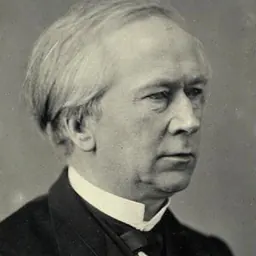
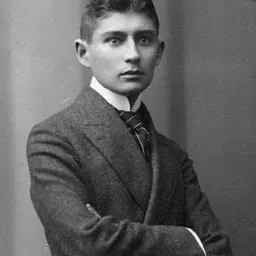
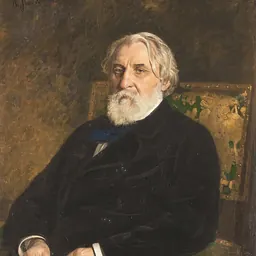

Related people
Same field, nearest in time
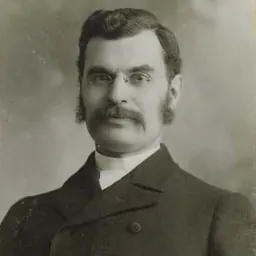
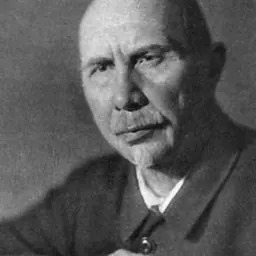
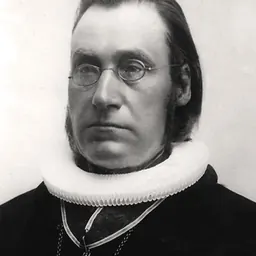
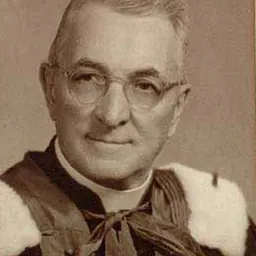
Contemporaries
People whose lives overlapped Eduard von Keyserling's





Frequently asked questions
Who was Eduard von Keyserling?
Baltic German writer (1855–1918)
When was Eduard von Keyserling born?
Eduard von Keyserling was born on 14 May 1855 in Kalvene Parish.
When did Eduard von Keyserling die?
Eduard von Keyserling died on 28 September 1918 in Munich.
What was Eduard von Keyserling's occupation?
Eduard von Keyserling was a writer, playwright and poet.
What nationality was Eduard von Keyserling?
Eduard von Keyserling was Russian.
Sources & further reading
· Wikipedia: Eduard von Keyserling
· DBpedia: Eduard von Keyserling
Cite this page
APA: Biography.guide. (2026). Eduard von Keyserling. https://biography.guide/eduard-von-keyserling/
MLA: "Eduard von Keyserling." Biography.guide, https://biography.guide/eduard-von-keyserling/.
Chicago: "Eduard von Keyserling." Biography.guide. https://biography.guide/eduard-von-keyserling/.
Data last updated: 2026-09-20 · Spot an error? Report a correction.
Page generated 2026-09-27 05:22 UTC