
About Eduard Streltsov
Lived 1937 – 1990 (aged 53). Eduard Streltsov was a Russian association football player and engineer.
Eduard Anatolyevich Streltsov (; 21 July 1937 – 22 July 1990) was a Soviet footballer who played as a forward for Torpedo Moscow and the Soviet national team during the 1950s and 1960s. A powerful and skilful attacking player, he scored the fourth-highest number of goals for the Soviet Union and has been called "the greatest outfield player Russia has ever produced".
Career
Early career Aged 16, Streltsov made his debut for Torpedo during the 1954 season, appeared in every league game and scored four goals. In his second season Streltsov was the league's most prolific goalscorer, scoring 15 goals in 22 games as his side rose to fourth place. when he scored a hat-trick within the first 45 minutes as the Swedish team was defeated 6–0. On his second appearance, a friendly home game against India, he scored three goals again. A further game in Hungary and a goal against France meant that by the start of 1956, Streltsov had scored seven goals for the Soviet Union in four matches. After scoring in a match against Denmark in April 1956, he missed three international matches before returning in September with a goal after three minutes in a 2–1 away victory over West Germany. Streltsov continued to score regularly for Torpedo, managing 12 league goals during the 1956 season, but appeared in two successive defeats for the Soviets before they travelled in November 1956 to the Olympic Games in Melbourne. The Soviets required a replay to overcome Indonesia in the quarter-finals and met Bulgaria in the semi-final.
Streltsov scored the first goal in a 2–0 win in a World Cup qualifying play-off match in Poland which meant the Soviet Union qualified for the 1958 World Cup. by the start of the World Cup year, 1958, his international record stood at 18 goals in 20 games. Streltsov scored five goals in the first eight league matches of the 1958 Top League season, and appeared in a 1–1 friendly draw with England in Moscow on 18 May 1958. halfway through preparations for the Soviet season. The Department of Soviet Football criticised both the player and his club over the timing of the ceremony. Held at Karakhanov's dacha, it was also attended by a 20-year-old woman named Marina Lebedeva, whom Streltsov had never met. The following morning, Streltsov, Ogonkov and Tatushin were all arrested and charged with raping her.
Journalist Kevin O'Flynn writes that since heavy drinking had taken place at the party, the evidence against Streltsov was "confused and contradictory", even from Lebedeva herself. Apart from Streltsov himself, the only members of the team present at his trial were Ogonkov and Tatushin, who appeared as witnesses. and barred from representing the USSR for life. In the camp where he was incarcerated, Streltsov was initially victimised by a young criminal who inflicted so much physical harm on him that he spent four months in the prison hospital, suffering from injuries caused by blows from either an "iron bar or a shoe heel". The Soviets reached the quarter-finals, losing 2–0 to hosts Sweden, a team defeated 6–0 by the Soviet Union during Streltsov's 1955 debut.
Release and return to football
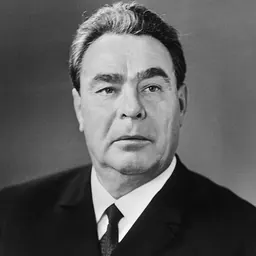
Amateur play First Secretary Leonid Brezhnev (pictured in 1967) helped Streltsov to return to professional football. alt=A black and white photograph of a man in a black suit bearing medals on the left breast, applauding as he looks to his right. Streltsov was released on 4 February 1963, five years into his twelve-year sentence, and owing to the ban from professional play began to split his time between work at the ZiL factory and the study of automotive engineering at the attached technical college. After failing to patch up his differences with Alla, he married Raisa Mikhailovna in September 1963. He started to play for the amateur factory team, which caused it to attract large crowds, both at home and away. When the ZiL side travelled to Gorky for an away match late in the 1964 season, the team's coach received orders from above not to play Streltsov, something which spectators noticed immediately when the match started; during the first half, they began to riot and threatened to burn down the stadium, chanting Streltsov's name. Worried that the angry crowd might go through with this, the Gorky factory chief ordered the ZiL coach to send Streltsov out for the second half. On stepping onto the field, the former Gulag prisoner received a standing ovation.
With Streltsov in the team, ZiL topped the factory league after winning all 11 matches. Although he was not allowed to play for Torpedo, Streltsov attended matches at his old club throughout the season.
Return to professionalism Streltsov was enthusiastically welcomed back by supporters. and scored the first international goal of his comeback a week later in a 2–2 draw with East Germany. An appearance in a 1–0 away defeat against Italy followed two weeks later. although he scored a relatively low six league goals during 1967, his lowest for a full season since his debut year of 1954. Streltsov returned to Torpedo in the capacity of youth team manager following his qualification; he also spent a brief spell as manager of the first team before returning to the youth team in 1982. He also took part in matches contested by former players before dying in 1990 from throat cancer, Seven years later, Marina Lebedeva, the woman Streltsov had confessed to raping, was seen laying flowers at his grave in Moscow on the day after the anniversary of his death. During his early career, this technical ability combined with considerable speed and physical presence to create a formidable all-round forward player. In his later years, with his physical attributes reduced, he emphasised his skill and on-field intelligence to become more of a playmaker, playing further back and setting up attacking moves for team-mates rather than leading them himself. Indeed, for his final two seasons, Streltsov played in an attacking midfield role rather than up front. Despite the eight-year gap between his two spells as a member of the Soviet national team, Streltsov, nicknamed "The Russian Pelé",
Torpedo Moscow's ground, Torpedo Stadium, was redubbed the "Eduard Streltsov Stadium" in 1996. A year later, the Russian Football Union introduced the Strelyets prizes as the most prestigious individual honours in Russian football, awarded annually to the best manager in the Russian league and the best players in each position until discontinued in 2003. A statue of Streltsov was constructed within Moscow's Luzhniki Olympic Complex in 1998, and another was erected by Torpedo outside the stadium bearing his name during the following year.
The Streltsov Committee, formed in 2001, was founded to attempt to have Streltsov's conviction of rape posthumously overturned. The campaign's leader, chess champion Anatoly Karpov, claimed in 2001 that the conviction had prevented Streltsov from becoming the world's best player.
Career statistics
Club Statistics for domestic cup competitions unknown at this time save 1968 Soviet Cup.
International
Honours
A commemorative two-ruble coin bearing Streltsov's likeness was issued in 2010. alt=A silver coin with Strelstov's head and neck illustrated in relief upon it, accompanied by the outlines of a football pitch and a football and his name in Russian. Streltsov on a 2016 Russian stamp from the series "Football Legends"
Torpedo Moscow Soviet Top League: 1965; Ballon d'Or: 13th place (1956),
Don’t just read it —
keep it.
Full-length biographies made to live with: read them, listen on the way to work, watch them tonight.
- E-book
- Audio
- Video
Instant download · yours to keep · every purchase keeps this site free
Important facts
People in Eduard Streltsov's life
Named in this biography and alive at the same time
Related people
Same field, nearest in time


Contemporaries
People whose lives overlapped Eduard Streltsov's




Frequently asked questions
Who was Eduard Streltsov?
Soviet footballer (1937-1990)
When was Eduard Streltsov born?
Eduard Streltsov was born on 21 July 1937 in Perovo.
When did Eduard Streltsov die?
Eduard Streltsov died on 22 July 1990 in Moscow.
What was Eduard Streltsov's occupation?
Eduard Streltsov was an association football player and engineer.
What nationality was Eduard Streltsov?
Eduard Streltsov was Russian.
Sources & further reading
Cite this page
APA: Biography.guide. (2026). Eduard Streltsov. https://biography.guide/eduard-streltsov/
MLA: "Eduard Streltsov." Biography.guide, https://biography.guide/eduard-streltsov/.
Chicago: "Eduard Streltsov." Biography.guide. https://biography.guide/eduard-streltsov/.
Data last updated: 2026-09-20 · Spot an error? Report a correction.
Page generated 2026-09-27 05:33 UTC