
About Eduard Steinberg
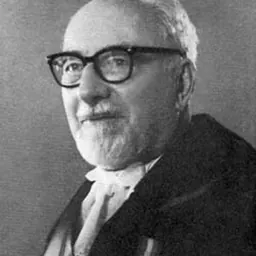
Lived 1937 – 2012 (aged 75). Eduard Steinberg was a Russian and French painter, graphic artist, philosopher, activist shareholder, illustrator and art theorist.
Eduard Arkadevich Steinberg (, also named "Edik Steinberg"; 3 March 1937 – 28 March 2012) was a Russian and French suprematist painter, philosopher and activist.
Biography Steinberg was born in Moscow, the elder son of poet, translator and artist .
Steinberg was born in 1937 - the key year of mass Stalinist political repressions in the USSR, which was also the year when his father Arkady Steinberg was arrested for the first time.
Career Steinberg began his career drawing live models and landscapes and later switched to "metaphysical still lifes".
In the 1960–1980s Steinberg participated in the dissident movement in the USSR, which supported freedom of expression in arts and basic human rights.
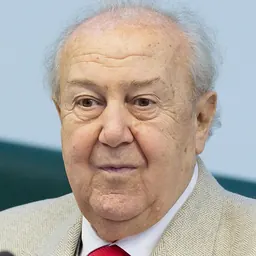
Steinberg became Honorary Members of the Russian Academy of Arts. Taking from the hands of Zurab Tsereteli a medal on a red ribbon, Steinberg said:
He also was Chevalier of the Order of Friendship (2008).
Steinberg’s collaboration with Manufacture de Sevres In 2000, Manufacture de Sevres offered Steinberg to make several items at his discretion. Steinberg choose a vase and three plates. In 2011, a year before his death, he made a table set of six plates with a dish.
Steinberg and Tarusa Shortly after Steinberg's birth, he was brought to the town of Tarusa by his father, although he left the town after his father was arrested in 1937. During his “second coming” to Tarusa after the call of his father, he got his initiation as a painter and a young “Sixtier”, a member of tiny non-conformist layer of progressive independent Soviet intelligentsia which strived to preserve the free spirit of the first years that followed Stalin’s death and the end of the most evil era in the history of USSR. In Tarusa, Steinberg became acquainted with progressive writers and poets and philosophers such as Paustovsky, Schiffers, who served as guiding lights in his own spiritual searches.
Due to late-Brezhnev era repressions against intelligentsia and mass emigration of independent people from the USSR in 1970s and 1980s, the former favorable cultural climate of Tarusa had mostly evaporated, which made Steinberg’s comeback to the town problematic, because In the 1960s–1980s, Steinberg participated in the dissident movement in the USSR, which supported freedom of expression in art and basic human rights.
However, by the end of the 1990s a certain aura of the 1960s started to dawn again. Moscow's artistic elite was again drawn to Tarusa. Tarusa confirmed its reputation as “Russian Barbison on Oka river” as it once again became a popular place for many painters and artists. Those people brought about what was later called “The second revival of Tarusa” as a special cultural place on Russia’s map, a peculiar spot of free-thinking and inner freedom for many representatives of modern-day intelligentsia who were lacking those features in big cities, with their overpowering bureacracy and rigid social order. The revival of Tarusa was marked by instituting annual autumn poetry readings in memory of Marina Tsvetaeva and the annual autumn festival of the great musician Svyatoslav Richter, which he himself inaugurated shortly before his death.
This created a new atmosphere in Tarusa which was much more favorable for Steinberg’s artistic search and developments. His own mansion at Paustovsky street where he lived and worked became a sort of art laboratory where he presided over meetings of like-minded person and confederates, who were immersed in art and its problems and future paths. Since his death in 2012, this mansion was made, in accordance with his will, into Tarusa branch of Pushkin Fine Art Museum. Now it houses art exhibitions and summer schools for aspiring young painters.
Selected exhibitions 1992 : , Josef-Albers-Museum in Bottrop, Germany 1995 : , Bochum, Germany 1999 : Morsbroich Museum, Leverkusen 2000 : , Ludwigshafen 2004 : State Russian Museum, Saint Petersburg 2005 : «Eduard Steinberg, Das Leben eines Dreiecks (Gouachen und Gemälde) 1970-2004», Galerie Sandmann, Berlin 2005 : «Russia!» – Solomon R. Guggenheim Museum, New York 2009 : Edik Steinberg at Gallery Claude Bernard, Paris (14 May – 27 June 2009) 2011—2012 : «Passion Bild», Kunstmuseum Bern 2012 : Religiöse Motive in der inoffiziellen Kunst der Sowjetunion
References and sources
Don’t just read it —
keep it.
Full-length biographies made to live with: read them, listen on the way to work, watch them tonight.
- E-book
- Audio
- Video
Instant download · yours to keep · every purchase keeps this site free
Important facts
People in Eduard Steinberg's life
Named in this biography and alive at the same time



Related people
Same field, nearest in time

Contemporaries
People whose lives overlapped Eduard Steinberg's

Frequently asked questions
Who was Eduard Steinberg?
Russian artist (1937-2012)
When was Eduard Steinberg born?
Eduard Steinberg was born on 3 March 1937 in Moscow.
When did Eduard Steinberg die?
Eduard Steinberg died on 28 March 2012 in Paris, 14th arrondissement of Paris.
What was Eduard Steinberg's occupation?
Eduard Steinberg was a painter, graphic artist, philosopher, activist shareholder, illustrator and art theorist.
What nationality was Eduard Steinberg?
Eduard Steinberg was Russian and French.
Sources & further reading
Cite this page
APA: Biography.guide. (2026). Eduard Steinberg. https://biography.guide/eduard-steinberg/
MLA: "Eduard Steinberg." Biography.guide, https://biography.guide/eduard-steinberg/.
Chicago: "Eduard Steinberg." Biography.guide. https://biography.guide/eduard-steinberg/.
Data last updated: 2026-09-20 · Spot an error? Report a correction.
Page generated 2026-09-27 05:09 UTC