
About Edith Ellis
Lived 1876 – 1960 (aged 83–84). Edith Ellis was an American actor, stage actor, playwright and writer.
Edith Ellis (June 1866 – December 27, 1960) (also known as Edith Ellis Baker) was an American actress, director, and playwright. She began her career as a child actress, and then began writing, directing, and producing. Ellis operated several theatres and touring companies throughout her lifetime. She is the author of over thirty-five plays. While not an outspoken feminist, Ellis’s work continuously focused on the issues of women. She also developed her own theory on directing, with a focus on the agency of the actor. Numerous times throughout her life, Ellis produced and directed her own writing.
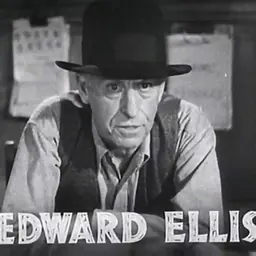
Biography Ellis was born in Coldwater, Branch County, Michigan. She was the older sister of actor Edward Ellis. Her father, Edward C. Ellis, was a Shakespearean actor who began her career by putting her behind the curtain and on the stage from a very early age. She married Frank Baker, a theatre manager, in about 1895. They were married until his death in 1907. Their daughter, Ellis Baker, became an actress. Edith later married C. Becher Furness, a Canadian, in 1909.
Career
Director Ellis began her work as a director with the help of her husband, theatre manager Frank Baker. Ellis and husband secured and managed the Park Theatre in Brooklyn from 1901 to 1902. Ellis was the primary stage director there and her husband managed the administrative end until the theatre burned down at the end of the 1902 season.
Ellis and Baker then leased the Criterion Theatre, also in Brooklyn, where Ellis continued to direct plays. While there, Ellis formed the Baker Stock Company. They later moved to the Berkeley Lyceum in New York City where she directed her own play, The Point of View.
In 1907, Frank Baker died. After his death, Ellis took back her maiden name and resumed directing, acting, and writing. Several times Ellis was head of her own stock companies, travelling or stationary, and wrote, produced, directed, and acted in many plays.
In 1908, Ellis acquired the New York Playhouse in Brooklyn. In 1909, Edith Ellis joined the Society of Dramatic Authors, a feminist group for women dramatics. Including members like Rachel Crothers, this group was a way for Ellis to network with other women in the industry.
Playwright Her first writing attempt was out of necessity, when she and her brother, Edward, were stranded on the road by the unexpected disbanding of their theatrical company. The play was successful enough to pay their way home.
Ellis' plots typically followed one of three trajectories. All three centered around women's issues. The unhappy life of a married woman (Mary Jane's Pa, 1906) Women in the workforce (The Point of View, 1903) Women above the age of forty (The White Villa, 1921) Ellis had difficulty in getting some of her plays produced, as in the case of The White Villa. The White Villa is a play about a woman in an unfulfilled marriage who decides to leave her husband. The play ends with the leading woman now living her life alone while her ex-husband has remarried a younger woman.
One male producer liked The White Villa but wouldn’t produce it. Another male reader (who was married to an actress) said that he enjoyed reading the play, but would never let his wife star in it. A third producer claimed that he would produce the play, except that women in the audience would hate the play’s truthful narrative, saying “Women won’t stand for the truth.” Edith Ellis eventually produced the play herself and would self-produce a majority of her works.
In 1936, Ellis began transcribing works about life after death. She said this idea came from a New England farm boy who was killed by a British soldier in 1781. These works include: Incarnation: A Plea from the Masters, (1936), Open the Door!, (1935), We Knew These Men, (1943) and Love in the Afterlife, (1956)
She also wrote silent film scenarios for Samuel Goldwyn.
Feminism in theatre
In 1909, Ellis joined the Society of Dramatic Authors, a feminist group for women dramatics. Including members like Rachel Crothers, this group was a way for Ellis to network with other women in the industry.
Although Ellis rejected the suffragette title, she was the most vocal directress at the time when it came to her political beliefs concerning women. Ellis’s commercial success as a playwright and director meant that she could present productions with feminist narratives. Having never categorized her work as feminist, she was able to present plays that disrupted expectations of gender roles, particularly the notion that women were passively happy in the domestic sphere.
Additionally, most of the plays that Ellis directed were not written by her, but written by other women. Edith Ellis produced women’s plays almost exclusively.
Directing theory Ellis developed a feminist directing theory. In her words: “My methods differ somewhat from those of the men directors. The men like first to put the company through the rough outline of the play, the mechanics as we say, leaving the characterizations to be developed later along with details and business. I prefer to stay ‘living’ the play from the first and working out the detail as we go slowly along. In this way the sense of reality is created, and the play is already properly colored.”
According to Ellis, women biologically made better directors because women had an ability to impart their knowledge to the cast, whereas male directors did not have the inborn emotional inclination or intuition of women. The only advantage that men had as directors, according to Ellis, was their ability to obtain directing positions. To some scholars, this part of her theory is problematic because Ellis attributes differences in gender to biological causes.
A major element of Ellis’ directing theory was maintaining an actor’s agency regarding character interpretations. According to Ellis, it was crucial that directors not eliminate the intelligence of the actor. As a former actress, Ellis was very familiar with the lowly treatment of actors by their directors. Actresses (female actors) were treated especially poorly by directors, so Ellis made a point to grant actresses agency in her rehearsal and performance space.
Works A Batch of Blunders, 1897 Mrs. B. O'Shaughnessy (Wash Lady), 1900 Because I Love You, 1903 The Point of View, 1904 Mary and John, 1905 The Wrong Man, 1905 Contrary Mary, 1905 Ben of Broken Bow, 1905 The Swallow, 1906 Mary Jane's Pa, 1906 My Man (with F. Halsey), 1910 He Fell In Love With His Wife, 1910 Seven Sisters, 1912 Partners, 1912 The Love Wager, 1912 Verspers, 1912 Fields of Flax, 1912 The Man Higher Up, 1912 The Amethyst Ring, 1913 Cupid's Ladder, 1915 Make Believe, 1915 Man with the Black Gloves, 1915, The Devil's Garden, 1915 Making Dick Over, 1916 Mrs. Clancey's Car Ride, with Edward Ells, 1918 Whose Little Bride Are You, 1919 Bravo, Claudia, 1919 Mrs. Jimmie Thompson (with Norman S. Rose), 1920 The White Villa, 1921 Betty's Last Bet, 1921 The Judsons Entertain, 1922 The Illustrious Tartarin, 1922 White Collars, 1924 The Moon and Sixpence, 1924 The Last Chapter (with Edward Ellis), 1930 The Lady of La Paz, 1926
Don’t just read it —
keep it.
Full-length biographies made to live with: read them, listen on the way to work, watch them tonight.
- E-book
- Audio
- Video
Instant download · yours to keep · every purchase keeps this site free
Important facts
Family & relationships
People in Edith Ellis's life
Named in this biography and alive at the same time



Related people
Same field, nearest in time


Contemporaries
People whose lives overlapped Edith Ellis's

Frequently asked questions
Who was Edith Ellis?
American playwright and actress
When was Edith Ellis born?
Edith Ellis was born in 1876 in Branch County, Coldwater, Michigan, Michigan.
When did Edith Ellis die?
Edith Ellis died on 27 December 1960.
What was Edith Ellis's occupation?
Edith Ellis was an actor, stage actor, playwright and writer.
What nationality was Edith Ellis?
Edith Ellis was American.
Sources & further reading
· DBpedia: Edith Ellis (playwright)
Cite this page
APA: Biography.guide. (2026). Edith Ellis. https://biography.guide/edith-ellis-actor/
MLA: "Edith Ellis." Biography.guide, https://biography.guide/edith-ellis-actor/.
Chicago: "Edith Ellis." Biography.guide. https://biography.guide/edith-ellis-actor/.
Data last updated: 2026-09-25 · Spot an error? Report a correction.
Page generated 2026-09-27 05:11 UTC