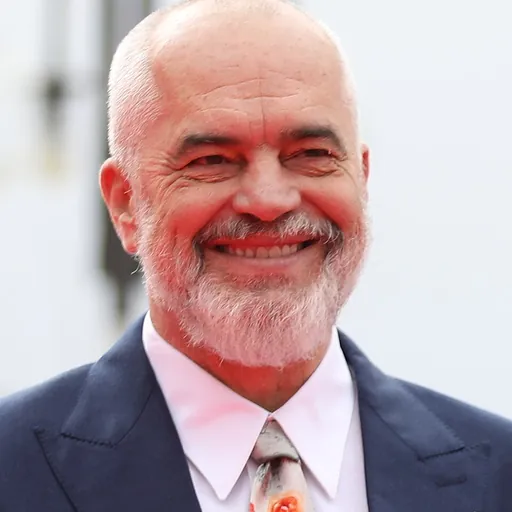
About Edi Rama
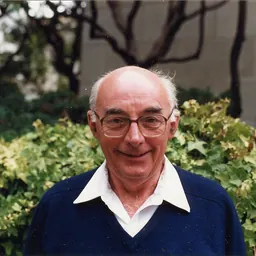
Born 1964. Edi Rama is an Albanian politician, painter, journalist, basketball player, sculptor and head of government.
Edvin Kristaq "Edi" Rama He was one of the initiators of Open Balkan, an economic zone of the Western Balkan countries intended to guarantee the "Four Freedoms".
At the same time, Rama's long rule has faced sustained criticism over democratic backsliding, corruption, state capture, clientelism, media pressure, public procurement, organised-crime influence and the concentration of political power around the ruling Socialist Party. Various sources have described his governing style as autocratic or increasingly personalistic. Freedom House classifies Albania as a "Partly Free" country in Freedom in the World and as a "Transitional or Hybrid Regime" in Nations in Transit, stating that politics is dominated by clientelist party politics and individual personalities, while elections are frequently affected by vote-buying, manipulation, fraud and gerrymandering.
The OSCE/ODIHR final report on the 2025 Albanian parliamentary election stated that the vote was competitive and professionally managed, but took place in a highly polarised environment and without a level playing field, citing reports of intimidation, misuse of public resources and pressure on public employees. Rama and the Socialist Party have rejected accusations of authoritarianism and criminal protection, arguing that their governments have strengthened state institutions, advanced EU integration and allowed independent prosecutors to investigate high-level corruption.
In 2026, he faced major anti-government demonstrations known as the Flamingo Revolution, sparked by opposition to a luxury resort project linked to Jared Kushner, the son-in-law of U.S. President Donald Trump, and located near protected coastal areas. Hostility to the project grew into wider protests over corruption, transparency, governance and public land development.
Early life and career Edvin Kristaq Rama was born on 4 July 1964 in Tirana, he is the first of two children of Kristaq (1932–1998) and Aneta Rama (; 1938–2020). His father was a well-known sculptor from Durrës, who created numerous statues during the communist era in Albania and had close ties to the communist regime; he was a signatory to the 1988 death sentence of opposition poet Havzi Nela. His mother, hailing from the southwestern village of Vuno, was a graduate of medicine and a great-niece of Spiro Koleka, a member of the Politburo during the communist years. Rama states that the Koleka family, going back some centuries, is of northern Mirditor origin, and that the surname was derived from Kol Leka.
Rama started painting early in his childhood. During his teenage years, his talent was noticed by two influential Albanian painters of the time, Edi Hila and Danish Jukniu. They encouraged Rama to further develop his painting skills in a professional context. As a teenager, Rama played professional basketball for Dinamo Tirana and was also part of the Albania national basketball team. and was also an interpreter for Italian club Scavolini Libertas when they played against Partizani Tirana in 1988 In 1982, he enrolled in the Academy of Arts in Tirana. After graduating, Rama started working as an instructor at the Academy of Arts. During this time, he organised several open student meetings, during which the Albanian communist government was publicly criticized. Essays from those meetings were collected in the book Refleksione, which Rama published together with publicist Ardian Klosi in 1992.
Shortly before the fall of communism in Albania, Rama attempted several times to get involved with the incipient fight for democracy. He tried to influence student protests and become part of the newly created Democratic Party of Albania but soon left after a quarrel over ideological matters with Sali Berisha. In 1994, Rama moved to France, and tried to begin a career as a painter. He and his former student, Anri Sala, exhibited their works in several art galleries. On 27 November 2002, Rama officially changed his first name to Edi.
Political career During one of his trips back to Albania in January 1997, Rama suffered a physical assault. While the perpetrators were never found, there were concerns over the involvement of the State Secret Service (SHIK) given Rama's outspoken criticism towards the Albanian government.
In 1998, while in Albania for the funeral of his father, Rama was offered a cabinet position by then-Prime Minister of Albania Fatos Nano. Later that year he was appointed Minister of Culture, Youth and Sports. As a Minister, Rama immediately became known for his extravagance in a variety of ways, including his unique, colourful dressing style. His innovative cultural projects, coupled with his unusual clothing and rebellious political style, helped him attract a great level of support.
Mayor of Tirana (2000–2011) In October 2000, the Socialist Party of Albania endorsed Rama in the election for Mayor of Tirana. The Democratic Party nominee was Besnik Mustafaj, a writer and diplomat. Rama won 57% of the vote, and was sworn in as mayor. After taking office, he undertook a radical campaign of bulldozing hundreds of illegal constructions and restoring many areas near Tirana's centre and Lanë River into their initial form.
Rama began an initiative in 2004 to repaint Tirana's degrading Hoxha-era apartment blocks using more vibrant colors. The repainting helped transform the aesthetics of areas dominated by the Soviet-style buildings. Rama was awarded the inaugural World Mayor Prize in 2004. The award committee, explained their decision stating that "Edi Rama is the man who changed a whole city. Now there is a new Tirana, colored, happy, with a new and improved infrastructure and cultural life". including the Skanderbeg Square project. He planted thousands of new trees, making Tirana a much more environment-friendly city. Rama also expanded the existing roads and paved new ones, improving mobility. According to a UNDP report Rama played a critical role in the modernization of the local government, empowering municipalities and giving them, for the first time real power to impact the life of their communities.
Rama was reelected Mayor of Tirana by defeating Democratic Party candidates Spartak Ngjela, a former attorney, in 2003, and Sokol Olldashi in 2007. In 2011, Rama decided to run for a fourth term in office. His opponent, Lulzim Basha was a member of Prime Minister Sali Berisha's cabinet. Rama's reelection bid failed in a hotly contested election, after a court ruling decided hundreds of ballots mistakenly cast in the wrong ballot boxes were valid. The initial count saw Rama ahead by 10 votes. With all ballots counted Lulzim Basha won the race by 81 votes. Rama appealed the court's decision at the Electoral College and demanded the reinstatement of the initial tally. Rama's appeals were rejected, and Basha was sworn in as the new Mayor of Tirana. Rama and the Socialist Party criticized the judges involved in the court ruling.
Leader of the opposition (2005–2013) Having previously run as an independent in 2000, Rama registered as a Socialist in 2003. Later that year he announced a bid for the chairmanship of the Party. He and Rexhep Meidani, former President, ran against the incumbent, Fatos Nano. Rama's bid failed to gain sufficient support from the Assembly delegates. He received 41 votes, Rexhep Meidani received 61, while Fatos Nano was reelected with 456 votes.
After the centre-left coalition lost in the 2005 parliamentary election, Fatos Nano resigned as Chairman of the Socialist Party. In the subsequent election for the chairmanship of the Party, Rama defeated Rexhep Meidani 297-151 and became the Chairman of the Socialist Party.
As the minority leader, Rama threw his support behind a set of constitutional amendments introduced in the Parliament during the summer of 2008. These amendments changed Albania's election law from a majoritarian representation with a proportional adjustment into a party-list proportional representation as well as curtailed Presidential powers. Despite criticism and protests from President Bamir Topi and MPs from the Socialist Movement for Integration and other smaller political parties, the amendments were passed in the Parliament with a super-majority.
Rama's reelection as mayor in 2007 was greatly helped by the Socialist Movement for Integration's endorsement of his candidacy. Seeing the 2008 constitutional amendments voted by Rama's SPA as a serious threat to their existence in Albanian politics, Ilir Meta and the SMI did not join Rama in a pre-electoral coalition for the 2009 parliamentary election. The Socialist Party led by Rama were only able to win 66 seats in the Parliament. Incumbent prime minister Berisha's Democratic Party won 70 seats, while the remaining 4 seats went to Ilir Meta's Socialist Movement for Integration. Demands by Rama and the Socialists for a recount in the district of Fier were rejected by courts amidst criticism about the judge's impartiality. Eventually, all four newly elected SMI members of the parliament voted support for Prime Minister Berisha's Democrats.
The 2009 election's narrow defeat prompted Rama to continue his mandate as chairman of the Socialist Party. The Socialist Party opted for a hardcore dispute of the newly elected government by boycotting parliamentary debates for months and staging a hunger strike to prompt for domestic and foreign attention to the situation. The heated political debate surrounding the 2009 election has been pointed out as one reason for Albania's failed bid at gaining official candidate status in accession talks with the EU.
In January 2011, a recorded videotape showed Deputy Prime Minister Ilir Meta negotiating informal pay-to-play fees with Dritan Prifti, Minister for the Economy, Commerce and Energy. On 21 January 2011, clashes broke out between police and protesters in an anti-government rally in front of the Government building in Tirana. Four people were shot dead by government special forces. The EU issued a statement to Albanian politicians, warning both sides to refrain from violence.
Prime Minister of Albania (2013–present) In 2013, the Socialist Party of Rama led the coalition of centre-left parties (that included his former opponents, the SMI) into a landslide victory in the parliamentary election, defeating the centre-right coalition led by Prime Minister Sali Berisha. His platform, nicknamed "Renaissance" was based on four pillars: European integration, economic revitalisation, restoration of the public order and democratisation of the state institutions. Since September 2013, Rama has been serving as the Prime Minister of Albania.
Policies as Prime Minister
U.S. Secretary of State John Kerry and Rama during the 2014 Wales NATO summit in Newport, Wales
On 11 September 2013, Rama began serving as the 33rd Prime Minister of Albania. During the electoral campaign, Rama stated that the return of public order was his number one priority. In 2013, the Albanian Police was able to cover actively only 55% of the territory. The Government invested heavily in modernising, training, and improving the financial benefits of the police force. The police earned international acclaim when, in 2014 undertook a highly successful operation on Lazarat, a remote village in the south of the country, known for the production of narcotics.
Rama has been committed to restructuring Albania's judicial system, which was considered one of the most corrupt and ineffective judicial systems in Europe at that time. In 2016, the Parliament approved the vetting law. Based on this law, any judge or prosecutor who cannot explain his source of wealth or former dubious verdicts will be disqualified for life. In November 2016, the European Union stated that a successful implementation of vetting law remains the sole criterion to fulfill before opening accession talks.
Another key reform was in the energy sector, left on the brink of bankruptcy from a previous failed privatisation effort. His government successfully enforced the payment of billions of unpaid bills and heavily invested in the modernization of the obsolete power distribution network. The economic growth, from 0.5% in 2013, accelerated to 3.5% in 2016 and exceeded 4% during 2017. Unemployment was reduced steadily, thanks to 183,000 new jobs created in his first mandate, through a war against informality and opening of new businesses. Furthermore, with 11.5% in 2019, Albania had the 5th lowest unemployment rate in the Balkans.
Other important reforms include the administrative reform, the social welfare and pension system reform, and the reform in higher education. Internationally, Rama is pursuing a historical reconciliation policy between Albanians and Serbs, and his visit to Belgrade in 2014, was the first visit of an Albanian Prime Minister to Serbia in over 70 years. In a second visit, during the Economic Forum of Niš, Rama compared the Albanian and Serbian reconciliation process with the historical reconciliation between the French and Germans after World War II. Rama is also a key supporter of the Berlin Process, an intergovernmental platform of cooperation between the European Union and Western Balkans countries.
The Socialist Party, led by Rama, participated in the 2017 Albanian parliamentary election, held on 25 June 2017. One day later, partial results suggested that the Socialist Party had won a majority. The Socialist Party subsequently secured a parliamentary majority.
Rama and Ramush Haradinaj, then Prime Minister of Kosovo, had a clash in late 2019 due to different views on the Open Balkan initiative. Rama stated that Haradinaj "lies due to ignorance or on purpose." In 2020, Rama filed a lawsuit for defamation against Haradinaj.
In 2023, the minimum wage was increased to 40,000ALL (€404) per month, an increase from that of 24,000ALL in 2017. Throughout 2024 and 2025, Rama's government increased wages in the public administration, with the average gross salary in the public administration reaching €1040.
In 2024, Rama announced plans to establish a new European microstate called the Sovereign State of the Bektashi Order enclaved within Tirana. The new country is planned to serve as the headquarters of the Bektashi Order, a Sufi Islamic order led by Baba Mondi.
In 2025, Rama's government appointed an AI-generated character named Diella as the country's minister in charge of overseeing public tenders as part of measures aimed at fighting corruption. Later in 2025, Rama announced that Diella was "pregnant" with 83 AI assistants intended to aid Socialist Party MPs.
Domestic policy Rama's domestic policy has combined market-oriented reforms, public-private partnerships, digitalisation of public services, infrastructure investment and a strong emphasis on tourism and urban development. Critics have described the approach as neo-liberal, arguing that it relies heavily on concessions and private investors in sectors including tourism, higher education, health, public works and culture. The International Monetary Fund warned that the government's use of public-private partnerships and concessions could expose Albania to "significant fiscal risks" if not properly monitored. Economic growth rates approached 4 percent in 2017 and 2018, while the unemployment rate fell from 17.5% in 2014 to 11.5% in 2020. Rama has attributed economic improvements to political stability, once saying: "We are a country without a Senate, without unions, without a radical left and without comedians who play politics." Nevertheless, salaries remained low compared with the European Union and emigration accelerated after 2014.
During Rama’s first term, Albania experienced a major expansion of cannabis cultivation and trafficking, peaking around 2016–2017. According to estimates by Italian customs, 753,000 cannabis plants were destroyed in 2016, compared to 46,000 in 2014. Such destruction would have affected only 10 percent of the cultivated area. The Minister of the Interior, Saimir Tahiri (in office from 2013 to 2017), has himself been accused (and sentenced) for his involvement in drug trafficking. In 2018, Rama adopted a law, welcomed by the European Union, providing for competition between universities and their openness to the market. Increases in tuition fees have caused discontent among students.
The Albanian branch of Transparency International and the Institute for Democracy and Mediation have used the concept of state capture to describe the influence of private interests over public decision-making in Albania. Their 2021 report identified patterns involving tailor-made laws, opaque concessions, public-private partnerships, weak parliamentary scrutiny and business interests close to political power. Rama's government has rejected the accusation that it has captured the state, arguing that it has advanced justice reform, digitalisation, EU accession and the prosecution of corruption cases through independent institutions.
Concentration of power and executive dominance Rama's critics have argued that his long tenure has concentrated power around the prime minister's office and the Socialist Party leadership. After the Socialist Party won an outright majority in 2017, Rama governed without a coalition partner. The opposition's boycott of parliament in 2019 and the Democratic Party's internal split after 2021 further weakened parliamentary oversight, leaving the Socialist Party with a dominant institutional position.
Transparency International's National Integrity System assessment stated that the executive's influence over the Assembly is significant and that the executive dominates parliament through its political majority and a weak opposition, leaving the legislature unable to effectively exercise constitutional oversight over the government. A 2025 analysis by the New Lines Institute similarly argued that parliament had largely become a rubber stamp for the prime minister's office and cited Rama's announcement of Elisa Spiropali as Speaker of Parliament at a party convention as an example of the erosion of parliamentary independence.
Rama's defenders argue that the concentration of governing authority has produced political stability, enabled difficult reforms and allowed Albania to advance more rapidly in EU accession negotiations. Critics counter that political stability has been achieved at the cost of weakened checks and balances, an increasingly subordinated parliament and a ruling-party network embedded in state institutions.
Elections, patronage and party-state overlap International election observers have repeatedly stated that Albanian elections under Rama have remained competitive, but have also raised concerns over the ruling party's structural advantages. The OSCE/ODIHR final report on the 2021 Albanian parliamentary election stated that voters had a choice of candidates and that fundamental freedoms were generally respected, but that the ruling party enjoyed a significant advantage from its control of local administrations and the misuse of administrative resources. It also noted widespread allegations of vote-buying.
The 2021 election was also affected by the Patronageists scandal, in which the outlet Lapsi.al reported that it had obtained a database containing personal data and political-preference information for about 910,000 voters or residents of Tirana County. Transparency International called on Albanian authorities to determine whether the Socialist Party had obtained personal data from government registries and whether state resources had been abused during the campaign.
The most serious drug-related case involving Rama's cabinet concerned former interior minister Saimir Tahiri, who served from 2013 to 2017. Tahiri was investigated over allegations connected to the Habilaj drug-trafficking network, whose members were his relatives. In 2022, an Albanian appeals court sentenced Tahiri to prison for abuse of office in connection with the network. OCCRP reported that the court found Tahiri had helped the criminal group by failing to act against it as interior minister and by receiving gifts from gang members. Tahiri denied wrongdoing, and the court acquitted him of the more serious drug-trafficking charges.
The 2025 Global Organized Crime Index stated that corruption within Albania's political and law-enforcement institutions continues to facilitate organised crime, and that investigations using encrypted communication platforms have revealed deep ties between high-ranking officials and criminal actors. It also reported that criminal groups use bribery and blackmail to obtain public tenders and government contracts, while police collusion continues to raise concerns. Rama's government has denied protecting criminal groups and points to SPAK, international police cooperation, asset seizures and prosecutions as evidence of progress against organised crime.
Media capture, censorship and attacks on journalists Media freedom has been a recurring criticism of Rama's governments. Reporters Without Borders has described Albania's media environment as fragile, stating that media independence is threatened by conflicts of interest between business and politics, a flawed legal framework and partisan regulation. Freedom House states that Albanian media owners use their platforms to influence government and political parties, while disinformation and weak media literacy remain problems. International press-freedom groups also criticised his government's 2019 "anti-defamation" package, arguing that it risked giving state regulators excessive power over online media. Rama's government defended the proposal as a response to disinformation and defamation.
In 2022, international press-freedom organisations sent an open letter to Rama after he banned journalists Ambrozia Meta and Klevin Muka from press conferences for a period following questions he considered unethical or inappropriate. In 2024, the Media Freedom Rapid Response reported that Rama's angry reaction to Ambrozia Meta after questions about the Kushner-linked coastal investment reflected broader pressure and intimidation of journalists in Albania. The report also cited other cases in which journalists were excluded from press conferences or subjected to disparaging language after asking questions about corruption, conflict of interest or strategic-investor projects.
In 2026, Rama again clashed publicly with Reporters Without Borders over Albania's ranking in the World Press Freedom Index. RSF responded that it measures media freedom rather than government communication, stating that Albania's 83rd-place ranking reflected political attacks, abuse of law-enforcement bodies, low media transparency and threats against journalists. During a 2026 media-freedom mission to Tirana, RSF urged the Albanian parliament and government to move toward genuine decriminalisation of defamation and insult and to restore journalists' trust.
Relations with SPAK and judicial independence Rama has presented justice reform as one of his main achievements, arguing that his governments created the legal and institutional basis for SPAK and the vetting of judges and prosecutors. International partners have also praised SPAK's progress in investigating corruption and organised crime. Transparency International's 2025 Rule of Law brief stated that SPAK had achieved tangible progress toward a solid track record, but also warned that political influence continues to undermine judicial independence, particularly through public and institutional pressure on SPAK and other judicial bodies in politically sensitive corruption cases. whereas political rivalries between him, Meta, and Basha were sidelined as they became involved in relief efforts.
Rama reconfigured the state budget for 2020 to manage the post-earthquake situation
In mid-December 2019, Rama faced criticism from several non-governmental organisations, human rights organisations, and parts of the media for misusing the situation to pass controversial legislation after he sought a three-month extension of his state of emergency powers from parliament. Rama assembled and tasked a group of fundraisers to manage donations from the Albanian diaspora and guarantee oversight of their use. Rama contacted and held discussions with several influential world leaders and countries, requesting assistance and the creation of an international donors' conference. On 8 December, Rama personally attended a Turkish donors conference for Albania that was organised and attended by President Erdogan. In January 2020, Rama publicised preliminary figures of damage caused by the earthquake, which totalled more than €1 billion.
Cabinet 1st Cabinet
The 1st Cabinet of Rama was sworn in by President Bujar Nishani on 11 September 2013, becoming the 8th Cabinet of the Albanian Republic, since the collapse of communism in Albania. The Cabinet is composed of 21 members, with fifteen coming from the Socialist Party, six from the Socialist Movement for Integration. The Cabinet is also the first in which the number of female ministers is equal to the number of male ministers, excluding the Prime Minister.
Cabinet NameParty Term Prime Minister Edi Rama Socialist Party (2013–) Deputy Prime Minister Niko Peleshi Socialist Party (2013–2017) Minister of Defence Mimi Kodheli Socialist Party (2013–2017) Minister of the Interior Saimir Tahiri Socialist Party (2013–2017) Minister of Foreign Affairs Ditmir Bushati Socialist Party (2013–2019) Minister of Justice Nasip Naço Socialist Party (2013–2017) Minister of European Integration Klajda Gjosha Socialist Movement for Integration (2013–2017) Minister of Economic Development Milva Ekonomi Socialist Party (2013–2017) Minister of Energy and Industry Damian Gjiknuri Socialist Party (2013–2017) Minister of Transportation and Infrastructure Sokol Dervishaj Socialist Movement for Integration (2013–2017) Minister of Urban Development Eglantina Gjermeni Socialist Party (2013–2017) Minister of Agriculture Edmond Panariti Socialist Movement for Integration (2013–2017) Minister of Health Arben Beqiri Socialist Party (2013–2017) Minister of Education Lindita Nikolla Socialist Party (2013–2017) Minister of Social Welfare and Youth Blendi Klosi Socialist Party (2015–2017) Minister of Culture Mirela Kumbaro Socialist Party (2013–2019) Minister of Environment Lefter Koka Socialist Movement for Integration (2013–2017) Minister of Innovation and Public Administration Milena Harito Socialist Party (2013–2017) Minister of Relations with Parliament Ermonela Felaj Socialist Party (2013–2017) Minister of Local Governance Eduard Shalsi Socialist Party (2013–2017)
2nd Cabinet
The 2nd Cabinet of Rama was sworn in by President Ilir Meta in September 2017, becoming the 9th Cabinet of the Albanian Republic, since the collapse of communism in Albania. The Cabinet is composed of 15 members, coming all from the Socialist Party. The Cabinet is also the second in which the number of female ministers is equal to the number of male ministers, excluding the Prime Minister.
Cabinet NameParty Term Prime Minister Edi Rama Socialist Party (2013–) Deputy Prime Minister Senida Mesi Socialist Party (2017–2019) Minister of Defence Olta Xhaçka Socialist Party (2017–2020) Minister of the Interior Fatmir XhafajDritan DemirajFatmir Xhafaj (acting)Sandër Lleshaj Socialist Party (2017)(2017)(2017–2018)(2018–2020) Minister for Europe and Foreign Affairs Ditmir BushatiEdi Rama Socialist Party (2013–2019)(2019–) Minister of Justice Etilda Gjonaj Socialist Party (2017–2021) Minister of Culture Mirela Kumbaro Socialist Party (2013–) Minister of Finance and Economy Arben Ahmetaj Socialist Party (2017–2019) Minister of Education, Sports and Youth Lindita NikollaBesa Shahini Socialist Party (2017–2019)(2019–) Minister of Health and Social Care Ogerta Manastirliu Socialist Party (2017–) Minister of Infrastructure and Energy Damian GjiknuriBelinda Balluku Socialist Party (2017–2019)(2019–) Minister of Agriculture and Rural Development Niko PeleshiBledar Çuçi Socialist Party (2017–2019)(2019–) Minister of Tourism and Environment Blendi Klosi Socialist Party (2017–2021) Minister of State for Albanian Diaspora Pandeli Majko Socialist Party (2017–2021) Minister of State for Entrepreneurs Sonila Qato Socialist Party (2017–)
3rd Cabinet
The third Cabinet of Rama was approved by parliament on 17 September 2021 and sworn in on 18 September 2021 after the Socialist Party won the 2021 Albanian parliamentary election. Reuters reported that Albania voted in its first female-dominated cabinet since the beginning of the multi-party system, with 12 women in a 17-member cabinet.
The third cabinet initially included Arben Ahmetaj as deputy prime minister, Olta Xhaçka as Minister for Europe and Foreign Affairs, Bledar Çuçi as Minister of Interior, Ulsi Manja as Minister of Justice, Niko Peleshi as Minister of Defence, Belinda Balluku as Minister of Infrastructure and Energy, Delina Ibrahimaj as Minister of Finance and Economy, Ogerta Manastirliu as Minister of Health and Social Protection, Evis Kushi as Minister of Education and Sport, Mirela Kumbaro as Minister of Tourism and Environment, Frida Krifca as Minister of Agriculture and Rural Development, and Elisa Spiropali as Minister of State for Relations with Parliament. The cabinet was reshuffled several times between 2022 and 2025, including the replacement of Ahmetaj by Balluku as deputy prime minister and the creation of new ministries or minister-of-state portfolios connected to EU accession and anti-corruption.
4th Cabinet
The fourth Cabinet of Rama was approved in September 2025 after the Socialist Party won the 2025 Albanian parliamentary election. Reuters reported that Rama began his fourth term after securing 82 votes in the 140-seat parliament and declared that Albania's membership in the European Union by 2030 would be the central goal of the new mandate. The new cabinet was sworn in before President Bajram Begaj on 19 September 2025.
The fourth cabinet included a major reshuffle, with Belinda Balluku continuing initially as deputy prime minister and minister of infrastructure and energy, Elisa Spiropali becoming Minister for Europe and Foreign Affairs, Albana Koçiu becoming Minister of Internal Affairs, Petrit Malaj continuing as Minister of Finance, Blendi Gonxhja taking the tourism, culture and sports portfolio, and Delina Ibrahimaj becoming Minister of Economy and Innovation. Rama also announced the AI-generated virtual figure Diella as a minister responsible for public procurement, describing it as a measure to reduce corruption in tenders; the opposition criticised the move as unconstitutional because Diella was not a human citizen.
In February 2026, Rama carried out a major reshuffle amid the corruption investigation into Balluku. Reuters reported that he dismissed Balluku as deputy prime minister and infrastructure minister after SPAK indicted her over alleged manipulation of public tenders worth more than €200 million; Balluku denied the allegations. Albanian media reported that Albana Koçiu was appointed deputy prime minister and that former diplomat Ferit Hoxha replaced Spiropali as foreign minister.
Foreign policy
Rama alongside U.S. Secretary of State Antony Blinken, 15 February 2024
On several occasions, Rama has stated that the European Union needs to accelerate the integration process of the Western Balkans, considering it the only way to subdue the dangerous fractions in the region, preventing a possible eruption of violence, like the one that hammered the region in the 1990s. Rama has also denounced the rising Russian influence in the region as destabilising.
Rama views Turkey as an important strategic partner and since 2013, he has developed a good personal relationship with Turkish President Recep Tayyip Erdoğan. Rama describes Erdoğan as a "friend of Albania and strategic ally". At his request, he had schools linked to the Gülen movement closed, which he went so far as to describe as a 'terrorist organization'.
Rama has had a diverse agenda of high-level meetings. Since 2013, he has frequently met with German Chancellor Angela Merkel, US President Barack Obama, French President Francois Hollande, British Prime Minister David Cameron, Chinese Prime Minister Li Keqiang, Austrian Foreign Minister Sebastian Kurz, Pope Francis, and other high-ranking diplomats. Rama, speaking in Israel in 2015, said that Albania was "proud to have been a country where no Jew was released to the Nazis, and where there are incredible stories of Muslim families who protected Jewish families," and he and Israeli Prime Minister Benjamin Netanyahu signed a joint declaration of friendship and a medical research cooperation agreement.
On 10 October 2019, together with Aleksandar Vučić, President of Serbia, and Zoran Zaev, Prime Minister of North Macedonia, Rama signed the so-called Mini Schengen deal on regional economic cooperation, including on the free movement of goods, capital, services, and labour between their three countries, while they await progress on EU enlargement. A month later, the leaders presented a set of proposals to achieve the "four freedoms" and the first steps towards them, including the possibility to the open border area. In December, the three leaders also met with Milo Đukanović, President of Montenegro, opening the possibility for the country to join the zone. In 2024, Rama said that Albania was aiming to join the EU by 2030. In December 2025, the European Commission stated that Albania had opened the final negotiating cluster, opening negotiations on all 33 chapters within 13 months. Rama presented the opening of all clusters as a major milestone for his 2030 EU-membership target, while EU officials and civil society continued to stress the need for rule-of-law, anti-corruption and environmental reforms.
In April 2025, Rama visited Israel and expressed support for Israel's war in the Gaza Strip, saying that "Hamas are the Nazis of the new century. And history has shown that with Nazis, there is no peace and there is no compromise." There was a demonstration in Tirana against his visit to Israel. In June 2025, he announced his support for Israeli strikes on Iran, "to prevent the theocratic regime in Tehran from ever possessing nuclear weapons."
Artist and writer Exhibitions City Art Gallery, Corfu, Greece (1990) National Art Gallery in Tirana, Albania (1992) Jano Gallery in New York City (1993) Place de Médiathèque in France (1995) Acud in Berlin (1993) São Paulo in Brazil (1994) Israel (1995) Gallery XXI in Albania (1999) Venice Biennale (2014) Marian Goodman Gallery in New York City (2016)
Rama is an active painter and has had several personal painting exhibitions.
In 2014 and 2017, Rama held an exhibit in the Venice Biennial. In 2016, a collection of his works were exhibited in the Marian Goodman Gallery in New York City.
Publications Rama, Edi; Klosi, Ardian (1991). Refleksione. Rama, Edi (1993). Etërit, Seksi dhe Krenaria Kombtare. Rama, Edi (2009). Edi Rama. Paintings Rama, Edi (2011). Kurban. Tirana: Dudaj.
Rama is also an active writer. In 1992, while a professor at the Academy of Arts of Albania, Rama published a book with various notes together with publicist Ardian Klosi entitled Refleksione (Reflections). In 2009, Rama published a collection of personal notes and paintings in a book entitled Edi Rama. In November 2011, Rama published a reflection book on his years as mayor of Tirana entitled Kurban.
Personal life Rama was baptized as Catholic and identifies as Catholic. Regarding his religious beliefs at present, Rama has declared himself an agnostic stating that "I do not practice any faith other than to the self and other people, but I don't believe that the existence or non-existence of God is a matter that can ever be resolved by mortals."
Rama married actress . The couple divorced in 1991. Rama has a son from his first marriage, Gregor, who is a cancer survivor. Rama's daughter-in-law was one of the 51 fatalities in the 2019 Albania earthquake. Since 2010, Rama has been married to Linda Rama (née Basha), an Albanian economist (Doctor of Economics), researcher, university lecturer, and advocate for women's and children's rights. Together they have a son born in 2014, named Zaho.
Aside from his native Albanian, Rama is fluent in English, French, and Italian.
Rama is a supporter of the sports teams FK Partizani and Juventus. His younger brother, Olsi Rama, is the sporting director of Partizani Tirana.
Rama leads a podcast called Flasim ('Speaking') which had such guests as Ermonela Jaho and Ogerta Manastirliu.
Controversies Obama fundraising photograph A photograph of Rama and Barack Obama at a fundraising event in October 2012 was shared by Rama on Facebook and Twitter ahead of Albania's 2013 parliamentary election, to imply a relationship with Obama. Rama's ticket to the event was purchased for $80,000 through intermediaries who later pleaded guilty to making foreign contributions in connection with the 2012 United States presidential election.
2017 electoral fraud allegations In 2019, the German tabloid Bild published a series of audio tapes allegedly concerning the 2017 Albanian parliamentary election. In one of the tapes Rama was recorded in a conversation with Arben Keshi, a local police official, asking whether "the objective had been met". In another recording, cabinet member Damian Gjiknuri was heard offering Keshi to send "a van of problematic guys" who "should not be too exposed" but might be needed "just in case" for the election. In other tapes, former Socialist MPs were recorded giving instructions to Keshi and other local officials on bribing constituents with cash and intimidating them with threats. In other tapes published by Bild, former mayor of Durrës Vangjush Dako, appointed by the Socialist Party, was heard in conversations with persons connected to drug trafficking and organised crime in relation to the 2017 elections.
Organised crime, drug trafficking and "narco-state" allegations The term "narco-state" has been used mainly by Rama's political opponents, protest movements and some commentators rather than by courts or official international institutions. During opposition protests in 2018, demonstrators chanted "No to narco-state" while accusing Rama's government of links to organised crime and cannabis trafficking.
Media organisations in Albania protested the changes, describing them as censorship of free speech and expressing concern that the draft had not taken into account recommendations made by international actors, including the Council of Europe's Commissioner for Human Rights. The Albanian Ombudsman called on the government not to approve the draft laws, saying they did not meet international standards.
The Venice Commission concluded that the proposed media law had a number of flaws and issued recommendations for amendments. Rama praised the recommendations on Twitter and said the Assembly should address the issue according to the Venice Commission's suggestions. The leak became known in Albanian politics as the patronageists scandal .
Transparency International called on Albanian authorities to determine whether the Socialist Party had obtained voters' personal data from government registries and whether state resources had been abused during the campaign. It said the database reportedly contained personal and private information, including notes made by patrons about citizens' political preferences and interactions with voters.
Rama acknowledged that the Socialist Party used a patronage or voter-contact system, but defended it as ordinary party work and denied wrongdoing. According to Transparency International, he said citizens' data had been collected through door-to-door meetings; according to the Committee to Protect Journalists, he also denied that the leaked database belonged to the Socialist Party.
Reporters Without Borders and media-freedom disputes After Albania fell to a historic low in the Reporters Without Borders annual World Press Freedom Index, Rama criticised the organisation's assessment. Pavol Szalai, the head of RSF's European Union and Balkan desk, noted that the methodology had changed from 2020 to 2022 and that Albania had fallen partly because of this and partly because countries such as Serbia and Montenegro had risen.
Rama accused the organisation on Twitter of making up "lies" and called the accusations "fantasies". He wrote: "Journalists victims of police violence in Albania? What a lie! Journalists critical of the government face political attacks? What a fantasy! Ethical self-regulation in the Albanian media? What a mockery! Only the title is missing: We complain about the lack of freedom because we do not know what to do with freedom!" One day after Rama tweeted his denials, RSF reported that he attacked an Albanian reporter whom he had previously placed under a two-month embargo.
Charles McGonigal In January 2023, Rama was mentioned in a U.S. federal indictment concerning former senior FBI official Charles McGonigal. According to the indictment, McGonigal had met Rama several times and failed to disclose contacts and financial relationships connected to Albania. The indictment stated that McGonigal received at least $225,000 from a former Albanian intelligence official and concealed the payment from the FBI; it did not charge Rama or the Albanian government.
Rama acknowledged meetings with McGonigal but denied bribery, preferential treatment or wrongdoing. He told parliament that the opposition was politically exploiting a U.S. legal process and said that the indictment contained no charges against him or his government.
Albanian incinerators scandal
The Albanian incinerators scandal became one of the most prominent corruption cases during Rama's time as prime minister. The scandal concerned concession contracts for waste-incinerator projects in Elbasan, Fier and Tirana. Reuters reported that the three sites, worth hundreds of millions of euros, were at the centre of criminal investigations into alleged fraud and corruption, with prosecutors alleging that contracts were awarded unlawfully, ministers accepted payments and contractors issued fake invoices for work that was not carried out.
Former environment minister Lefter Koka, who served in the first Rama government, was sentenced by the Special Court against Corruption and Organized Crime to six years and eight months in prison on corruption, abuse of power and money-laundering charges related to the Fier incinerator contract. The court said Koka had accepted a €3.7 million bribe connected to the contract. Several other officials and businessmen were also sentenced in the same case.
Former deputy prime minister Arben Ahmetaj, one of Rama's senior government figures, was later charged in connection with the scandal. Transparency International reported that SPAK sought Ahmetaj's arrest in 2023 on charges of corruption, money laundering and falsification of official documents related to asset declarations; Ahmetaj left Albania and denied wrongdoing. Reuters described the incinerator affair as a major issue in Albanian politics and a symbol of persistent graft concerns during Rama's fourth-term campaign. Albanians interviewed by Balkan Insight characterised the planned state as a distraction from alleged domestic scandals created by Rama in an attempt to gain favourable news coverage. Besnik Sinani, a research fellow at the Center for Muslim Theology at Tübingen University, said the comparison to Vatican City "does not withstand historical scrutiny" and called the proposal "an unprecedented case of contemporary religious engineering". He further said he believed it would "disrupt the historical arrangements of the relationship between religion and state in Albania".
Balluku corruption case and conflict with prosecutors In December 2025, SPAK indicted Deputy Prime Minister Belinda Balluku, one of Rama's closest allies and a senior figure in his governments, on suspicion of interfering in two infrastructure tenders worth more than €200 million. Reuters reported that prosecutors alleged Balluku had steered tenders in favour of specific companies and "created unfair advantages and privileges". Balluku denied wrongdoing.
According to prosecutors, businessmen Ergys Agasi and Ermal Beqiri allegedly led a structured criminal network aimed at controlling and manipulating AKSHI tenders, in some cases through coercion and intimidation. SPAK said the investigation involved suspected offences including corruption, manipulation of public tenders, participation in a structured criminal group, money laundering, unlawful deprivation of liberty and violent interference in market competition. AKSHI director Mirlinda Karçanaj was placed under house arrest and charged with violating equality in tenders in cooperation within a criminal group, while deputy director Hava Delibashi and several other officials and businessmen were also placed under security measures.
As the demonstrations grew, protesters framed the issue not only as an environmental dispute but also as a symbol of corruption, lack of transparency, contested land ownership and foreign-backed elite development. Reuters reported that demonstrations spread from the development site to Tirana and that protesters called for Rama's resignation. The Financial Times reported that tens of thousands of people joined a protest in Tirana on 20 June 2026, describing the movement as one of the country's largest protests in recent years and noting that anger over the resort had merged with wider frustration over corruption and Albania's political elite.
In July 2026, the movement escalated into one of the largest protest movements of Rama's premiership. The Associated Press reported that a massive demonstration took place in Tirana for the 35th consecutive night, with protesters calling for Rama's resignation, a temporary replacement of his government, constitutional reforms and an end to corruption.
Rama defended the project, saying it would help modernise Albania and proceed only in compliance with environmental rules. He rejected claims that public land was being sold and described the protests as politically and externally motivated.
Honors Orders, decorations, and medals
Other Prime Minister Rama received the Global Leadership Award of pro-Israel NGO Combat Antisemitism Movement for his work in fighting antisemitism and other types of religious prejudice.
Don’t just read it —
keep it.
Full-length biographies made to live with: read them, listen on the way to work, watch them tonight.
- E-book
- Audio
- Video
Instant download · yours to keep · every purchase keeps this site free
Important facts
People in Edi Rama's life
Named in this biography and alive at the same time

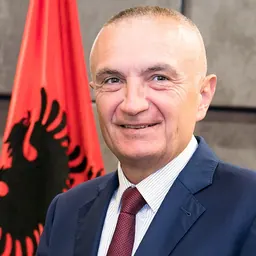


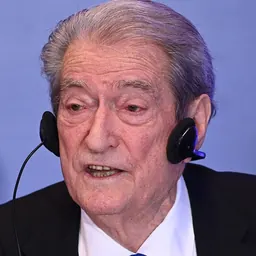

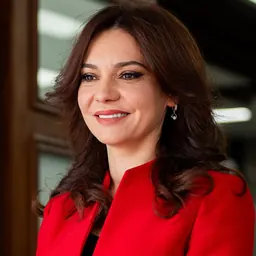
Related people
Same field, nearest in time


Contemporaries
People whose lives overlapped Edi Rama's


Frequently asked questions
Who is Edi Rama?
Prime Minister of Albania since 2013 (born 1964)
When was Edi Rama born?
Edi Rama was born on 4 July 1964 in Tirana.
What is Edi Rama's occupation?
Edi Rama is a politician, painter, journalist, basketball player, sculptor and head of government.
What nationality is Edi Rama?
Edi Rama is Albanian.
Sources & further reading
Cite this page
APA: Biography.guide. (2026). Edi Rama. https://biography.guide/edi-rama/
MLA: "Edi Rama." Biography.guide, https://biography.guide/edi-rama/.
Chicago: "Edi Rama." Biography.guide. https://biography.guide/edi-rama/.
Data last updated: 2026-09-23 · Spot an error? Report a correction.
Portrait: Wikimedia Commons · author & licence
Page generated 2026-09-27 05:08 UTC