
About Edgardo Boeninger
Lived 1925 – 2009 (aged 84). Edgardo Boeninger was a Chilean economist, politician, political scientist, civil engineer and engineer.
Edgardo Boeninger Kausel (23 August 1925 − 13 September 2009) was a Chilean politician who served as minister.
Between 1976 and 1978, he worked at the Inter-American Development Bank (IDB) as a specialist in higher education financing. He also joined the United Nations Children's Fund (UNICEF). In 1977, he served as coordinator of the Evaluation Team for the Regional Food and Nutrition Program (PIA/PNAN).
Professional career He completed his primary and secondary education at The Grange School, the Instituto Nacional, and the Instituto Alonso de Ercilla of the Marist Brothers. He later entered the Pontifical Catholic University of Chile, where he graduated as a civil engineer in 1950. He subsequently enrolled at the University of Chile, obtaining the degree of business administration with a specialization in economics in 1960. Later, in 1975, he pursued studies in political science at the University of California in the United States.
Between 1950 and 1959, he worked as a traffic engineer at the Municipality of Santiago. At the same time, he served as a professor at the Faculty of Economic and Administrative Sciences of the University of Chile, teaching courses in Economic Theory between 1958 and 1961, as well as Public Finance, Fiscal Policy, and Economic Policy between 1961 and 1973.
Representing Chile, he traveled to San José, Costa Rica, to attend the International Conference on Education and Economic Development in 1962, and the Conference on Fiscal Policy in 1963. That same year, he attended the Conference on Health Planning in Washington, D.C., United States. The following year, he participated in the Congress on Planning Administration in Paris.
From the late 1960s onward, he began an active collaboration with various international organizations, serving as an adviser or in executive roles. In 1975, he was a visiting professor for the Board of Regents of the University of California and worked at the Latin American and Caribbean Institute for Economic and Social Planning (ILPES). Concurrently, and until 1976, he served as coordinator of the State and Planning Project as an economics expert.
In 1978, he was a founding member of the Chilean Constitutional Studies Group. That same year and until 1980, he was a member of the Rockefeller Foundation’s Evaluation Committee of the Education for Development Program. In 1984, he worked as a consultant for the World Bank in Public Sector Management in Peru. He also traveled to the People's Republic of China as part of a Higher Education and Agricultural Research Mission of the Food and Agriculture Organization of the United Nations (FAO). Concurrently, until 1987, he served as director of the Center for Development Studies (CED), and until 1991 he was a member of the board of the Institute of the Americas in San Diego, United States.
Among other activities, he was the author and co-author of monographic works and articles published in academic journals, as well as papers presented at national and international meetings. He was an enthusiast of sports—especially table tennis, tennis, and horse racing—as well as cinema, theatre, and dancing.
Political career Between 1965 and 1969, during the government of President Eduardo Frei Montalva, he served as Director of the Budget Office at the Ministry of Finance under the administrations of Sergio Molina, Raúl Sáez, and Andrés Zaldívar. During this period, he maintained close contact with Jorge Ahumada, who served as an adviser at the Ministry of Agriculture.
At the same time, he served as dean of the Faculty of Economic Sciences of the University of Chile. After completing his term, he was elected rector of the University of Chile for two consecutive terms, serving until 1973. His Secretary General during this period was Ricardo Lagos Escobar between 1969 and 1971, who had previously worked as a professor and researcher at the Institute of Economics. He was also president of the Council of Rectors of Chilean Universities. In this capacity, between 1971 and 1974, he attended international conferences of rectors who were members of the Council of Higher Education (CHEAR).
At the end of 1973, he began his political career by joining the Christian Democratic Party, a decision he described as a gesture of rejection of the military regime. During the military government of Augusto Pinochet, he opposed the abuses committed against human rights and was part of the “Group of 24,” composed of lawyers and academics—including Manuel Sanhueza—who drafted an alternative constitutional project to the 1980 Constitution. As a Christian Democratic militant, he served as vice president of the party between 1987 and 1989. Additionally, between 1988 and 1989, he served as coordinator of Political Relations and of the Government Program of the Concertation of Parties for Democracy.
On 11 March 1990, he assumed office as Minister Secretary-General of the Presidency during the presidency of Patricio Aylwin Azócar, a position he held until 11 March 1994. During this period, he maintained close contact with ministers Alejandro Foxley, Carlos Ominami, and René Cortázar, promoting social initiatives, labour reforms, and transformations in economic and tax policy.
After leaving the Senate in 2006, he led the Electoral System Reform Commission that same year. Until 2008, he served as an associate researcher at the Corporation for Latin American Studies (CIEPLAN); advised Alejandro Foxley during his tenure as Minister of Foreign Affairs; and assumed the vice presidency of the Chilean chapter of Transparency International, Chile Transparente.
He died in Santiago on 13 September 2009.
Don’t just read it —
keep it.
Full-length biographies made to live with: read them, listen on the way to work, watch them tonight.
- E-book
- Audio
- Video
Instant download · yours to keep · every purchase keeps this site free
Important facts
People in Edgardo Boeninger's life
Named in this biography and alive at the same time


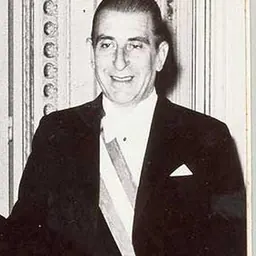
Related people
Same field, nearest in time


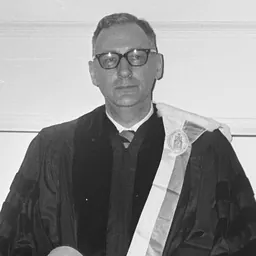
Contemporaries
People whose lives overlapped Edgardo Boeninger's


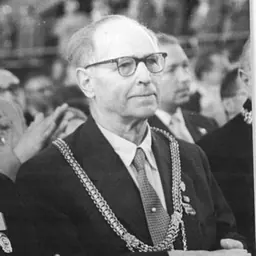

Frequently asked questions
Who was Edgardo Boeninger?
Chilean politician
When was Edgardo Boeninger born?
Edgardo Boeninger was born on 23 August 1925 in Santiago.
When did Edgardo Boeninger die?
Edgardo Boeninger died on 13 September 2009 in Santiago.
What was Edgardo Boeninger's occupation?
Edgardo Boeninger was an economist, politician, political scientist, civil engineer and engineer.
What nationality was Edgardo Boeninger?
Edgardo Boeninger was Chilean.
Sources & further reading
· Wikipedia: Edgardo Boeninger
Cite this page
APA: Biography.guide. (2026). Edgardo Boeninger. https://biography.guide/edgardo-boeninger/
MLA: "Edgardo Boeninger." Biography.guide, https://biography.guide/edgardo-boeninger/.
Chicago: "Edgardo Boeninger." Biography.guide. https://biography.guide/edgardo-boeninger/.
Data last updated: 2026-09-24 · Spot an error? Report a correction.
Page generated 2026-09-27 05:03 UTC