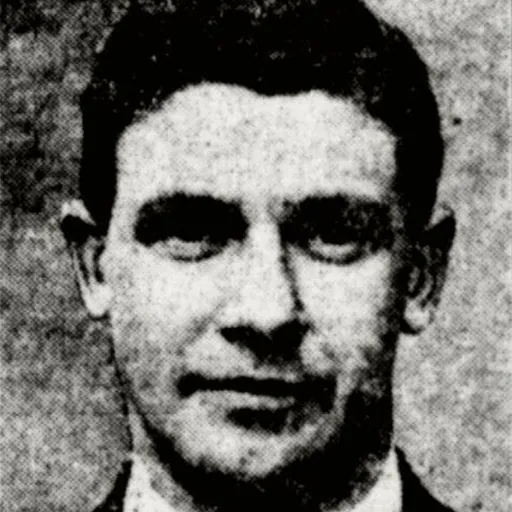
About Edgar J. March
Lived 1897 – 1971 (aged 73). Edgar J. March was a historian and writer.
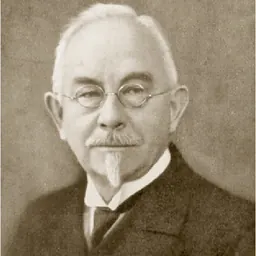
Edgar James March (5 September 1897 – 22 July 1971) was an English writer, lecturer and historian of traditional British sailing craft.
March began his career during the The First World War as a draughtsman for the Air Ministry, and after the war he exhibited watercolour paintings of aeroplanes in action. However he had grown up on the Thanet coast in Kent, where he regularly witnessed working sailing ships, and a fisherman taught him to sail. So from around 1920 to the end of his life he was researching traditional British, wooden, working sailing craft which operated inshore and at sea. This research continued in tandem with his 25-year lecturing career, in which he brought to the public films, lantern slides and histories of sailing boats. For his generation in the United Kingdom, working sailing craft were already almost completely gone from the waters. By 1950 he had amassed a collection of over 15,000 lantern slides of lost or soon-to-be lost sail-driven fishing and cargo boats, which were about to be overtaken by motor vessels.
From 1948, March published six heavily detailed volumes laying out the history and construction of sailing barges, sailing drifters, sailing trawlers, British destroyers, and finally two volumes covering his life's research on inshore craft of the British Isles. His published works contain memories and photographs dating from the 1860s to the dates of publication. The books include scale drawings and construction plans of the vessels, which are sufficiently detailed for the use of model-makers. Of March's book, Sailing Drifters, the Lynn Advertiser comments, "The 191 photographs portray a way of life now gone for ever and likely to have vanished unrecorded had not Edgar J. March striven to collect information stored in the wise old heads of a generation now well into the evening of its day".
Early and personal life
March's father was William March, a butler, who became a seaside hotelier. His mother was Lizzie "Lissie" March née Barr, daughter of William Barr, who was a groom and postilion for the Earl of Craven, and later a farmer. William and Lissie March were married at the Church of All Saints, Leighton Buzzard on 17 October 1888. Between at least 1901 and 1921 they were running the Kimberley Hotel, a 22-room seaside boarding house, in Westgate-on-Sea, with a resident cook and housemaid. Guests included Sir Gilbert Parker, MP, and Frederic Wallace Hastings Blake, governor of HM Prison Pentonville. In 1935 the Kimberley Hotel, under the management of March assisted by his elderly father, mounted a prizewinning exhibition on the subject of yachting, as part of the Queen Carnival in Westgate. March's uncle, George March, ran the Westcliffe Hotel in Westgate-on-Sea, and was a councillor for Westgate. He was baptised on 3 October 1897 at All Saints' Church, Westbere, Kent. He had an elder brother, William Francis George March, a 2nd lieutenant of the Royal Flying Corps, who died of his wounds in the First World War. March and his brother were brought up at the Kimberley Hotel in Westgate-on-Sea. On 17 October 1929, March married Linda Dorothy Tottenham-Bowman, at St Saviour's Church, Westgate-on-Sea. By 1939, he and his wife were living in Cedric Road, Margate. Before they moved to the Isle of Wight, they lived at Sunrays, 3 Cedric Road, Westgate-on-Sea, for more than fifty years. During the First World War he worked for the Air Ministry and "executed many important drawings for the authorities". In 1920 he exhibited water colour action paintings of war planes and sea planes, in Trafalgar Square, Westgate. However March's brother, an airman, had died in 1917 of his wounds in the First World War, and March was disillusioned with aeroplanes. He later wrote in Spritsail Barges, "I cannot help thinking that the world would have been a happier place if aircraft had remained dreams instead of becoming nightmares". By 1939 he was working as a hotelier and lecturer, and was also serving as a special constable, number 53, in Margate Borough.
War reserve constable
March was employed as a war reserve constable during the Second World War, when in plain clothes he arrested a burglar who was looting evacuated properties in Sea Road, Westgate, and after the offender punched March in the face, a chase began across the local golf course, together with another policeman. The burglar, a soldier Private Ernest Hipkiss, was again arrested and taken to the police station, pending a court appearance. The court heard the following from March:
Researcher From the 1920s, March was occupied with the research which was to become the basis for his series of nautical books. He frequently appealed for information via newspapers.
In 1944, March was asking readers of the Thanet Advertiser for information about the Ramsgate sailing fleet. In 1946 and 1949, he was writing to the Banffshire Advertiser, asking for information about fifies and zulus. Also in 1946, he wrote similarly to the John O' Groats Journal, and to the Hull and East Yorkshire Times and Hull Daily Mail about fleets on the Humber and the Dogger Bank. In 1947, he was writing to the Cornish Guardian for information on Cornish luggers for his Sailing Drifters book. Public awareness of his research was prompting consciousness of loss of the old traditions and the need to preserve records.
In January 1926, at Garston, Merseyside, March took part in the Garston Free Lectures series with his "Salving of Ships" lantern slide lecture. This offered him a "rare opportunity to describe the wonderful apparatus for retrieving the damage done to shipping during gale and fog, and by the ravages of war. The sinking of valuable ships and almost priceless cargoes in the submarine attack on Britain's commerce in the Great War was dealt with, and many of the remarkable inventions that resulted from the crisis then experienced". A Garston newspaper reader D.L.H. added that, "March told of many ways of doing the work, and exciting and dangerous work it is. He told of the wonderful work done by the divers too. It was a splendid lecture by a fine lecturer. Every item of interest was explained so well". In the same month, March gave his "Salving of Ships" lecture in Belper, Derbyshire. The Belper News reported that he "proved a wonderfully fluent speaker who never hesitated for a word. For an hour and a half he spoke with scarcely a moment's hesitation, every word being clearly and loudly spoken, an achievement not often attained by other speakers". On 30 January 1926, he was at Bedford, giving his "Ships Throughout the Ages" lecture. In October 1926, in Dunstable he gave his "Salving of Ships" lecture which was described by the Luton News as "an interesting account of how many ships that had apparently become wrecked beyond help of salvage had eventually been saved". In November 1926, he twice gave his "Ships Throughout the Ages" lecture at Liverpool with lantern illustrations. In December 1926, March lectured at Runnacleave Hall, Ilfracombe, on "Ships Throughout the Ages", and this prompted a local councillor to tell of Barnstaple-built ships which once carried wool to Australia.
In February 1927, March gave his "Ships Throughout the Ages" lecture in Hull. In December 1927, March gave his "Ships Throughout the Ages" lantern lecture at the Smethwick Institute, which was then in Worcestershire.
In 1928, he gave a lecture on "Ocean Cables" and showed a "special film" to Brighouse Sunday Lecture Society, in Brighouse, West Yorkshire. In the same year he gave an untitled lecture as part of Edinburgh's winter philosophical programme, organised by the Edinburgh Philosophical Insititution. In November 1928, he gave a lecture for the Bodmin Free Library Lectures Committee on "Ships and Shipbuilding" with limelight illustrations. In December of that year, he gave a lantern slide lecture whose title was to be oft repeated for later lectures: "The Salving of Ships". On this occasion, the lecture contents included "recovering gold from the Laurentio; raising a 24,000-ton battleship; work on the scuttled German fleet, etc". In the same month, he gave his "Ships Throughout the Ages" talk with lantern slides at the former Stoll Picture Theatre in Kingsway, London.
In January 1929, in the "spacious" and "thronged" RDS theatre in Ballsbridge, Dublin, March gave his "Ships Throughout the Ages" talk with lantern slides as part of a children's lecture course. The lantern show began with people riding on trunks of trees and early British coracles, and continued through Norman and mediaeval shipbuilding. There followed the development from the ships of Columbus and of Henry VII to the great liners of the 1920s. However he "devoted a considerable portion of his discourse" to yacht racing, perhaps as light relief for the children. At that time, motor ships were superseding sail and steam, but March said "this would bring renewed activity to the shipyards". In November 1929, he gave another lecture on "The Salvaging of Ships" at the Barn Theatre, Oxted. The Kent and Sussex Courier noted that the lecture was "profusely illustrated with beautiful lantern slides".
On 8 February 1930, March gave a lecture on the salving of ships to the Sittingbourne Paper Mills Club, at their club house in Sittingbourne, Kent, and gave the same talk to the Thanet Shiplovers Society in 1950. In 1936 and 1937, March gave more lectures. He was described as a "noted marine engineer" when on 12 March 1936, he gave a lecture to St Ninian's Literary Guild in Angus, Scotland, on the recent building of the Cunard-White Star Liner, the RMS Queen Mary in John Brown's Yard, Clydebank. He showed lantern slides including the "laying of the giant keel ... the bending of the great girders that form the ribs of the ship ... Mr March's astronomical figures left the audience almost gasping at times". At the behest of the Committee of the Markinch Institute, he gave a similar lecture to a "large audience" in Markinch town hall in January 1937. In that month he gave the same lecture in the Stoll Picture Theatre, Newcastle, having been invited by Tyneside Lecture Society.
In 1940, March abandoned plans to lecture in Dublin; not due to wartime conditions but because of illness. In 1949 he gave a lantern slides lecture on "Ships Throughout the Ages" to the Whitstable Historical Society. By 1950, he owned over 15,000 lantern slides on "nautical matters".
In 1954, as president of the Thanet Shiplovers, March presented copies of Sailing Drifters and Sailing Trawlers to Prince Philip, Duke of Edinburgh. In the same year, during a world conference on fishing in the United States of America, 150 copies of his Sailing Trawlers were bought by attendees. He was also an Associate of the Royal Institution of Naval Architects.
Works March had written both Sailing Drifters and Sailing Trawlers by 1951, but there were publication delays. . .
in 2 volumes.
Responses and reviews As the reviews and comments below demonstrate, March was a "well-known fishing-ship historian" from the publication of Spritsail Barges in 1948 to the end of his life.
Model-making
One of the public responses to March's work was to use his books as an information source for ship modelling. This is unsurprising, since March was a ship-modeller himself, and chapter 12 of his Spritsail Barges (1948) features 31 pages of details and drawings on that subject. Modeller Captain David Bray made several models from March's plans, including one of the 1920 Rye sailing trawler Master Hand.
On Spritsail Barges of the Thames and Medway
March's 1948 book on Thames and Medway spritsail barges In 1955 the Thames Sailing Barge Trust held an exhibition in Chatham library. They wanted to preserve at least one of those barges for posterity. Although despised in the past, that type of vessel had become the "darling of the sea" by 1955, and barge-sailing clubs had formed. The Maidstone Telegraph comments that "Mr March undertook the bulk of the research during the difficult days of the war". According to March's book, the Thames barge sailing races began in 1863, and in consequence the barges' construction and the men's seamanship improved. The book also includes plans and instructions for the model maker.
On Sailing Drifters The Hull Daily Mail describes this book as "a thing of joy for its magnificent production". In 1952, when March's Sailing Drifters was first published, The Scotsman says: Memories [of old fishermen] enrich his book, though it is no mere romantic evocation of vanished glories. On the contrary, it is a solid work, packed with information collected with the unflagging industry of an enthusiast. [Although location and history is covered], Mr March's interest is obviously in the design of sailing drifters and in local types which he describes in the most careful and elaborate detail. He illustrates the construction and rig of the vessels by a series of scale plans extending to some 60 pages, where there are nearly 200 photographs of drifters under sail or in harbour, of fishing villages, and crowded ports.
The Banffshire Advertiser reviewed the book at length in 1952, saying, "It is indeed amazing what a mass of detail and illustrated information author Edgar J. March has succeeded in getting between the covers of his book, Sailing Drifters". The newspaper devoted much attention to March's content dealing with Buckie, its scaffies, and the great gale of 1848, when many lives were lost. As reported by the Berwickshire News and General Advertiser, the book also includes details of the East Coast Disaster of 1881, where, again, many fishermen lost their lives, leaving hundreds of children fatherless.
After March's Sailing Drifters was reprinted in 1971, it was still drawing attention. Reporter Stephen Guy comments on the sailors' superstitions, and says, "These are just a few of the gems packed in this revived voluminous work – the story of Britiain's herring luggers. The mass of minutiae transforms an apparently dull subject into the chronicle of a vanished way of life". Sailing Drifters was reprinted again in 1978. In 1964 Sailing Drifters was caught up in a discussion of the three-mile fishing limit, because the book contained details of a fishing charter which were not easily available anywhere else, at the time.
Reviewer D.C. of the Lynn Advertiser quotes March: "The time this book should have been written was fifty years ago when sail rode the waters as a thing of life and beauty. In the interim two fierce storms of man-made violence swept this country. The first saw the extinction of the sailing drifter; during the second priceless records vanished, some to swell salvage drives, others burned up on the funeral pyre of Nazi hate". D.C. adds that, "The 191 photographs portray a way of life now gone for ever and likely to have vanished unrecorded had not Edgar J. March striven to collect information stored in the wise old heads of a generation now well into the evening of its day".
Although the Shetland Times reviewer of 1952 bemoans the lack of specific reference to Shetland fishing boats within the Scottish fleet, he still describes Sailing Drifters as "monumental" and "magnificent". He does mention a description by the Shetlander Stuart Bruce of the colourful nature of the scaffies and fifies which were once used in Shetland, but which could not be recorded in black and white photographs. For example, "The fifies were gaily coloured – white or blue gunwales, black topsides, a red or yellow bend, white water cuts and green bottoms". March intended to include the Shetland fleet in his Inshore Craft, having begun working on the book by 1951, but did not complete it until 1970. He wrote that the last of the sailing trawlers were used on the Norfolk Broads in the Second World War to deflect the landing of enemy seaplanes, and that he managed to examine the remaining ones in order to note their construction details.
A 1953 Shetland Times review of Sailing Trawlers calls the book "a masterpiece". Bookman of Berwickshire News says,
Edward Crossley describes Sailing Trawlers as a "magnificent volume". He notes March's comment that many of the skilled fishermen were illiterate and used inadequate compasses, but that their seamanship was superb, such that with education they could have been officers in the navy. He notes March's words: "Sad as it is to see the disappearance of the picturesque sailing smacks ... still sadder is it to realise that the splendid men who manned them are going fast". March quotes a trawlerman who said, "In the old days there was always laughter when the men were working. You don't hear it nowadays".
James R. Nicolson calls March's Sailing Trawlers a "great book", and repeats some of its information on the first steam-trawling fishery of 1877 and its subsequent expansion, in his article on overfishing. Reviewer J.C.W. of the Grimsby Daily Telegraph describes the book as:
On Inshore Craft of Britain in the Days of Sail and Oar
March's Inshore Craft of Britain in the Days of Sail and Oar was published in 1970. Alan Wrangles says:
Legacy An uncatalogued collection of notes, books, papers and photographs pertaining to March's research for his lectures and publications is held at the National Maritime Museum. It comprises 15 boxes and one oversized folder, and the contents are dated between 1860 and 1945. The collections is titled, "Uncatalogued: March, Edgar J, Maritime Author, Fl. 1952-1970". Although photographs are mentioned, the list does not mention the films and the 15,000 magic lantern slides as used by March in his lectures; the whereabouts of these is unknown.
Don’t just read it —
keep it.
Full-length biographies made to live with: read them, listen on the way to work, watch them tonight.
- E-book
- Audio
- Video
Instant download · yours to keep · every purchase keeps this site free
Important facts
People in Edgar J. March's life
Named in this biography and alive at the same time







Related people
Same field, nearest in time

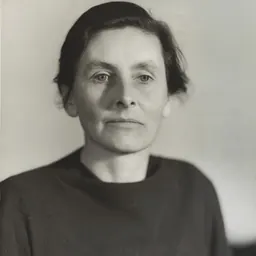
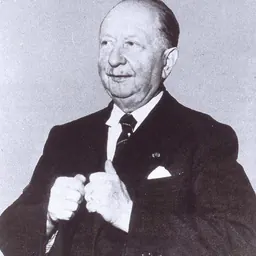
Contemporaries
People whose lives overlapped Edgar J. March's
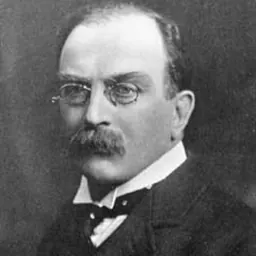

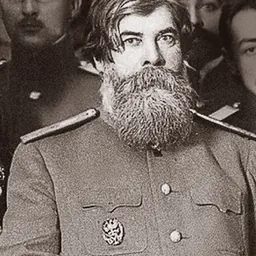

Frequently asked questions
Who was Edgar J. March?
20th-century writer and historian of sailing craft
When was Edgar J. March born?
Edgar J. March was born on 5 September 1897 in Isle of Thanet.
When did Edgar J. March die?
Edgar J. March died on 22 July 1971 in Isle of Wight.
What was Edgar J. March's occupation?
Edgar J. March was a historian and writer.
Sources & further reading
Cite this page
APA: Biography.guide. (2026). Edgar J. March. https://biography.guide/edgar-j-march/
MLA: "Edgar J. March." Biography.guide, https://biography.guide/edgar-j-march/.
Chicago: "Edgar J. March." Biography.guide. https://biography.guide/edgar-j-march/.
Data last updated: 2026-09-21 · Spot an error? Report a correction.
Portrait: Wikimedia Commons · author & licence
Page generated 2026-09-27 05:01 UTC