
About Eddie Shore
Lived 1902 – 1985 (aged 82). Eddie Shore was a Canadian ice hockey player.
Edward William Shore (November 25, 1902 – March 16, 1985) was a Canadian professional ice hockey defenceman, principally for the Boston Bruins of the National Hockey League, and the longtime owner of the Springfield Indians of the American Hockey League. Iconic for his aggressiveness, toughness and defensive skill, he was called both "Old Blood and Guts" and "the Edmonton Express". In 2017, Shore was named one of the '100 Greatest NHL Players' in history.
Shore won the Hart Trophy as the NHL's most valuable player four times, the most of any defenceman; only Wayne Gretzky and Gordie Howe have won it more often. After the league began naming NHL All-Star teams at the end of Shore's fifth season, Shore was honoured as a First Team All-Star in seven of his last nine seasons, while being named a Second Team All-Star one of the other seasons; in the remaining season he missed over half the schedule due to injury. A bruiser known for his violence, Shore set a then-NHL record for 165 penalty minutes in his second season.
Early life Shore was born to Katherine and John T. Shore in rural Saskatchewan and grew up in the small town of Cupar, which had only an outdoor rink for him to skate on. Shore had six siblings, and his family owned a ranch, which helped him develop a strong athletic foundation.
Playing career
Ace Bailey (left) shakes the hand of Eddie Shore at the benefit All-Star Game held in honour of Bailey. Shore started his career with his hometown minor hockey team, the Cupar Canucks. He played for the Melville Millionaires and won the 1923–24 Saskatchewan senior championship.
Shore moved up to professional hockey with the Regina Capitals of the Western Canada Hockey League in 1925. His team finished last in the league and moved to Portland after the season. Shore moved to the league champion Edmonton Eskimos in 1926, where he converted from forward to defence and was given the nickname "the Edmonton Express". They remained partners for the rest of Hitchman’s career, with Shore’s rushing style complementing Hitchman’s stay-at-home play. During Shore’s second year with the team, he and Hitchman helped lead the Bruins to the Stanley Cup Final, though they ultimately lost to the Ottawa Senators. Two years later, the pair anchored a defence that was virtually impenetrable. The Bruins surrendered only 52 goals over 44 games, helping the team capture its first Stanley Cup in 1929. His best statistical season came in 1932–33, when he scored 8 goals and 35 points, earning him the Hart Memorial Trophy as the NHL’s Most Valuable Player for the first time. That year he also finished 12th in the league's scoring race, which was unheard of for a defenceman at that time.
Shore brought a brand of rough-and-tumble hockey the league had never seen before. He antagonized fans, fought opponents, and stirred more controversy than any other player of his era. He quickly became one of the league’s first star players during the 1920s and 1930s. Also being credited for helping gain the city of Boston's interest in the NHL.
Due to Shore being one of the top players in the league he regularly faced an onslaught of physical punishment. His former teammate Milt Schmidt later commented “He was bruised, head to toe, after every game, everybody was after him. They figured if they could stop Eddie Shore, they could stop the Bruins.” By the end of the game Shore had suffered a concussion, a broken nose, two black eyes, and three broken teeth resulting in him spending the night in the hospital.
Another unusual incident involving Shore occurred in January 1930 when he was challenged to a boxing match by baseball player Art Shires. While NHL President Frank Calder said that Shore's participation was up to Bruins' manager Art Ross to decide, baseball commissioner Judge Kenesaw Mountain Landis vetoed Shires' participation, and the match was never held. On January 24, 1933, during a game against Montreal, Shore accidentally punched NHL referee-in-chief Cooper Smeaton during a fight with Sylvio Mantha and was fined $100.
On March 30, 1933, Shore scored a playoff overtime goal against Toronto, the only time he accomplished that feat in his career.
In Boston Garden on December 12, 1933, Shore ended the career of Toronto Maple Leafs star Ace Bailey when he hit Bailey from behind. When Bailey's head hit the ice, he was knocked unconscious and went into convulsions. Moments earlier, Maple Leafs teammate King Clancy upended Shore with a hard check as he rushed up the ice. Angry, dazed, and thinking he was going after Clancy, Shore rushed at Bailey intent on revenge. In retaliation, the Leafs tough-guy Red Horner punched Shore, whose head hit the ice as he fell from the blow. Shore was knocked unconscious and required seven stitches but was not seriously injured. An all-star benefit game was held at Maple Leaf Gardens on February 14, 1934, which raised $20,909 for Bailey and his family. Bailey and Shore shook hands and embraced at centre ice before the game began. Thirteen years later, the NHL introduced an annual all-star game.
Shore was named captain of the Bruins for the 1935–36 season and continued to be one of the league’s top players. As he went on to capture the Hart Memorial Trophy in back-to-back seasons (1935 and 1936). During the 1937 season Shore missed half the year after suffering a cracked vertebra.
Shore and the Bruins won their second Stanley Cup in 1939. Shore retired and bought the Springfield Indians of the American Hockey League, where he was player-owner in 1939–40. He was persuaded to rejoin the Bruins after injuries to the Bruins' defence corps, with an agreement that he would play in home games for $200 per match. Shore played just four games for Boston, and was reported as being unenthusiastic about the arrangement. Obtaining permission to play in the Indians' home games, he began to agitate to play in Springfield road games as well, which provoked his trade to the New York Americans on January 25, 1940, for Eddie Wiseman and $5000. He stayed with the Americans through their elimination from the playoffs, and was simultaneously playing with the Indians in their playoff games. Shore's final NHL game was March 24 against the Detroit Red Wings, which coincidentally was also the final NHL game for Hall of Famer and teammate Nels Stewart.
In February 1940, Shore and eight other arena managers organized the Ice Capades.
Throughout his career Shore had a reputation as a fierce competitor which was solidified by his aggressive style of play, which contributed to his nickname as one of the toughest players of his era. Shore's career was marked by significant injuries, yet he continued to play and push the boundaries of defencemen's roles by incorporating offensive strategies. Being viewed as one of the best defenceman in the history of the NHL.
Richard A. Johnson, curator of The Sports Museum in Boston, once remarked: “I always describe Shore as both the Babe Ruth and Ty Cobb of hockey. He had skill and a charisma that made you never want to take your eyes off him, and he also had a competitive ferocity that created this aura of imminent dread and contention that was always present. You always had the sense that something was going to happen when he was on the ice.”
Shore’s midnight ride
One of the most famous tales about Shore took place when he was travelling with a friend to catch the Bruins’ overnight train to Montreal. Along the way, his friend’s car broke down. Instead of leaving him behind and grabbing a cab, Shore rolled up his sleeves and tried to repair the engine himself. By the time they finally made it to the station, the team train had already departed. Refusing to give up, Shore struck a deal with a taxi driver, offering $100 to be driven the to Montreal. Shore and the cab driver met rough conditions, with heavy snow in the White Mountains. Resulting Shore often had to take the wheel himself, at one point stopping a trucker to borrow tire chains. He shovelled the cab out of ditches multiple times, and when the car could go no farther, he even hopped onto a horse-drawn sleigh to reach another station. The entire ordeal lasted 22 hours, but he managed to arrive just before game time. Coach Art Ross fined Shore $200 for the incident. However with his face raw from windburn and traces of frostbite, Shore went on to play one of the best games of his career scoring the only goal of the game with the Bruins winning 1–0. Shore hired John Ducey to handle public relations and promote hockey in Springfield and Buffalo. After the war, the Springfield Indians resumed play in 1946 and Shore returned.
In addition to owning the Indians, Shore purchased the Oakland Oaks of the Pacific Coast Hockey League (PCHL) in May 1948, and owned the team until it folded in December 1949.
As an owner, Shore could be cantankerous and was often accused of treating players with little respect. He commonly had Springfield players who had been out of the lineup perform maintenance in the Eastern States Coliseum, the Indians' home, referring to them as "Black Aces". Today, the term is commonly used to refer to extra players on the roster who train with the team in case of injury.
Shore was also involved in the local community, starting a youth hockey program and the greater Springfield amateur hockey league. While he was owner of the Indians he would open up the home rink on Saturdays, where he would hold skating lessons for the local youth. Shore is widely recognized as “the savior of hockey” in Western Massachusetts. His efforts to revive the Springfield Indians and foster youth programs have left a lasting impression on the region’s sports culture.
Shore and his wife remained in the Springfield area, Shore son Eddie Jr was also involved in the game of hockey and helped him manage the Indians. He also owned a farm in Alberta that he bought during his playing days.
On March 15, 1985, Shore was visiting his son in Springfield, Massachusetts. That night, Shore began coughing up and vomiting blood and was rushed to the hospital. He was pronounced dead the next morning and the cause of death was later determined to be liver cancer. His funeral was held in his hometown five days later. He is buried in Hillcrest Park Cemetery in the Sixteen Acres section of Springfield.
Cultural references In the film Slap Shot, Eddie Shore's name, along with Toe Blake and Dit Clapper, is considered synonymous with "old-time hockey." Shore is also featured in the Don Cherry biopic Keep Your Head Up Kid: The Don Cherry Story where he was portrayed by Stephen McHattie.
Honors and recognition Shore was elected to the Hockey Hall of Fame in 1947. The Boston Bruins retired his uniform number, 2. The Eddie Shore Award is given annually to the AHL's best defenceman. The Boston Bruins also give out their own annual Eddie Shore Award, which is given to the player "demonstrating exceptional hustle and determination". In 1970 Shore was awarded the Lester Patrick Trophy for contributions to U.S. Hockey. Also being inducted into the Canada's Sports Hall of Fame in 1975.
In 1998, he was ranked number 10 by the Hockey News on its list of the 100 Greatest Hockey Players, making him the highest-ranked pre-World War II player.
For his contributions to hockey, Eddie Shore was awarded the vanity license plate "MR HOCKEY" by the Commonwealth of Massachusetts.
Artifacts and memorabilia from Shore’s early career and local involvement are displayed in his hometown museum in Cupar, Saskatchewan, highlighting recognition of his legacy.
He was honored during the Bruins centennial celebrations in 2024. Being named to the Boston Bruins all-centennial team. In 1998, he was ranked No. 10 on The Hockey News' list of the 100 Greatest Hockey Players. Inducted into the American Hockey League Hall of Fame in 2006. Named to the Boston Bruins All-Centennial Team.
Records NHL record for most Hart Memorial Trophies as the NHL's most valuable player by a defenceman: (4) Oldest player in NHL history along with Herb Gardiner to win the Hart Memorial Trophy – 35 years old. Most fights in one NHL game (5)
Career statistics
Regular season and playoffs Bold indicates led league Regular season Playoffs Season Team League GP G A Pts PIM GP G A Pts PIM 1923–24 Melville Millionaires S-SSHL — — — — — 2 6 2 8 0 1923–24 Melville Millionaires Al-Cup — — — — — 9 8 6 14 0 1924–25 Regina Capitals WCHL 24 6 0 6 75 — — — — — 1925–26 Edmonton Eskimos WHL 30 12 2 14 86 2 0 0 0 8 1926–27 Boston Bruins NHL 41 12 6 18 136 8 1 1 2 46 1927–28 Boston Bruins NHL 43 11 6 17 165 2 0 0 0 8 1928–29 Boston Bruins NHL 39 12 7 19 98 5 1 1 2 28 1929–30 Boston Bruins NHL 42 12 19 31 109 6 1 0 1 26 1930–31 Boston Bruins NHL 44 15 16 31 107 5 2 1 3 22 1931–32 Boston Bruins NHL 45 9 13 22 98 — — — — — 1932–33 Boston Bruins NHL 48 8 27 35 112 5 1 1 2 14 1933–34 Boston Bruins NHL 30 2 10 12 67 — — — — — 1934–35 Boston Bruins NHL 48 7 26 33 32 4 0 1 1 2 1935–36 Boston Bruins NHL 45 3 16 19 61 2 1 1 2 12 1936–37 Boston Bruins NHL 20 3 1 4 12 — — — — — 1937–38 Boston Bruins NHL 48 3 14 17 42 3 0 1 1 6 1938–39 Boston Bruins NHL 44 4 14 18 47 12 0 4 4 19 1939–40 Boston Bruins NHL 4 2 1 3 4 — — — — — 1939–40 New York Americans NHL 10 2 3 5 9 3 0 2 2 2 1939–40 Springfield Indians IAHL 15 1 14 15 18 2 0 1 1 0 1940–41 Springfield Indians AHL 56 4 13 17 66 3 0 0 0 2 1941–42 Springfield Indians AHL 35 5 12 17 61 5 0 3 3 6 1943–44 Buffalo Bisons AHL 1 0 0 0 0 — — — — — NHL totals 551 105 179 284 1099 55 7 13 20 185 WCHL/WHL totals 54 18 2 20 161 2 0 0 0 8
Don’t just read it —
keep it.
Full-length biographies made to live with: read them, listen on the way to work, watch them tonight.
- E-book
- Audio
- Video
Instant download · yours to keep · every purchase keeps this site free
Important facts
People in Eddie Shore's life
Named in this biography and alive at the same time

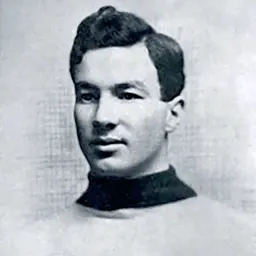


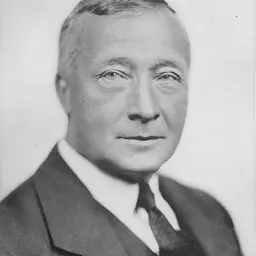
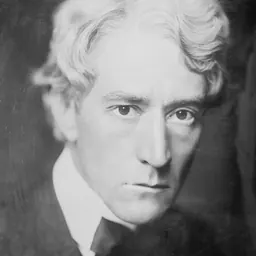


Related people
Same field, nearest in time
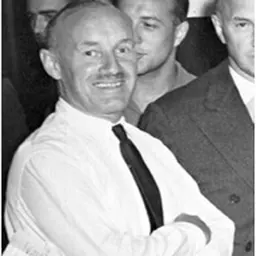



Contemporaries
People whose lives overlapped Eddie Shore's



Frequently asked questions
Who was Eddie Shore?
Canadian ice hockey player (1902–1985)
When was Eddie Shore born?
Eddie Shore was born on 25 November 1902 in Fort Qu'Appelle.
When did Eddie Shore die?
Eddie Shore died on 16 March 1985 in Springfield.
What was Eddie Shore's occupation?
Eddie Shore was an ice hockey player.
What nationality was Eddie Shore?
Eddie Shore was Canadian.
Sources & further reading
Cite this page
APA: Biography.guide. (2026). Eddie Shore. https://biography.guide/eddie-shore/
MLA: "Eddie Shore." Biography.guide, https://biography.guide/eddie-shore/.
Chicago: "Eddie Shore." Biography.guide. https://biography.guide/eddie-shore/.
Data last updated: 2026-09-26 · Spot an error? Report a correction.
Page generated 2026-09-27 05:13 UTC