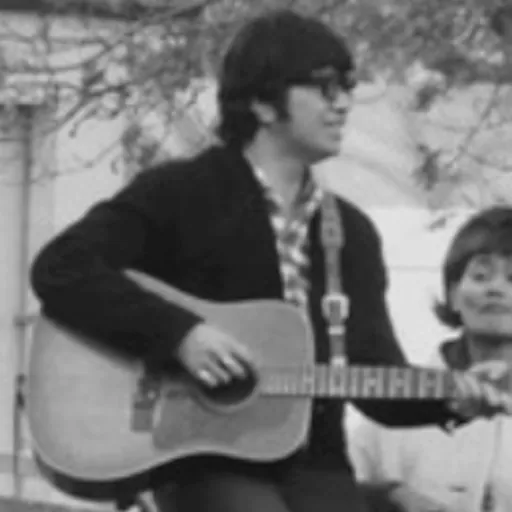
About Eddie Low
Lived 1943 – 2024 (aged 81). Eddie Low was a New Zealand musician.
Edward Robert Low (14 May 1943 – 21 September 2024) was a New Zealand country singer and musician, with a career spanning over 60 years. Low released a number of successful country albums and singles throughout the 1970s and 80s and performed in a number of groups since the 1960s including The Quin Tikis and the New Zealand Highwaymen. Low continued to record and release music throughout his life, enjoying a second wave of success in the 2010s after releasing his career overview album The Voice In A Million which went platinum. He was awarded Member of the New Zealand Order of Merit for services to music in the 2006 Queen's Birthday Honours.
Low began his career in the early 1960s with his brother in the Auckland-based group The Chevronaires, where he met John Rowles. The pair moved to Australia performing Beatles covers before moving to Sydney and becoming part of The Sundowners, joining the Miller's brewery circuit. Low later joined The Truetones for a period before becoming part of The Quin Tikis in the mid-1960s, performing in Australia and New Zealand for several years and appearing regularly in the annual tours of Miss New Zealand Extravaganza organised by Joe Brown. Low was encouraged by Brown to go solo, dubbing him "the voice in a million", and signed to Joe Brown Records, releasing his debut solo album Presenting The Golden Voice Of Eddie Low in 1970.
In the 1970s, Low collaborated with John Hore, releasing Eddie Low and John Hore Live (1971) and We Should Be Together (1972). Low went on to tour North America and released several albums and EPs including The Voice In A Million (1970), Eddie Low (1973), and Eddie Low in USA and Canada (1976). Following the tour, he entered a recording hiatus. Low returned in 1980, signing to RCA Records and releasing Eddie Low Sings (Songs of Home). Throughout the 1980s, he released a number of singles and several more albums including Easy Temptations (1981), Blue Smoke (1982), Country Greats (1984) and Heart and Soul (1984), and periodically returned to Christchurch to appear in That's Country hosted by Ray Columbus.
In 1986, Low launched his own record label, MAL Records, which he used to publish personal projects including "I Am Me", a single about his feelings around being labelled handicapped, and the albums Turning Back The Clock and Land of my Mother, Land of my Father, the latter reflecting his mixed Scottish and Māori heritage. Low continued recording music and performing throughout the 1990s through RCA Records, BMG and Sony Music, including Eddie Low (1992). In the 2000s, Low toured with the New Zealand Highwaymen and continued writing music, and moved to live in Christchurch in 2008.
In 2011, Low's compilation album The Voice In A Million (The Very Best Of Eddie Low) spent twenty-two weeks on the chart and peaked at number two, going platinum. He followed up in Icon (2012) and This Could Be the Last Time (2017), the latter published under EdRab Music, a new label he created for his later projects, and returned to touring with the New Zealand Highwaymen in a series of successful shows. Despite ailing health from a cancer diagnosis, Low continued to record music and tour until his death in 2024, with albums such as Paint Me a Memory (2020) and When I Sing About You (2021).
During his lifetime, Low was a celebrated country music singer, receiving extensive radio play on country stations, and won numerous awards including New Zealand Entertainer and Songwriter of the Year, the Variety Artists Club Scroll of Honour, the Country Music Legend Award, the Benny Award, and the Rockonz International Star Award, among others.
His father, Robert McRoy, was unable to cope as a single parent. Low and his older brother David were sent to live with several other children in the home of Maria Low, a widow who was a cousin of their mother. He started his first band, the Three Blind Mice, with two of his friends when he was 13.
After the contract ended, the pair moved to Sydney seeking opportunities in Kings Cross, where they discovered fellow musician Graham Willoughby, who had been in The Chevronaires, in a new band called The Dingdongers. The group performed in Australia and New Zealand, and were regulars on the annual Miss New Zealand Extravaganza tours and the Country and Western NZ Show, both organised by impresario Joe Brown.
1970–1979: Solo career and hiatus
In 1969, Brown encouraged Low to leave The Quin Tikis and offered to sign him to his label, Joe Brown Records, as a solo artist. Low agreed. In 1970 he debuted with the albums Presenting The Golden Voice Of Eddie Low and The Voice In A Million. In 1971, Low recorded an EP with John Hore named Eddie Low and John Hore Live. In November that year, Low reunited with Morrison and performed a nightly show along with Billy Peters.
By the mid-1970s, Low had released 11 singles through Brown and several albums and EPs, including a single with his daughter Marie, "Daddy What If". His music received heavy airplay on country radio stations.
1980–1996: Return to studio, MAL Records, and recognition In 1980, Low signed to RCA Records and returned with Eddie Low Sings (Songs of Home). Over the next four years, Low released four more albums: Easy Temptations, Blue Smoke, Country Greats and Heart and Soul. In 1984, he received the Variety Artists Club Scroll of Honour.
In 1986, Low started his own record label, MAL Records (later known as MAL Music Promotions) named after his daughter Maria Ann Low, who he had sung with in the 1975 single "Daddy What If". He released his single "I Am Me" through his label, a reflective piece on his blindness and his feelings about being considered handicapped. In 1996, Low re-released Heart and Soul through BMG and released the compilation album Eddie Low: New Zealand’s International Singing Star.
1997–2012: New Zealand Highwaymen and renewed success In 2004, Rajon Music re-released Turning Back The Clock and Land of my Mother, Land of my Father as a three-disc collection.
Throughout the 2000s, Low toured across New Zealand, including in 2003 with his Roy Orbison tribute show,
In 2006, Low's long career and contributions were recognised and he was awarded the Member of the New Zealand Order of Merit for services to music in the 2006 Queen's Birthday Honours.
In 2011, Low released The Voice In A Million (The Very Best Of Eddie Low), a compilation album reflecting on highlights of his career. The album was a commercial success going platinum, spending twenty two weeks on the charts, including two weeks peaking at number two, and reviving mainstream interest in Low's catalogue. It was the fifteenth best-selling album in New Zealand that year and the fourth best-selling album by a New Zealand artist in 2011. He followed up in 2012 with Icon released by Sony Music, Near the end of the tour during one of their shows, Low collapsed minutes before a performance at the Hokitika Regent Theatre, and was taken to hospital. He was transferred to Christchurch Hospital for nine days, leaving to attend his 80th birthday celebration. In early 2019 while visiting Australia during one of Low's tours, Kathleen died suddenly from a heart attack.
Throughout his life, Low spent time living and performing in both Australia and New Zealand. Low had a home in Sydney where he lived in the late 1970s, periodically returning to Christchurch to perform and appear on TV shows including That's Country. Low died in Christchurch on the morning of 21 September 2024, aged 81.
Honours and awards New Zealand Entertainer and Songwriter of the Year, 1980 Australia Country Hands of Fame, 1983 Country Music Legend Award, 2009 Benny Award, Variety Artists Club of New Zealand, 2009 New Zealand Walk of Fame (2023) Easy Temptations (1981) Blue Smoke (1982) Country Greats (1984) Heart and Soul (1984) Turning Back The Clock Land of my Mother, Land of my Father Icon (2012) Do You Wanna Dance (2014) This Could Be the Last Time (2017) You Raise Me Up (2019) To All The Girls I've Sung Before Paint Me a Memory (2020) When I Sing About You (2021)
EPs Eddie Low (1970) Eddie Low On A Mini Record (1971) Eddie Low Live (The Voice In A Million) (1971) Joe Brown Presents Eddie Low (1975)
Singles "Bonnie Please Don't Go" (1971) "Lonely Women Make Good Lovers" (1972) "Help Me Make It Through The Night" (1972) "Daddy What If" with Daughter Marie (1975) "May God Go With You" (1982) "I Am Me" (1990)
Collaborative albums and EPs Eddie Low and John Hore Live (1971) We Should Be Together with John Hore (1972)
Compilation albums The Best Of Eddie Low (1972) Eddie Low: New Zealand’s International Singing Star (1996) The Great Eddie Low (2009) The Voice In A Million (The Very Best Of Eddie Low) (2011) Selections 2009–2021 (2022)
Don’t just read it —
keep it.
Full-length biographies made to live with: read them, listen on the way to work, watch them tonight.
- E-book
- Audio
- Video
Instant download · yours to keep · every purchase keeps this site free
Important facts
People in Eddie Low's life
Named in this biography and alive at the same time



Related people
Same field, nearest in time

Contemporaries
People whose lives overlapped Eddie Low's


Frequently asked questions
Who was Eddie Low?
Blind Maori Country Singer
When was Eddie Low born?
Eddie Low was born on 14 May 1943 in Rotorua.
When did Eddie Low die?
Eddie Low died on 21 September 2024 in Christchurch.
What was Eddie Low's occupation?
Eddie Low was a musician.
What nationality was Eddie Low?
Eddie Low was New Zealand.
Sources & further reading
Cite this page
APA: Biography.guide. (2026). Eddie Low. https://biography.guide/eddie-low/
MLA: "Eddie Low." Biography.guide, https://biography.guide/eddie-low/.
Chicago: "Eddie Low." Biography.guide. https://biography.guide/eddie-low/.
Data last updated: 2026-09-22 · Spot an error? Report a correction.
Portrait: Wikimedia Commons · author & licence
Page generated 2026-09-27 05:03 UTC