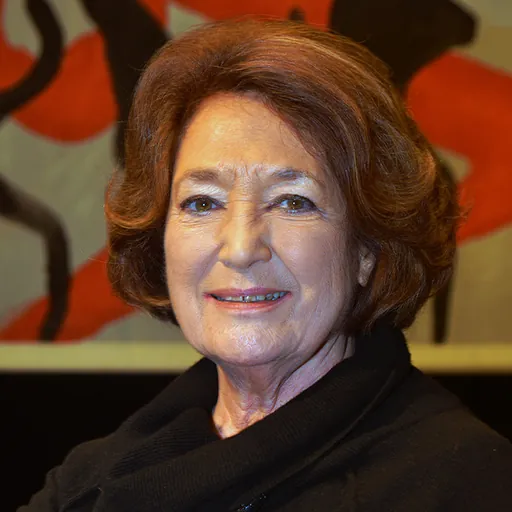
About Edda Moser
Born 1938. Edda Moser is a German opera singer, musician and university teacher.
Edda Moser (born 27 October 1938) is a German operatic soprano. She was particularly well known for her interpretations of music by Mozart. Her 1973 recital LP received the Grand Prix du Disque.
Life and career Moser was born in Berlin, the daughter of the musicologist Hans Joachim Moser. She is aunt to cellist Johannes Moser and pianist Benjamin Moser. She studied at the Stern Conservatory with Hermann Weißenborn and Gerty König and made her debut as Kate Pinkerton in Madama Butterfly at the Deutsche Oper Berlin in 1962. After singing in the Würzburg Opera Chorus from 1962 until 1963, she sang at the opera houses in Hagen, Bielefeld, Hamburg and Frankfurt, before joining the Vienna State Opera in 1971. She also sang in Salzburg.
She made her American debut in November 1968, when she appeared at the Metropolitan Opera in the role of Wellgunde in Das Rheingold. She went on to sing various roles there over nine seasons, including the parts of Donna Anna (Don Giovanni) and the Queen of the Night (The Magic Flute), as well as Liù in Puccini's Turandot.
She maintained an extensive repertoire, singing both coloratura and spinto soprano roles. She played Donna Anna in Joseph Losey's movie Don Giovanni. She was one of the original performers of Hans Werner Henze's oratorio Das Floß der Medusa which she created on disc because the intended premiere in Hamburg was cancelled after a classical music riot.
Opera News has said in a review of a series of recordings made in the 1980s that Moser could sing with a "finely controlled" legato."
After retiring from opera, Moser remained active as a recitalist during the late 1990s. She gave several concerts in Germany with Ivan Törzs at the piano (Dresden, Semperoper 1997, Stadttheater Gießen (1999) with programs ranging from Johann Adolph Hasse to Clara Schumann and Richard Strauss. She gave her farewell performance in Munich in 1999 at the Cuvilliés Theatre.
Edda Moser is involved in promoting the use of proper German instead of Denglisch. In 2006 she founded the yearly (Festival of German language). Three CDs documenting this festival have appeared thus far at the German publishing house Bastei Lübbe. She was also a professor of singing at the Hochschule für Musik in Cologne.
A recording by Moser of "Der Hölle Rache kocht in meinem Herzen" from The Magic Flute was included on the Voyager Golden Record.
Recordings
Operas and operettas (studio recordings)
Beethoven – Fidelio – Leonore D'Albert – Die Abreise – Luise Gluck – Orfeo ed Euridice – Amor Gounod – Faust (in German Margarethe highlights) – Marguerite Humperdinck – Hänsel und Gretel – Knusperhexe Kálmán – Gräfin Mariza – Manja Lehár – Giuditta – Giuditta Lehár – Die lustige Witwe – Hanna Glawari Leoncavallo – Pagliacci (Der Bajazzo) – Nedda Mozart – Apollo et Hyacinthus – Hyacinthus Mozart – Don Giovanni – Donna Anna Mozart – Idomeneo – Elettra Mozart – Der Schauspieldirektor – Mademoiselle Silberklang Mozart – Die Zauberflöte – Königin der Nacht Orff – Prometheus – Chorführerin I Rameau – Hippolyte et Aricie – prêtresse, chasseresse Schubert – Die Verschworenen – Gräfin Ludmilla Schumann – Genoveva – Genoveva O. Strauss – Ein Walzertraum – Franzi Steingrüber Suppé – Boccaccio – Beatrice Verdi – Don Carlos (in German, highlights) – Elisabetta Wagner – Das Rheingold, Götterdämmerung – Wellgunde Weber – Abu Hassan – Fatime
Sacred music Bach – Magnificat (BWV 243) Beethoven – Missa Solemnis Handel – Brockes Passion Mozart – Krönungsmesse Mozart – Vesperae solennes de confessore
Concert arias and operatic recitals
Virtuose Arien von WA Mozart, Orchestra of the Bavarian State Opera, Munich, EMI Electrola 1C 063-29 082 (1 LP, issued 1973) Works: O zittre nicht, mein lieber Sohn, recitative and aria for the Queen of the Night from Die Zauberflöte "Der Hölle Rache kocht in meinem Herzen", aria for the Queen of the Night from Die Zauberflöte Conductor: Wolfgang Sawallisch "Popoli di Tessaglia!", K. 316, recitative and aria for soprano and orchestra "Crudele? – Non mi dir, bell idol mio", recitative and aria for Donna Anna from Don Giovanni "Ma che vi fece, o stelle ... Sperai vicino il lido", K. 368, recitative and aria for soprano and orchestra "Martern aller Arten" from Die Entführung aus dem Serail Conductor: Leopold Hager Awards: Grand Prix du Disque; Schallplattenpreis der Mozartgemeinde Wien Various other albums with Mozart Concert Arias on EMI and Berlin Classics (with Jeanette Scovotti) Mendelssohn – "Infelice! Ah, ritorna, età felice", Op. 94 Opera Recital, arias from Tannhäuser, Oberon, Ariadne auf Naxos, Alceste, Rinaldo, Iphigenie en Tauride, La clemenza di Tito, Münchner Rundfunkorchester, conductor Peter Schneider Wagner – arias (Isolde, Brünnhilde) Ljubljana Symphony Orchestra, conductor Anton Nanut
Live recordings Handel – Rinaldo – Alcina (Met, 1984) Henze – Novae de infinito laudes Mozart – Don Giovanni – Donna Anna (Met, 1971) Mozart – Mitridate – Aspasia Verdi – Rigoletto – Gilda Wagner – Die Walküre, first act – Sieglinde The Metropolitan Opera Centennial Gala (1983)
Anthologies Great Moments of ... Edda Moser [EMI box set] Edda Moser singt Mozart, EMI 2006
Other Various albums on EMI with Lieder by Robert Schumann (Frauenliebe und -leben), Clara Schumann (Drei Lieder nach Friedrich Rückert), Brahms, Wolf (Mignon Lieder), Strauss (Brentano Lieder, Ophelia Lieder), Pfitzner and Schubert.
Cavalieri – Rappresentatione di Anima, et di Corpo – Vita Mondana Henze – Cantatas Being Beauteous, Cantata della Fiaba Estrema, Whispers from Heavenly Death Henze – Das Floß der Medusa – La Mort Haydn – Die Jahreszeiten – Hanne Bruno Maderna – Studi per 'Il processo' di Franz Kafka Schumann – Das Paradies und die Peri – Die Peri Schumann – "Des Sängers Fluch", Op. 139 Schumann – Spanisches Liederspiel, Spanische Liebeslieder, Tragödie, Liebesfrühling, Minnespiel
Symphonies Beethoven – 9th symphony Mahler – 8th symphony
Spoken word Fairy tales for Christmas by Hans Christian Andersen Poems to the Moon (Mondgedichte)
Don’t just read it —
keep it.
Full-length biographies made to live with: read them, listen on the way to work, watch them tonight.
- E-book
- Audio
- Video
Instant download · yours to keep · every purchase keeps this site free
Important facts
People in Edda Moser's life
Named in this biography and alive at the same time


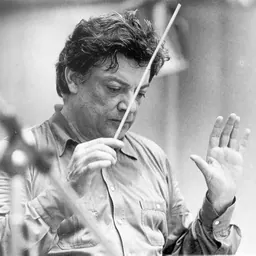
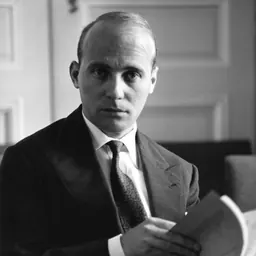
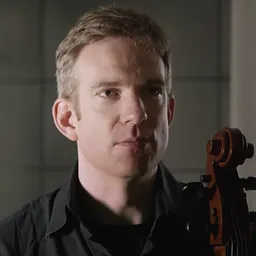


Related people
Same field, nearest in time



Contemporaries
People whose lives overlapped Edda Moser's



Frequently asked questions
Who is Edda Moser?
German operatic soprano
When was Edda Moser born?
Edda Moser was born on 27 October 1938 in Berlin.
What is Edda Moser's occupation?
Edda Moser is an opera singer, musician and university teacher.
What nationality is Edda Moser?
Edda Moser is German.
Sources & further reading
Cite this page
APA: Biography.guide. (2026). Edda Moser. https://biography.guide/edda-moser/
MLA: "Edda Moser." Biography.guide, https://biography.guide/edda-moser/.
Chicago: "Edda Moser." Biography.guide. https://biography.guide/edda-moser/.
Data last updated: 2026-09-22 · Spot an error? Report a correction.
Page generated 2026-09-27 05:10 UTC