
About Ebenezer Bassett
Lived 1833 – 1908 (aged 75). Ebenezer Bassett was an American diplomat.
Ebenezer Don Carlos Bassett (October 16, 1833 – November 13, 1908) was United States Ambassador to Haiti from 1869 to 1877. He was the first African American diplomat and the fourth U.S. ambassador to Haiti since the two countries established relations in 1862. His mother was Pequot. From 1857 to 1869, he was the principal of the Institute for Colored Youth in Philadelphia.
Early life Born in Derby, Connecticut, Ebenezer D. Bassett was from a community that had a strong tradition of owning their own property, running their own businesses, and playing important leadership roles. Among this community, the Bassetts stood out as astute and prominent. Bassett's father Eben Tobias, as well as his grandfather Tobiah, had the distinction of being elected "Black Governor" in Connecticut, an unofficial honorific among the black community.
Both Bassett's parents ensured that their son would receive the best education possible. In a step rare for any students of the mid-19th century, Bassett attended college in his home state. In 1853 he was the first black student to attend the Connecticut Normal School (now Central Connecticut State University). He finished his schooling as quickly as the school allowed, one year. After graduation Bassett taught school in New Haven, where he met and became friends with the abolitionist Frederick Douglass.
Educator and activist
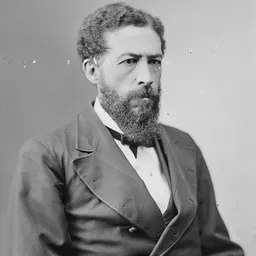
Soon Bassett was offered the chance to teach at a progressive new all-Black high school in Philadelphia. At the time, he was teaching at the Institute for Colored Youth (ICY). It later became Cheyney University of Pennsylvania, the earliest college dedicated to educating Black youth in the country. There he focused on Latin, Greek, mathematics and science, becoming principal after one year. Among his students was John H. Smythe, who would also become a diplomat in Liberia. But Pennsylvania, like the rest of the country, was soon dragged into the American Civil War.
Ebenezer Bassett also became one of Philadelphia's leading voices for abolition of slavery and emancipation of the nearly four million enslaved Blacks. Bassett used ICY as a base to recruit Blacks to serve in the Union Army.
His remaining years as an educator and activist would cement his position in the abolitionist community. The position of Haitian minister was first offered to John Mercer Langston, another prominent African American, by Andrew Johnson but Langston declined and Johnson chose Gideon H. Hollister instead. Bassett's accreditation to the "Black Republic" was no accident either. Though Haiti had gained its independence from France in 1804, it was not officially recognized by the United States until 1862. Southern resistance to a former colony governed by ex-slaves becoming a "nation" had prevented the United States from recognizing the country.
Bassett oversaw cases of citizen commercial claims, diplomatic immunity for consular and commercial agents, and aid to citizens affected by hurricanes, fires and numerous tropical diseases.
Canal crisis
The case that posed the greatest challenge to him, however, was political refugee General Pierre Théoma Boisrond-Canal.
Although he faced professional repercussions for his disputes with State Department officials,he continued to urge the Secretary of State and the Domingue administration to ensure the humane treatment of a Haitian citizen. In doing so, Bassett served the interests of both the United States and the Haitian people.
Upon the end of the Grant Administration in 1877, Bassett submitted his resignation as was customary with a change of hands in government. In spite of any lingering resentment that may have existed in Washington because of his defiant stance, it was impossible for the Department not to recognize Bassett's work.
Acting Secretary of State F.W. Seward wrote to Bassett, thanking him for his years of service:
I cannot allow this opportunity to pass without expressing to you the appreciation of the Department for the very satisfactory manner in which you have discharged your duties of the mission at Port-au-Prince during your term of office. This commendation of your services is the more especially merited because at various times your duties have been of such a delicate nature as to have required the exercise of much tact and discretion.
Later life When he returned to the United States, he spent an additional ten years as the Consul General for Haiti in New York City. He later returned to Haiti as secretary to Frederick Douglass who had been appointed as Minister Resident. Bassett himself requested this position and historians have tied his willingness to accept this demotion to Bassett's financial troubles. Bassett worked to temper Douglass' zeal for Pan-Americanism and American expansionism during his tenure from 1889 to 1891.
Prior to his death in Brooklyn, New York, he lived in Philadelphia, where his daughter Charlotte taught at the Institute for Colored Youth. He is buried, with family members, at the Grove Street Cemetery in New Haven, Connecticut.
Don’t just read it —
keep it.
Full-length biographies made to live with: read them, listen on the way to work, watch them tonight.
- E-book
- Audio
- Video
Instant download · yours to keep · every purchase keeps this site free
Important facts
People in Ebenezer Bassett's life
Named in this biography and alive at the same time




Related people
Same field, nearest in time


Contemporaries
People whose lives overlapped Ebenezer Bassett's



Frequently asked questions
Who was Ebenezer Bassett?
American diplomat
When was Ebenezer Bassett born?
Ebenezer Bassett was born on 16 October 1833 in Derby.
When did Ebenezer Bassett die?
Ebenezer Bassett died on 13 November 1908 in Brooklyn.
What was Ebenezer Bassett's occupation?
Ebenezer Bassett was a diplomat.
What nationality was Ebenezer Bassett?
Ebenezer Bassett was American.
Sources & further reading
Cite this page
APA: Biography.guide. (2026). Ebenezer Bassett. https://biography.guide/ebenezer-bassett/
MLA: "Ebenezer Bassett." Biography.guide, https://biography.guide/ebenezer-bassett/.
Chicago: "Ebenezer Bassett." Biography.guide. https://biography.guide/ebenezer-bassett/.
Data last updated: 2026-09-20 · Spot an error? Report a correction.
Page generated 2026-09-27 05:26 UTC