
About Eamon Collins
Lived 1954 – 1999 (aged 44–45). Eamon Collins was a British writer.
Eamon Collins (1954 – 27 January 1999) was a Provisional Irish Republican Army member in the late 1970s and early 1980s. He turned his back on the organisation in the late 1980s, and later co-authored a book called Killing Rage detailing his experiences within it. In January 1999 he was waylaid on a public road and murdered near his home in Newry in Northern Ireland.
Early life He was born in Camlough, County Armagh, his parents being Brian Collins and his wife Kathleen Cumiskey; his farmer father dealt in livestock, and was involved in cattle smuggling. Camlough, on the outskirts of Newry, was a small, staunchly Irish republican town in South Armagh. Despite the sentiment of the area, the Collins family had no association and little interest in Irish Nationalist politics. Kathleen Collins was a devout Catholic, and he was brought up under her influence with a sense of awe for the martyrs of that religion in Irish history, in its conflicts with Protestantism.
After completing his schooling, Collins worked for a time in the Ministry of Defence in a clerical capacity in London before studying law at Queen's University Belfast, where he became influenced by Marxist political ideology. and on remonstrating with them Collins was himself assaulted, and both he and his father were arrested and detained. Collins later attributed his crossing of the psychological threshold of actively supporting Irish Republican paramilitarism to this incident. Another factor in his radicalization at this time was an English law tutor at university who had persuaded him that the newly formed Provisional Irish Republican Army was a means of opposing the British military presence in Northern Ireland, as well as a vehicle for Marxist revolutionary politics, in line with the radical ideological expression of a younger generation in the IRA in the late 1970s that were now replacing an old guard which was more Catholic and nationalist.
Collins subsequently dropped out of university, and after working in a pub for a period, he joined Her Majesty's Customs & Excise Service, serving in Newry, and would go on to use this internal position within the administrative machinery of the British Government to support IRA operations against British security forces.
Around this time he married Bernadette, with whom he subsequently had four children.
IRA activity Collins joined the Provisional IRA during the blanket protest by Long Kesh inmates in the late 1970s, which sought Special Category Status for Irish Republican paramilitary prisoners, and he became involved in street demonstrations at this time. He joined the "South Down Brigade" of the IRA, being active in one of its units based around Newry. This brigade sometimes worked alongside the "South Armagh Brigade", which was the IRA's most effective unit during the troubles. Psychologically unsuited to physical violence, Collins was appointed instead by the IRA as its South Down Brigade's intelligence officer. This role involved gathering information on members of the Crown security forces personnel and installations for targeting in gun and bomb attacks. His planning was directly responsible for at least five deaths, including that of Major Ivan Toombs of the Ulster Defence Regiment in January 1981, with whom Collins worked in the Customs Station at Warrenpoint, and possibly three times that number. Many of the bombing targets of his unit were of limited scale, such as the wrecking of Newry Public Library, and a public house where a Royal Ulster Constabulary (RUC) choir drank after practice.
Collins became noted within IRA circles for his hard-line views on the continuance of the armed campaign, and later joined its Internal Security Unit. At the instigation of the South Armagh Brigade's leadership, he became a member of Sinn Féin in Newry. The South Armagh IRA wanted a hard-line militarist in the local party, as they were opposed to the increasing emphasis of the Republican leadership on political over military activity. Collins was not selected as a Sinn Féin candidate for local government elections, in part, due to his open expressions of suspicion of the IRA and Sinn Féin leadership, whom he accused of covertly moving towards a position of an abandonment of the IRA's military campaign. Around this time Collins had a confrontation with Gerry Adams at the funeral of an IRA man killed in a failed bombing attack over how to deal with the funeral's policing, where Collins accused Adams of being a "Stickie" (a derogatory slang term for the Official IRA). His uneasy state was further augmented by being arrested under anti-terrorism laws on two occasions, the second involving his detention at Gough Barracks in Armagh for a week, where he was subject to extensive sessions of interrogation in 1985 after an IRA mortar attack in Newry, which had claimed the lives of multiple police officers. Collins had not been involved in this operation, but after five days of incessant psychological pressure being exerted by R.U.C. specialist police officers, during which he had not said a word, he mentally broke, and yielded detailed information to the police about the organisation. As a result of his arrest he was dismissed from his career with H.M. Customs & Excise Service.
Collins subsequently stated that the strain of the interrogation merely exacerbated increasing doubts that he had already possessed about the moral justification of the IRA's paramilitary campaign and his actions within it. These doubts had been made worse by the strategic view that he had come to that the organisation's senior leadership had in the early 1980s quietly decided that the war had failed, and was now slowly manoeuvering the movement away from a military campaign to allow its political wing Sinn Féin to pursue its purposes by another means in what would become the Northern Ireland peace process. This negated in Collins' mind the justification for its then on-going military actions.
Statements against the IRA
After his confession of involvement in IRA activity, Collins became an RUC informant (or "Supergrass", in contemporary media language), upon whose evidence the authorities were able to prosecute a large number of IRA members. He was incarcerated in specialized protective custody, along with other paramilitaries who had after arrest given evidence against their organisations, in the Crumlin Road Prison in Belfast from 1985 to 1987. However, after an appeal from his wife who remained an IRA supporter The technical acquittal in the Crown court based upon judicial legal principles made an impact upon Collins' view of the British state, markedly contrasting with what he had witnessed in the IRA's Internal Security Unit, and reinforced his disillusionment with Irish Republican paramilitarism.
Post-IRA life
After his exile Collins moved to Dublin The IRA order exiling him had not been lifted, but with a formal ceasefire from the organisation in operation ordered by its senior command, and in the sweeping changes that were underway with renunciations of violence by all the paramilitary organisations in Northern Ireland that had followed on from it, he judged it safer to move back in with his wife and children who had never left Newry.
Broadcasting and published works Having returned to live in Newry, rather than maintaining a low profile Collins decided to take a prominent role in the ongoing transition of Northern Ireland's society, using his personal history as a platform in the media to analyze the adverse effects of terrorism. In 1995 he appeared in an ITV television documentary entitled "Confession", giving an account of his disillusioning experiences and a bleak insight into Irish Republican paramilitarism. In 1997 he co-authored Killing Rage, with journalist Mick McGovern, a biographical account of his life and IRA career. He also contributed to the book Bandit Country by Toby Harnden about the South Armagh IRA. At the same time in the media he called for the re-introduction of internment after the Omagh bombing for those continuing to engage in such acts; published newspaper articles openly denouncing and ridiculing the Real IRA's campaign, alongside publicly analyzing his own past role in such activity, and the damage that it had caused on a personal and social level to the two communities of Northern Ireland.
Witness evidence against Thomas Murphy In May 1998, Collins gave evidence against leading republican Thomas "Slab" Murphy, in a libel case Murphy had brought against the Sunday Times, over a 1985 article naming him as the IRA's Northern Commander. Murphy denied IRA membership, but Collins took the witness stand against him, and testified that from personal experience he knew that Murphy had been a key military leader in the organisation. Murphy subsequently lost the libel case and sustained substantial financial losses in consequence.
After giving his testimony, Collins had said in the court-room to Murphy "No hard feelings Slab". However, soon after the trial, Collins' home was attacked and daubed with graffiti calling him a "tout", a slang word for an informer in Irish Republican circles. After his return to Newry in 1995 his home there had been intermittently subjected to acts of petty vandalism, but after the Murphy trial these intensified in regularity and severity, and another house belonging to his family in Camlough, in which no one was resident, was destroyed by arson. His body also bore marks of having been struck by a car moving at speed.
Rumoured reasons behind the murder were that he had returned to Northern Ireland in breach of the IRA's banning order, and further he had detailed IRA activities and publicly criticized in the media a multiplicity of Irish Republican paramilitary splinter groups that had appeared after the Provisional IRA's 1994 ceasefire, and that he had testified in court against Murphy. Gerry Adams stated the murder was "regrettable", but added that Collins had "many enemies in many places". and a funeral service at St. Catherine's Dominican Church in Newry, Collins' body was buried at the town's Monkshill Cemetery, not far from the grave of Albert White, a Catholic former RUC inspector, whose assassination he helped to organise in 1982. In February 2014, detectives from the Serious Crime Branch arrested a 59-year-old man at an address in Newry in relation to the murder; he was subsequently released without charge. In September 2014, the PSNI arrested three men, aged 56, 55 and 42, in County Armagh in relation to inquiries into the murder, all of whom were subsequently released without charges after questioning. In January 2019, the PSNI released a statement regarding the murder that one of the assailants of Collins had been seriously injured by an accidentally sustained knife wound during the attack, and had left traces of his own blood at the scene, and that recent scientific advances in DNA evidence had increased the possibility of his identification. In May 2019, three men aged 60 to 62 were arrested and questioned, but then released unconditionally.
Publications Killing Rage (1997)
Don’t just read it —
keep it.
Full-length biographies made to live with: read them, listen on the way to work, watch them tonight.
- E-book
- Audio
- Video
Instant download · yours to keep · every purchase keeps this site free
Important facts
People in Eamon Collins's life
Named in this biography and alive at the same time
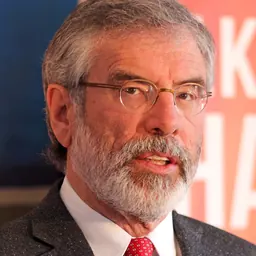
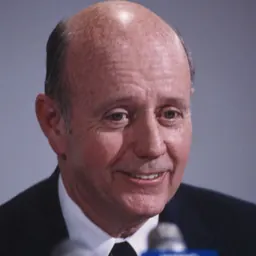




Related people
Same field, nearest in time

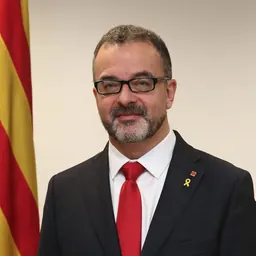
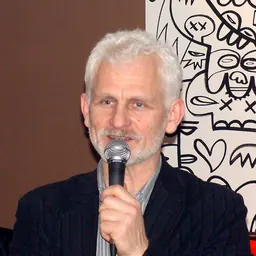
Contemporaries
People whose lives overlapped Eamon Collins's



Frequently asked questions
Who was Eamon Collins?
Irish republican; memoirist, writer
When was Eamon Collins born?
Eamon Collins was born in 1954.
When did Eamon Collins die?
Eamon Collins died on 27 January 1999.
What was Eamon Collins's occupation?
Eamon Collins was a writer.
What nationality was Eamon Collins?
Eamon Collins was British.
Sources & further reading
Cite this page
APA: Biography.guide. (2026). Eamon Collins. https://biography.guide/eamon-collins/
MLA: "Eamon Collins." Biography.guide, https://biography.guide/eamon-collins/.
Chicago: "Eamon Collins." Biography.guide. https://biography.guide/eamon-collins/.
Data last updated: 2026-09-20 · Spot an error? Report a correction.
Page generated 2026-09-27 05:33 UTC