
About E. Sally Ward
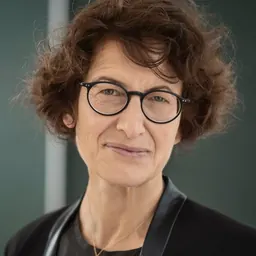
E. Sally Ward was a researcher and biochemist.
Research and career Ward remained at Cambridge as a Junior Research Fellow at Gonville and Caius College and subsequently as the Stanley Elmore Senior Research fellow at Sidney Sussex College, Cambridge. During this time, she carried out research in the Department of Biochemistry, and subsequently worked with the 2018 Nobel Laureate, Sir Gregory Winter, on antibody repertoire technology at the MRC Laboratory of Molecular Biology in Cambridge. She moved to the Texas A&M University Health Sciences University in 2014.
Ward's primary research interests have been directed towards understanding the factors that regulate the persistence and transport of antibodies in the body. This has relevance to the maintenance of immunity, in addition to the successful delivery of therapeutic antibodies. In 1996, Ward's laboratory addressed a longstanding question in immunology by identifying the neonatal Fc receptor, FcRn, as the regulator of Immunoglobulin G (IgG) levels and transport in the body. The identification of FcRn as a critical player in these processes also confirmed the 30-year old Brambell hypothesis (F.W.R. Brambell) that connected IgG transport and persistence.
Ward's research has involved the use of molecular and cellular approaches to establish the mechanism by which Fcrn achieves the regulation of antibody persistence and levels. To investigate the cellular processes involving FcRn, in collaboration with Raimund Ober, Ward developed advanced microscopy techniques to track FcRn and IgG in live cells. Ward's molecular and cellular studies have been used to inform the development of new approaches for antibody drug development.
The knowledge of the central role of FcRn in regulating antibody levels was used to develop an approach to extend the in vivo persistence of antibodies, namely half-life extension (HLE). This approach leads to substantial increases in the longevity of antibody-based drugs, allowing lower dosing frequencies. HLE has been widely implemented by biopharma and is used in several clinically approved antibody therapeutics (e.g. ), with many more in ongoing clinical trials.
Ward's identification of the role of FcRn in regulating IgG levels has led to the development of FcRn antagonists (or inhibitors) that lower antibody levels. Specifically, Ward developed an engineered antibody, called an Abdeg (for antibody that enhances IgG degradation), to inhibit FcRn. The Abdeg technology was licensed to the biopharma company, argenx, and led to the first approved FcRn antagonist, efgartigimod. Efgartigimod is approved to treat several autoantibody-mediated diseases, and its approval has been followed by that of additional FcRn antagonists developed by other companies.
To address the need for treatments for autoimmune disease that are not immunosuppressive, Ward's laboratory pioneered an approach for the specific removal of antibodies that cause disease in autoimmunity or other antibody-mediated pathologies. This has been named Seldeg technology (for selective degradation).
Ward's research has also involved the use of cell biological studies to generate engineered antibody-drug conjugates (ADCs) that are more effective in delivering cytotoxic drugs to tumor cells for the treatment of cancer. This approach, called ALTA technology, is expected to lead to reduced side-effects due to undesirable toxicities that can currently limit the effective use of ADCs to treat cancer.
Awards and honours Stanley Elmore Senior Research Fellowship (Sidney Sussex College, Cambridge) 2018 Royal Society Wolfson Research Merit Award 2022–2023 President of The Antibody Society 2022 Elected Fellow of the Royal Society 2025 International Society of Molecular Recognition Award in Affinity Technology
Selected publications Binding activities of a repertoire of single immunoglobulin variable domains secreted from Escherichia coli Abnormally short serum half-lives of IgG in beta 2-microglobulin-deficient mice Increasing the serum persistence of an IgG fragment by random mutagenesis Engineering the Fc region of immunoglobulin G to modulate in vivo antibody levels Engineered clearing agents for the selective depletion of antigen-specific antibodies Engineering a HER2-specific antibody-drug conjugate to increase lysosomal delivery and therapeutic efficacy
Videos
What is FcRn and What Does It Do? (YouTube) FcRn and the Long Half-Life of IgG Antibodies (YouTube) What is an FcRn Blocker and How Does It Work? (YouTube)
Don’t just read it —
keep it.
Full-length biographies made to live with: read them, listen on the way to work, watch them tonight.
- E-book
- Audio
- Video
Instant download · yours to keep · every purchase keeps this site free
Important facts
Related people
Same field, nearest in time





Frequently asked questions
Who was E. Sally Ward?
biochemistry researcher
What was E. Sally Ward's occupation?
E. Sally Ward was a researcher and biochemist.
Sources & further reading
Cite this page
APA: Biography.guide. (2026). E. Sally Ward. https://biography.guide/e-sally-ward/
MLA: "E. Sally Ward." Biography.guide, https://biography.guide/e-sally-ward/.
Chicago: "E. Sally Ward." Biography.guide. https://biography.guide/e-sally-ward/.
Data last updated: 2026-09-20 · Spot an error? Report a correction.
Page generated 2026-09-27 05:29 UTC