
About E. Herbert Norman
Lived 1909 – 1957 (aged 47). E. Herbert Norman was a Canadian historian, diplomat and canadians.
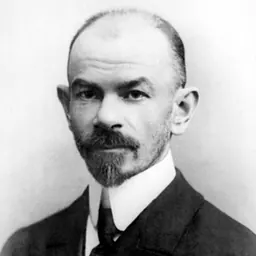
Egerton Herbert Norman (September 1, 1909 – April 4, 1957) was a Canadian diplomat and historian. Born in Japan to missionary parents, he became a historian of modern Japan before joining the Canadian foreign service. His most influential book was Japan's Emergence as a Modern State where he argued that persisting feudal class relations were responsible for government oppression at home and the imperialistic expansion that led to World War II in Asia. During the Red Scare of the 1950s Norman was accused of being a communist or even a spy, though investigations found no corroboration and he was defended by Canadian authorities. He committed suicide in 1957.
Early life and education Born and raised in Karuizawa, Japan where his father, Daniel Norman, was a Canadian Methodist missionary in Nagano province.
In 1936, Norman entered the graduate program in Japanese history at Harvard University, where he studied under Serge Elisséeff, a Russian émigrée Japanologist. Norman joined the Canadian foreign service in 1939 and received his doctorate from Harvard in 1940.
His elder brother, Howard, who also became a missionary, worked in Canada during World War II to support Japanese who were placed in internment camps.
During the Allied occupation of Japan after its defeat, Norman served as Canadian representative to the Supreme Commander of the Allied Powers (SCAP) administration and worked under the direction of Douglas MacArthur. He also became the first post-war President of the Asiatic Society of Japan. Using the close relationship he developed with MacArthur, he played a decisive role in the decision of the SCAP in 1946 to ban all Japanese political parties except the Japanese Communist Party (JCP). John Howes suggested that Norman took his life because he was concerned that the repetition of the allegations against him could jeopardize negotiations in the aftermath of the Suez Crisis. The Canadian public at the time was horrified, and the incident caused harm to Canada-U.S. relations.
The circumstances surrounding Norman's death continue to provoke controversy. In 1990, Joe Clark, then Canadian Minister of External Affairs, commissioned Peyton Lyon to review all the Canadian government's files on Norman and "clarify his allegiance to Canada ... and any relationship he may have had with the Soviet Union." Lyon reported that Norman was not a spy; that he was a sympathiser with Communism and the Soviet Union before joining the public service in 1939; that he was never a member of the Communist Party of Canada; and that he did not lie, but had "understated" his degree of commitment to Marxism and his leftist activities. Lyon rejected the conclusions of a book by Professor James Barros, published in 1986, in which Barros had detailed Norman's links to Communist groups.
Norman is buried in the Protestant Cemetery in Rome.
Norman was one of the inspirations for Harry Raymond, the central character in Timothy Findley play The Stillborn Lover (1993).
Books by E.H. Norman Japan's Emergence as a Modern State: Political and Economic Problems of the Meiji Period, International Secretariat of the Institute of Pacific Relations, 1940 Soldier and Peasant in Japan: The Origins of Conscription, International Secretariat of the Institute of Pacific Relations, 1943 Ando Shoeki and the Anatomy of Japanese Feudalism, Asiatic Society of Japan, 1949 Origins of the Modern Japanese State: Selected Writings of E.H. Norman, ed. John W. Dower, Random House, 1975 Japan's Emergence as a Modern State: Political and Economic Problems of the Meiji Period, 60th Anniversary Edition, ed. Lawrence T. Woods, Vancouver: UBC Press, 2000
Don’t just read it —
keep it.
Full-length biographies made to live with: read them, listen on the way to work, watch them tonight.
- E-book
- Audio
- Video
Instant download · yours to keep · every purchase keeps this site free
Important facts
People in E. Herbert Norman's life
Named in this biography and alive at the same time






Related people
Same field, nearest in time


Contemporaries
People whose lives overlapped E. Herbert Norman's



Frequently asked questions
Who was E. Herbert Norman?
Canadian diplomat (1909–1957)
When was E. Herbert Norman born?
E. Herbert Norman was born on 1 September 1909 in Nagano.
When did E. Herbert Norman die?
E. Herbert Norman died on 4 April 1957 in Cairo.
What was E. Herbert Norman's occupation?
E. Herbert Norman was a historian, diplomat and canadians.
What nationality was E. Herbert Norman?
E. Herbert Norman was Canadian.
Sources & further reading
· Wikipedia: E. Herbert Norman
Cite this page
APA: Biography.guide. (2026). E. Herbert Norman. https://biography.guide/e-herbert-norman/
MLA: "E. Herbert Norman." Biography.guide, https://biography.guide/e-herbert-norman/.
Chicago: "E. Herbert Norman." Biography.guide. https://biography.guide/e-herbert-norman/.
Data last updated: 2026-09-26 · Spot an error? Report a correction.
Page generated 2026-09-27 05:14 UTC