
About E. F. Jacob
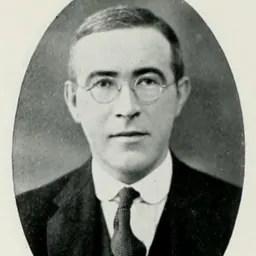
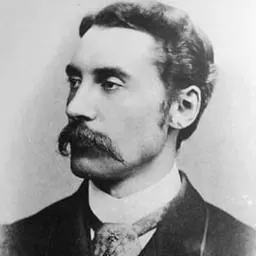
Lived 1894 – 1971 (aged 77). E. F. Jacob was a British historian, university teacher and medievalist.
Ernest Fraser Jacob (12 September 1894 – 7 October 1971) was a British medievalist and scholar who was President of the Chetham Society, Lancashire Parish Register Society and Ecclesiastical History Society.
Education He was educated at Twyford School, Winchester College, and then for a period at New College, Oxford - broken by service in World War I. He won a fellowship to All Souls College, Oxford, and taught there and at Christ Church where his pupils included A. L. Rowse.
Professor He was then professor of history at Manchester University from 1929 to 1944 before returning to Oxford as Chichele Professor of Modern History at All Souls from 1950 until 1961. He was an able academic politician, and is said to have recruited Sir Lewis Namier to Manchester by reading in his newspaper that Namier had no position, making a phone call to invite him to take a chair, and only then walking over to tell the vice-chancellor of the recruitment. Jacob was a Member of the Chetham Society, serving as a Member of Council from 1931 and as president from 1938 until 1971.
He was a Fellow of the Society of Antiquaries, Royal Historical Society and British Academy and also President of the Ecclesiastical History Society (1965–66).
Legacy Jacob is remembered as the link between the old school of 'structuralist' medievalists, including distinguished names such as William Stubbs, T. F. Tout and F. W. Maitland, and the subsequent school of more socio-political medieval historiography, to which J. S. Roskell, K.B. McFarlane and C. A. J. Armstrong belonged. His professorships at Manchester and Oxford did much to make the two schools England's academic centres for medieval studies. He also contributed the Fifteenth Century volume to the landmark Oxford History of England series.
List of works The Legacy of the Middle Ages (Oxford University Press, 1926) co-authored with C. G. Crump The Holy Roman Empire (Ernest Benn, 1928) no. 9 "Benn's Sixpenny Library" Essays in the Conciliar Epoch (Manchester University Press, 1943) Henry V and the Invasion of France (The English Universities Press, 1947) "Teach Yourself History" series The Medieval Registers of Canterbury and York (St. Anthony's Hall, 1953) Italian Renaissance Studies: A Tribute to the Late Cecilia M. Ady (Faber, 1960) editor The Fifteenth Century 1399-1485 (Oxford University Press, 1961) volume 6 in the "Oxford History of England" series Archbishop Henry Chichele (Nelson, 1967) Essays in Later Medieval History (Manchester University Press, 1968)
Don’t just read it —
keep it.
Full-length biographies made to live with: read them, listen on the way to work, watch them tonight.
- E-book
- Audio
- Video
Instant download · yours to keep · every purchase keeps this site free
Important facts
People in E. F. Jacob's life
Named in this biography and alive at the same time


Related people
Same field, nearest in time
Contemporaries
People whose lives overlapped E. F. Jacob's


Frequently asked questions
Who was E. F. Jacob?
British historian (1894-1971)
When was E. F. Jacob born?
E. F. Jacob was born on 12 September 1894.
When did E. F. Jacob die?
E. F. Jacob died on 7 October 1971.
What was E. F. Jacob's occupation?
E. F. Jacob was a historian, university teacher and medievalist.
What nationality was E. F. Jacob?
E. F. Jacob was British.
Sources & further reading
Cite this page
APA: Biography.guide. (2026). E. F. Jacob. https://biography.guide/e-f-jacob/
MLA: "E. F. Jacob." Biography.guide, https://biography.guide/e-f-jacob/.
Chicago: "E. F. Jacob." Biography.guide. https://biography.guide/e-f-jacob/.
Data last updated: 2026-09-20 · Spot an error? Report a correction.
Page generated 2026-09-27 05:33 UTC