
About Durgabar Kayastha
Lived 1515 – 1560 (aged 44–45). Durgabar Kayastha was a poet.
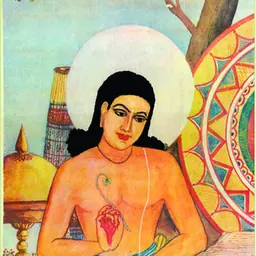
Durgabar Kayastha (1515–1560), sometimes spelled Durgavar or Durgavara Kayastha, was a poet and Ojapali performer from Kamakhya, Kamrup. He was well-known for his poetry praising the snake goddess Manasa as well as being an expert oja, the lead vocalist in Ojapali. Bengali critics claim that his works are also part of Bengali culture, since the Koch kings of Cooch Behar were major patrons of Assamese poets during the Middle Ages. Durgabar's patron was Biswa Singha, king of the Koch dynasty and a proponent of Shaktism.
His major works include Behula Upakhyana, narrating the story of Behula and Chand Sadagar. This story draws from ballads that were popular in Western Assam and North Bengal long before the verses were reduced to writing by Sukavi Narayan in the thirteenth century and by Durgabar in the early sixteenth century. The songs by Durgabar are known as Durgabari. In his work Giti Ramayana, Durgabar translated Madhava Kandali's Ramayana into lyrics and made new verses of his own, totaling fifty-eight; these songs were set to several classical ragas. One of his songs, O he bhāi lakhāi, describes the sorrows of Rama in the absence of his consort Sita. This song is characterised by its absolute minor pentatonic scale. This is a common feature in Biyāh-gowā Ojapali music not designed to be sung to a raga melody. Modern scholars assume that this melodic pattern is used to adapt poetic texts that were never treated musically, or as a method to maintain folk lyrics after the original tune is lost. Durgabar's Manasa poems, also known as Padmā Purāṇ, were fervently sung by Muslim ojas. In his poems he tenuously associates the god Dharmathakur with the tortoise god Kurma, whereas Mankar, another contemporaneous Manasa poet, related him with Shiva.
He was among the most influential figures in the evolution of panchali literature, which developed in Assam in the late 15th and early 16th centuries. His songs lack signs of later revisions influenced by Sankardev's neo-Vaishnavism and mostly preserve pre-Vaishnavite poetry.
His songs are sung rarely in Biyāh-gowā Ojapali performances in the modern day. Durgabar's Padmā Purāṇ songs are performed at the Devadhani festival, a Devadasi dance ceremony held at Kamakhya Temple on the first and second days of the month of Bhadrapada.
Don’t just read it —
keep it.
Full-length biographies made to live with: read them, listen on the way to work, watch them tonight.
- E-book
- Audio
- Video
Instant download · yours to keep · every purchase keeps this site free
Important facts
People in Durgabar Kayastha's life
Named in this biography and alive at the same time
Related people
Same field, nearest in time

Contemporaries
People whose lives overlapped Durgabar Kayastha's

Frequently asked questions
Who was Durgabar Kayastha?
poet
When was Durgabar Kayastha born?
Durgabar Kayastha was born in 1515 in Kamakhya (Locality), Kamrup district.
When did Durgabar Kayastha die?
Durgabar Kayastha died in 1560.
What was Durgabar Kayastha's occupation?
Durgabar Kayastha was a poet.
Sources & further reading
· Wikipedia: Durgabar Kayastha
Cite this page
APA: Biography.guide. (2026). Durgabar Kayastha. https://biography.guide/durgabar-kayastha/
MLA: "Durgabar Kayastha." Biography.guide, https://biography.guide/durgabar-kayastha/.
Chicago: "Durgabar Kayastha." Biography.guide. https://biography.guide/durgabar-kayastha/.
Data last updated: 2026-09-20 · Spot an error? Report a correction.
Page generated 2026-09-27 05:29 UTC