
Durgabai Deshmukh
Indian freedom fighter, politician, and social worker
About Durgabai Deshmukh
Lived 1909 – 1981 (aged 71). Durgabai Deshmukh was an Indian lawyer, social worker, politician, writer and social reformer.
Durgabāi Deshmukh (née Gummididala, 15 July 1909 – 9 May 1981) was an Indian freedom fighter, lawyer, social worker and politician. She was a member of the Constituent Assembly of India and of the Planning Commission of India.
A public activist for women's emancipation, she founded the Andhra Mahila Sabha (Andhra Women's Conference) in 1937. She was also the founder chairperson of the Central Social Welfare Board. In 1953, she married C.D. Deshmukh, the first Indian governor of the Reserve Bank of India and Finance Minister in India's Central Cabinet from 1950 to 1956.
Early life Durgabai Gummididala was born on 15 July, 1909 into a Vaidiki Brahmin family from Rajahmundry, Andhra Pradesh, British India. She later left him to continue her education.
Personal life In 1953, she married the then Finance Minister of India Chintaman Deshmukh. According to her own account, Prime Minister Jawaharlal Nehru was one of the three witnesses.
When the Indian National Congress had its conference in her hometown of Kakinada in 1923, When the organisers of the exhibition saw what she did and angrily chided her, she replied that she was only following instructions. She allowed Nehru in only after the organisers bought a ticket for him. Nehru praised the girl for the courage with which she did her duty.
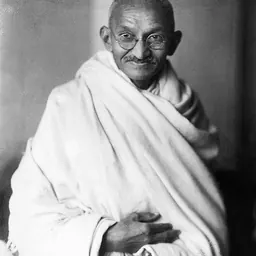
She followed to Mahatma Gandhi in India's struggle for freedom from the British Raj. She never wore jewellery or cosmetics, and she was a satyagrahi. As a prominent social reformer she participated in Gandhi-led Salt Satyagraha activities during the Civil Disobedience Movement. She was instrumental in organising women satyagrahis in the movement. This led to British Raj authorities imprisoning her three times between 1930 and 1933. With similar demands for speedy justice for women in familial matters from women's movement and organisations, the Family Courts Act was enacted in 1984.
She was the first chairperson of the National Council on Women's Education, established by the Government of India in 1958. In 1959, the committee presented its recommendations, as follows: "The Centre and State Governments should give priority to the education of girls. In the central ministry of education, a department of women's education should be created. For proper education of girls, a Director of Women's Education should be appointed in each state. Co-education should be properly organised at higher level of education. The University Grants Commission should specify a definite amount separately for the education of girls. In the first phase of development, provision of free education should be made for girls up to Class VIII Facilities in the choice of optional subjects should be made available for girls. Girls should get training facilities on a liberal basis. Education of Girls should be given due encouragement in rural areas. A large number of seats in various services should be reserved for them. Programmes for the development of adult women's education should be properly initiated and encouraged."
To commemorate her legacy, Andhra University, Visakhapatnam has named its Department of Women Studies as Dr. Durgabai Deshmukh Centre for Women's Studies.
In 1963, she was sent to Washington D.C. as a member of the Indian delegation to the World Food Congress. She proposed a period of fifteen years of status quo to enable all the non-Hindi speakers to adopt and learn Hindi. in 1938. Council for Social Development Durgabai Deshmukh Hospital in 1962. Sri Venkateswara College, New Delhi
Andhra Education Society (AES) was founded in 1948 by Dr. Durgabai Deshmukh to serve the educational needs of Telugu children residing in Delhi.
Don’t just read it —
keep it.
Full-length biographies made to live with: read them, listen on the way to work, watch them tonight.
- E-book
- Audio
- Video
Instant download · yours to keep · every purchase keeps this site free
Important facts
Family & relationships
People in Durgabai Deshmukh's life
Named in this biography and alive at the same time

Related people
Same field, nearest in time



Contemporaries
People whose lives overlapped Durgabai Deshmukh's



Frequently asked questions
Who was Durgabai Deshmukh?
Indian freedom fighter, politician, and social worker
When was Durgabai Deshmukh born?
Durgabai Deshmukh was born on 15 July 1909 in Rajahmundry.
When did Durgabai Deshmukh die?
Durgabai Deshmukh died on 9 May 1981 in Narasannapeta.
What was Durgabai Deshmukh's occupation?
Durgabai Deshmukh was a lawyer, social worker, politician, writer and social reformer.
What nationality was Durgabai Deshmukh?
Durgabai Deshmukh was Indian.
Sources & further reading
· Wikipedia: Durgabai Deshmukh
Cite this page
APA: Biography.guide. (2026). Durgabai Deshmukh. https://biography.guide/durgabai-deshmukh/
MLA: "Durgabai Deshmukh." Biography.guide, https://biography.guide/durgabai-deshmukh/.
Chicago: "Durgabai Deshmukh." Biography.guide. https://biography.guide/durgabai-deshmukh/.
Data last updated: 2026-09-20 · Spot an error? Report a correction.
Page generated 2026-09-27 05:22 UTC