
About Duncan K. McRae
Lived 1820 – 1888 (aged 67). Duncan K. McRae was an American politician.
Duncan Kirkland McRae (August 16, 1820 – February 12, 1888) was an American politician from North Carolina. After studying law, he served as attorney, diplomat and state legislator. He was an officer in the Confederate States Army during the American Civil War, the wounds received in it complicating his later life. McRae was also a newspaper editor.
Early life and education McRae was born in Fayetteville, North Carolina, the son of John McRae (1793–1880), Fayetteville's postmaster in the 1840s and 1850s. In 1825 the five-years old Duncan held the welcome speech at the visit of the Marquis de Lafayette. He attended the University of Virginia, located in Charlottesville, and the College of William & Mary in Williamsburg. Back in North Carolina he studied law under Judge Robert Strange, was admitted to the bar in 1841 and briefly practiced in Oxford before becoming a courier to Mexico for the State Department.
Political career In 1842 young McRae was elected into the North Carolina House of Commons as Democratic representative for his native Cumberland County; serving a single term until 1843. Then he became a U.S. District Attorney, gaining a reputation as sharp lawmen and outstanding speaker. He became an Independent Democrat campaigning as the Land Distribution Democratic nominee, calling for public lands given by North Carolina to the federal government in 1790 to be sold and the money granted to North Carolina. He lost his candidacy to John Willis Ellis by a wide margin. leading it into the maelstrom of the Battle of Antietam where it nearly perished. McRae himself was badly wounded but again stayed with his command until after the battle when he was hospitalized. When the recuperating colonel was passed over for promotion, the later going to Alfred Iverson Jr., he resigned his commission; effective on November 13, 1862. At Antietam, he admitted that, "the unaccountable panic occurred, when I was left along on the field, with only Captain Withers of Caswell and perhaps one other officer, and I had just gotten off, when I encountered ... General Lee, and it was while, with him I was trying to get some men out of the Hay Stacks that a piece of shell struck me in the forehead." He became a bitter critic of the Civil War, though in private, writing on August 21, 1885 to D.H. Hill, who queried him on the battles of the past:
McRae's frail health and reappearing complications from his war wounds made him relocate - first to Chicago, then to New York City. He died in Brooklyn on February 12, 1888, and was buried on Woodlawn Cemetery.
Family McRae married Louise Virginia Henry, the daughter of Judge Louis D. Henry of Raleigh, on October 8, 1845. They had three daughters; Margaret Kirkland, Virginia Henry, and Marie.
Don’t just read it —
keep it.
Full-length biographies made to live with: read them, listen on the way to work, watch them tonight.
- E-book
- Audio
- Video
Instant download · yours to keep · every purchase keeps this site free
Important facts
People in Duncan K. McRae's life
Named in this biography and alive at the same time


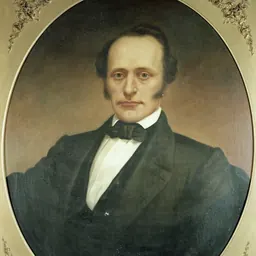

Related people
Same field, nearest in time


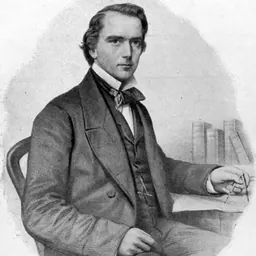

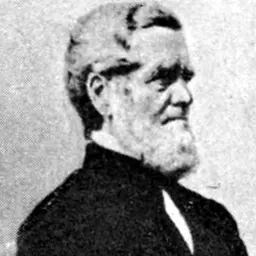
Contemporaries
People whose lives overlapped Duncan K. McRae's

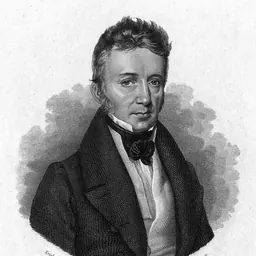




Frequently asked questions
Who was Duncan K. McRae?
American political candidate
When was Duncan K. McRae born?
Duncan K. McRae was born on 16 August 1820 in Fayetteville.
When did Duncan K. McRae die?
Duncan K. McRae died on 12 February 1888 in Brooklyn.
What was Duncan K. McRae's occupation?
Duncan K. McRae was a politician.
What nationality was Duncan K. McRae?
Duncan K. McRae was American.
Sources & further reading
Cite this page
APA: Biography.guide. (2026). Duncan K. McRae. https://biography.guide/duncan-k-mcrae/
MLA: "Duncan K. McRae." Biography.guide, https://biography.guide/duncan-k-mcrae/.
Chicago: "Duncan K. McRae." Biography.guide. https://biography.guide/duncan-k-mcrae/.
Data last updated: 2026-09-20 · Spot an error? Report a correction.
Page generated 2026-09-27 05:20 UTC