
About Dumitru Țepeneag
Born 1937. Dumitru Țepeneag is a French and Romanian linguist, writer, translator and essayist.
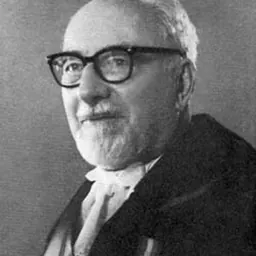
Dumitru Țepeneag (also known under the pen names Ed Pastenague and Dumitru Tsepeneag; b. February 14, 1937) is a contemporary Romanian novelist, essayist, short story writer and translator, who currently resides in France. He was one of the founding members of the Oniric group, and a theoretician of the Onirist trend in Romanian literature, while becoming noted for his activities as a dissident. In 1975, the Communist regime stripped him of his citizenship. He settled down in Paris, where he was a leading figure of the Romanian exile.
In addition to his literary work, he is known for his independent left-wing views, which were influenced by libertarian socialism and anarchism. Țepeneag is one of the most important Romanian translators of French literature, and has rendered into Romanian the works by New Left, avant-garde and Neo-Marxist authors such as Alain Robbe-Grillet, Robert Pinget, Albert Béguin, Jacques Derrida, and Alexandre Kojève. The founder of the magazine Cahiers de l'Est, he has also translated texts by Romanian poets into French — examples include Leonid Dimov, Daniel Turcea, Ion Mureșan, Marta Petreu, Emil Brumaru, Mircea Ivănescu. Both took partial inspiration from Surrealism, but rejected its focus on psychoanalysis and the scientific ideas favored by André Breton.
The group was for a while under the protective wing of Romanian poet Miron Radu Paraschivescu, a Communist Party member who was generally seen as anti-dogmatic, and whose personal opinions were veering toward Trotskyism. Țepeneag's work of the time was part of a Romanian intellectual reaction against Realism and Socialist realism, and coincided with the climate of liberalization at the end of Gheorghe Gheorghiu-Dej's period in power and the rise of Nicolae Ceaușescu. Subsequently, placed under surveillance by the Romanian secret police, the Securitate, he was formally indicted in 1975. Ever since, he has commuted between Paris and Bucharest, and has played a part in promoting Romanian literature to the foreign public. His diaries from the early 1970s, detailing the years of his dissidence, were published in Romania beginning in 2006. The polemic was alluded to in Buzura's 2003 volume Tentația risipirii, where the author responded to criticism from Țepeneag, as well as to similar opinions expressed by Paul Goma, Gheorghe Grigurcu, and other writers. Commenting on this dispute, literary critic Mircea Iorgulescu argued that Buzura's book had classified Dumitru Țepeneag and his other adversaries as "insignificant authors", and expressed his opinion that such an attitude was incorrect. Ștefănescu alleged that all four authors had associated with Romania's first post-Revolution President, Ion Iliescu, and, to varying degrees, with Iliescu's Social Democratic Party.
Published works
First published in Romanian
Short stories Exerciții (Exercises) Bucharest, Editura pentru literatură, 1966 Frig (Cold), Bucharest, Editura pentru literatură, 1967 Așteptare (Waiting), Bucharest, Cartea Românească, 1971 Înscenare și alte texte ("Staging" or "Frame-up" and other texts), Pitești, Editura Calende, 1992 Prin gaura cheii (Through the keyhole), ed. Nicolae Bârna, Bucharest, Editura Allfa, 2001 Proză scurtă (Short prose), Bucharest, Tracus Arte, 2014
Novels Hotel Europa, Bucharest, Editura Albatros, 1996 Maramureș, Cluj, Editura Dacia, 2001 La belle Roumaine, Pitești, Editura Paralela 45, 2004; Bucharest, Art, 2007 Camionul bulgar. Șantier sub cerul liber (The Bulgarian Truck. Building Site beneath the Open Sky), Iași, Polirom, 2010.
Diaries Un român la Paris (A Romanian in Paris), Cluj, Editura Dacia, 1993; definitive edition, Bucharest, Cartea Românească, 2006
Essays and journalism Întoarcerea fiului la sânul mamei rătăcite (The son's return to the bosom of the errant mother), Iași, Institutul European, 1992 Călătorie neizbutită (Unsuccessful journey), Bucharest, Cartea Românească, 1999 Războiul literaturii nu s-a încheiat (The literature war is not yet over), Bucharest, Editura ALL, 2000 Destin cu popești, Cluj, Editura Dacia & Biblioteca Apostrof, 2001 Clepsidra răsturnată. Dialog cu Ion Simuț (Upturned hourglass. Dialogue with Ion Simuț)., Pitești, Paralela 45, 2003 Capitalism de cumetrie (Nepotistic capitalism), Iași, Polirom, 2007
First published in French Arpièges, Paris, Flammarion, 1973 — translated by Alain Paruit after Zadarnică e arta fugii, first published in Romania by Editura Albatros in 1991; Bucharest, Art, 2007 Les noces nécessaires, Paris, Flammarion, 1977, translated by Alain Paruit after Nunțile necesare (The Necessary Weddings), published in Romania in 1992 and 1999 La défense Alekhine, Paris, Garnier, 1983 Le mot sablier. Cuvântul nisiparniță (The Hourglass Word), Paris, Éditions P.O.L., 1984; Romanian-French bilingual edition: Cuvîntul nisiparniță, Bucharest, Editura Univers, 1994 Roman de gare, written directly in French, 1985, translated into Romanian by the author as Roman de citit în tren, Iași, Institutul European, 1993 Pigeon vole, written directly in French, 1988; translated into Romanian by the author as Porumbelul zboară, Bucharest, Editura Univers, 1997 Pont des Arts, translated by Alain Paruit, Paris, Éditions P.O.L., 1998; Romanian version published by Editura Albatros, 1999 Frappes chirurgicales, Paris, Éditions P.O.L., 2009
Translations
French Exercices d'attente, Flammarion, 1972, trans. Alain Paruit Au pays du Maramureș, trans. Alain Paruit, Paris, Éditions P.O.L., 2001 Attente, trans. Alain Paruit, Paris, Éditions P.O.L., 2003 Hôtel Europa, trans. Alain Paruit, Paris, Éditions P.O.L., 2006 La belle Roumaine, trans. Alain Paruit, Paris, Éditions P.O.L., 2006 Le camion bulgare, trans. Nicolas Cavaillès, Paris, Éditions P.O.L., 2011
English Vain Art of the Fugue, trans. Patrick Camiller, Dalkey Archive Press, 2007 Pigeon Post, trans. Jane Kuntz, Dalkey Archive Press, 2008 The Necessary Marriage, trans. Patrick Camiller, Dalkey Archive Press, 2009 Hotel Europa, trans. Patrick Camiller, Dalkey Archive Press, 2010 The Bulgarian Truck, trans. Alistair Ian Blyth, Dalkey Archive Press, 2015 La Belle Roumaine, trans. Alistair Ian Blyth, Dalkey Archive Press, 2015
Don’t just read it —
keep it.
Full-length biographies made to live with: read them, listen on the way to work, watch them tonight.
- E-book
- Audio
- Video
Instant download · yours to keep · every purchase keeps this site free
Important facts
People in Dumitru Țepeneag's life
Named in this biography and alive at the same time




Related people
Same field, nearest in time




Contemporaries
People whose lives overlapped Dumitru Țepeneag's




Frequently asked questions
Who is Dumitru Țepeneag?
Romanian dissident
When was Dumitru Țepeneag born?
Dumitru Țepeneag was born on 14 February 1937 in Bucharest.
What is Dumitru Țepeneag's occupation?
Dumitru Țepeneag is a linguist, writer, translator and essayist.
What nationality is Dumitru Țepeneag?
Dumitru Țepeneag is French and Romanian.
Sources & further reading
Cite this page
APA: Biography.guide. (2026). Dumitru Țepeneag. https://biography.guide/dumitru-tepeneag/
MLA: "Dumitru Țepeneag." Biography.guide, https://biography.guide/dumitru-tepeneag/.
Chicago: "Dumitru Țepeneag." Biography.guide. https://biography.guide/dumitru-tepeneag/.
Data last updated: 2026-09-27 · Spot an error? Report a correction.
Page generated 2026-09-27 05:17 UTC