
Dragoslav Šekularac
Serbian footballer
About Dragoslav Šekularac
Lived 1937 – 2019 (aged 81). Dragoslav Šekularac was a Yugoslav and Serbian association football player and association football coach.
Dragoslav Šekularac (, ; 8 November 1937 – 5 January 2019) was a Yugoslav and Serbian professional footballer and coach.
Nicknamed Šeki, he played as an attacking midfielder, and his enormous popularity throughout FPR Yugoslavia during the early 1960s transcended sports as he easily became one of the most recognizable individuals in the country.
Early life Šekularac was born on 8 November 1937 in Štip, Vardar Banovina, Kingdom of Yugoslavia present day North Macedonia to mixed family Montenegrin Serb father Bogosav from the village of Kurikuće, Berane Municipality (the Vasojevići region in northern Montenegro) and Macedonian mother Donka (née Markovska). His father was a lawyer whose job took him to Štip where he got married and started a family. Dragoslav was a six-month-old infant when the family moved to the Yugoslav capital Belgrade as a result of his father landing a job at the Ministry of Agriculture. The family resided in central Belgrade, on Hilandarska Street near the Politika office building, and their second son, Dragoslav's younger brother Mirko, was born in 1941.
Šekularac was born bowlegged, much like Garrincha, a footballer whom he was later often compared to. The youngster took up street football very early, right after World War II ended, playing on concrete in his school yard and displaying exceptional dribbling skills.
Young Šekularac simultaneously became a fan of the recently established Red Star Belgrade football club, sneaking into their matches at the old SK Jugoslavija ground. Though lacking in height and having a stocky build, he nevertheless also enjoyed basketball—frequently going to the Mali Kalemegdan outdoor concrete court to watch Red Star Belgrade basketball club games featuring their stars Aleksandar Gec, Tullio Rochlitzer, and Srđan Kalember.
Well versed in street football, the youngster's first attempt at structured association football took place via a tryout at the Red Star Belgrade under-14 youth squad. Adjudged to be short and physically underdeveloped, young Šekularac was rejected. Months later, he would experience another rejection before eventually being accepted on his third try, under the youth team coach Dimitrije Milojević whom Šekularac and the rest of the youth squad referred to as Čika Mitke (Uncle Mitke).
Club career Red Star Belgrade Šekularac made his senior debut at only 17 years of age on 6 March 1955 during the latter part of Red Star's 1954–55 league campaign under head coach Milovan Ćirić. The youngster would record only one more league appearance by the end of that season.
However, the next season, 1955–56, signaled immediate breakthrough. In addition to securing a spot in the first team, he also became an integral part of the squad that won the Yugoslav league title in convincing fashion. He contributed to the cause with 7 goals in addition to many eye-catching midfield displays that would soon become a staple of his game.
By the start of the 1956–57 season, eighteen-year-old Šekularac had already made his senior national team debut. And, in November and December 1956 during the league's winter break, he represented FPR Yugoslavia at the 1956 Melbourne Olympics. Despite added pressures and responsibilities, he turned in another stellar league season helping Red Star to another title. He also played an important part in Red Star's European Champions' Cup campaign that ended at semi-final stage versus AC Fiorentina.
All the success led to coach Ćirić receiving and taking the S.S. Lazio head coaching offer position. In his place came Miša Pavić who previously mentored Šekularac in the club's youth setup. The season was not much of a success, however, either team-wise or for Šekularac individually. Increased opponents' defensive focus multiplied the number of hits and knocks he was forced to endure during games. He battled injury problems that caused him to miss almost half of the season as Red Star quickly fell out of title contention.
Though the next 1958–59 season brought continued injury issues, Šekularac, by now a bona fide star across the league, managed to lead his team to league-cup double, both at the expense of arch-rival FK Partizan. In 1959 after winning the league and cup double with Red Star, Italian industrialist Gianni Agnelli spared no expense in order to bring 21-year-old Šekularac to Juventus. The transfer was reportedly stopped by the highest echelons of communist nomenclature in FPR Yugoslavia, with even the interior minister Aleksandar Ranković commenting that Šeki is needed in the country to "entertain the working class".
Šekularac is also remembered as the perpetrator of an infamous on-pitch incident in fall 1962 when he assaulted referee Pavle Tumbas in the middle of a league match. He ended up serving a year and a half long suspension.
He ended up playing 375 official competitive matches (156 of those in the league) for Red Star and scoring over 119 goals (32 league goals).
Playing abroad He later played for Independiente Santa Fe in Colombia for five seasons, before transferring to Millonarios from Bogotá. He eventually ended his playing career in France with Paris FC and later on as a player-coach in Canada with the Serbian White Eagles in 1975. While in Toronto, Šekularac posed for a photograph beside the royal insignia of pre-war Serbia for which he had his passport temporarily revoked by the Yugoslav government. While playing in Colombia, he was referred to as el Pelé blanco (the white Pelé).
International career At only 18, he made his national team debut on 30 September 1956. He was on the national side that won the silver medal at the 1956 Summer Olympics in Melbourne, Australia, and also participated in the World Cups of 1958 and 1962. He went on to make 41 senior international appearances, scoring 6 goals.
A highlight of his international career was the 1960 European Nations' Cup, where Šekularac earned the spot in the Team of the Tournament. Forty years later, he reminisced on the matches:
He played his final international in June 1966 against Bulgaria.
Playing style He was known for his speed, ball control, and technical ability. His style of play, which emphasized creativity and individual skill, contributed to his popularity among spectators. During the early 1960s, he was a prominent figure in Yugoslav football and became widely recognized within the country.
In addition to the swelling of praise and accolades for his skills, he also attracted criticism over lack of team play and overall attitude on the pitch that some found to be disrespectful to the game. Others point to his lack of effectiveness and a seeming disproportion between his talent and his overall career statistics.
Coaching career Guatemala national team Šekularac was head coach of the Guatemala national team for eighteen months from 1984 to 1985. Under Šekularac, Guatemala was undefeated in 36 home matches but narrowly missed out on the 1986 World Cup after losing away to Canada in a decisive 1985 CONCACAF Championship match. With seasoned internationals being brought over from Serbia and the rest of Europe, the team was set.
The Eagles advanced to the knockout-stage, easily beating Toronto Supra Portuguese in the quarterfinals with a score of 3-0 and also easily beating the Windsor Border Stars in the semifinal 6–1. The season was almost brought to a happy end but the Serbian White Eagles lost to the Italia Shooters in the final by a score of 1–0. Mirko’s grandson Kristian is also a professional footballer.
Along with Serbian, English and Spanish, Šekularac also spoke conversational Portuguese.
Šekularac was a keen chess player. At the age of 81, only weeks before his death, he drew his game in a simultaneous exhibition against Anatoly Karpov in Valjevo.
In popular culture Šekularac was probably the first sports superstar in Yugoslavia whose fame transcended sporting bounds. The popularity he enjoyed during his playing heyday was such that he even starred in a 1962 full-length comedy feature Šeki snima, pazi se – a football-related movie built around his public persona. In 2006, a biography of Šekularac titled Čovek za sva vremena (The All-Time Man) by Dušan Popović was published in Belgrade In 2011, Šekularac (along with Serbian sports journalist Jovo Vuković) wrote an autobiography titled Ja, Šeki (I, Šeki). The book was also published in Belgrade.
Death and legacy Šekularac died on 5 January 2019 in Belgrade, Serbia. He is interred in the Alley of Distinguished Citizens in the Belgrade New Cemetery in a joint grave with Milunka Lazarević, next to the grave of actor Božidar Stošić and across the graves of Ranko Žeravica and Branislav Pokrajac.
The Serbian White Eagles Academy was posthumously named in his honour.
Honours Player Red Star Belgrade Yugoslav First League: 1955–56, 1956–57, 1958–59, 1959–60, 1963–64 Yugoslav Cup: 1957–58, 1958–59, 1963–64 Independiente Santa Fe Categoría Primera A: 1971 Copa Simón Bolívar: 1970
Yugoslavia Summer Olympics Second place: 1956 UEFA European Championship runner-up: 1960
Individual UEFA European Championship Team of the Tournament: 1960
Manager Red Star Belgrade
Yugoslav First League: 1989–90 Yugoslav Cup: 1989–90
Heidelberg United NSL Cup: 1992–93
Serbian White Eagles Canadian Soccer League (International Division): 2006 Canadian Soccer League (Play-offs): 2006 (runner-up)
Don’t just read it —
keep it.
Full-length biographies made to live with: read them, listen on the way to work, watch them tonight.
- E-book
- Audio
- Video
Instant download · yours to keep · every purchase keeps this site free
Important facts
People in Dragoslav Šekularac's life
Named in this biography and alive at the same time



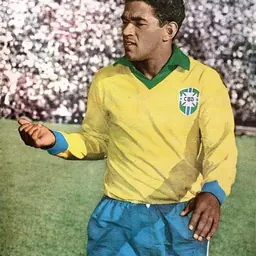
Related people
Same field, nearest in time




Contemporaries
People whose lives overlapped Dragoslav Šekularac's



Frequently asked questions
Who was Dragoslav Šekularac?
Serbian footballer (1937-2019)
When was Dragoslav Šekularac born?
Dragoslav Šekularac was born on 30 November 1937 in Štip.
When did Dragoslav Šekularac die?
Dragoslav Šekularac died on 5 January 2019 in Belgrade.
What was Dragoslav Šekularac's occupation?
Dragoslav Šekularac was an association football player and association football coach.
What nationality was Dragoslav Šekularac?
Dragoslav Šekularac was Yugoslav and Serbian.
Sources & further reading
· Wikipedia: Dragoslav Šekularac
· DBpedia: Dragoslav Šekularac
Cite this page
APA: Biography.guide. (2026). Dragoslav Šekularac. https://biography.guide/dragoslav-sekularac/
MLA: "Dragoslav Šekularac." Biography.guide, https://biography.guide/dragoslav-sekularac/.
Chicago: "Dragoslav Šekularac." Biography.guide. https://biography.guide/dragoslav-sekularac/.
Data last updated: 2026-09-24 · Spot an error? Report a correction.
Page generated 2026-09-27 05:03 UTC