
About Dragan Vasiljković
Born 1954. Dragan Vasiljković is a Serbian military personnel.
Dragan Vasiljković (; born 12 December 1954), nicknamed Captain Dragan is a convicted war criminal and former commander of a Serb paramilitary unit called the Kninjas during the Yugoslav Wars. In 2005, prosecutors in Croatia accused him of committing alleged war crimes during the wars. A warrant for his arrest was subsequently issued by Interpol.
He was arrested in Australia in January 2006, and ordered to prison by the High Court of Australia in anticipation for extradition to Croatia to face prosecution for his alleged crimes. He was extradited to Croatia on 8 July 2015 after losing his thirteenth appeal and sentenced to 15 years in prison on 26 September 2017 by the County Court in the city of Split. His father Živorad died in a motorcycle accident while Dragan was still young.
As a juvenile, he ended up in trouble with the law several times. He was accused of robbery and selling stolen goods and later was charged with forcing women into prostitution. He was convicted of criminal charges in relation to brothel ownership in Elsternwick, a suburb of Melbourne, Australia during the 1980s. He also worked as a golf instructor in Australia. In Belgrade, Vasiljković met Saša Medaković, one of the leaders of the barricades in Krajina following the Log Revolution in August. On 25 June 1991, Croatia proclaimed its independence; soon after, war broke out in Croatia. He served during the Croatian War of Independence under the newly created Republic of Serbian Krajina as a volunteer. International Criminal Tribunal for the former Yugoslavia prosecutors claim that this service took place under Serbian police auspices, and media even reported that he claimed this during his testimony at the trial of Slobodan Milošević in 2003.
He commanded special units known as Red Berets. He trained units at Krajina's Golubić training camp for which he was allegedly paid by the State Security Service of Serbia; he denied this at the Milosevic trial, despite his role as a prosecution witness. He added that the only time that the Serbian State Security paid him was for a 28-day stint in 1997 "to monitor exercises"; his fee was 2,200 dinars. Martić, in contrast, he considered to be "a man of honour and a man of his word." According to Šešelj, "Captain Dragan interfered and started a rebellion among the army ranks", and organised a rally of military personnel. The rally, Šešelj said, proved a failure and Babic remained in power. Šešelj also testified at the Milosevic trial that Vasiljković had a training camp in Golubic. During the war, he founded the Kapetan Dragan Fund aimed at helping victims of war. He maintained his friendship with Franko Simatović, and in 2001 stated that he would defend him in court if necessary. Simatović was arrested by the Serbian Police and transferred to the ICTY in 2003. Vasiljković reemerged in the spotlight after he testified against Slobodan Milošević in 2004 at the ICTY, and subsequently moved back to Perth, Western Australia.
Allegation In September 2005, an article in The Australian newspaper accused Vasiljković of war crimes as a Serbian paramilitary commander between 1991 and 1994. Vasiljković made a short return to Serbia and held a press conference in Belgrade before returning to Australia. He lodged a public defamation case against the publishing company Nationwide News for the article, but in December 2009 the court ruled against Vasiljković, and ordered him to pay them $1.2 million.
Vasiljković was arrested on the basis of a Croatian warrant in January. He is accused by the Republic of Croatia of being responsible for soldiers under his command allegedly torturing, beating and killing captured members of Croatian Army and Police between June and July 1991 in a prison on the fortress in Knin, and also for making plans to attack and take over the Glina Police station, a near city village Jukince and the villages Gornji and Donji Viduševac in February 1993 at Benkovac in agreement with the commander of the tank unit JNA. It is alleged that during that, in violation of the Geneva convention, civil buildings were damaged and ruined, Croatian citizens' property was robbed and civilians were wounded and killed, including a German journalist, Egon Scotland. Those accusations were made public after the newspaper The Australian reported a story about him. All of the others named are either already on trial at the Hague or at large. In 2005, ICTY spokesperson Florence Hartmann announced that Vasiljković had been under investigation, but that it had stopped due to the mandate on the tribunal to finish its work. Dragan subsequently sued The Australian for defamation. In July 2007, the Supreme Court held that 6 out of 10 imputations in that article were defamatory. However, in December 2009, a judge ruled that Vasiljković "committed torture and rape" and that The Australian article from 2005 proved that Vasiljković participated and committed the allegations against him.
Extradition hearing in Australia
In December 2006, Vasiljković's bid to prevent his extradition hearing from going ahead failed in the Sydney Magistrates Court. for an Australian citizen to be extradited. An application for bail pending an appeal to the Federal Court of Australia was dismissed.
On 3 February 2009, Vasiljković appeal against extradition to Croatia was rejected by the Federal Court. , Among those coming to the defence of Vasiljković was the Serbian Orthodox bishop of Australia and New Zealand, Irinej Dobrijević. On 2 September 2009, Federal Court of Australia ruled that "there was a substantial or real chance of prejudice" if he was extradited to Croatia, ordering release, pending appeal. He subsequently walked free from Parklea prison in Sydney's west on 4 September 2009. The Australian government appealed the ruling, and in March 2010, the High Court of Australia overturned the Federal Court decision and ruled that Vasiljković should be extradited to Croatia. After the ruling, Vasiljković was nowhere to be found, prompting the Australian Federal Police to launch a nationwide manhunt.
Final arrest and appeals Vasiljković was captured by federal police in New South Wales on 12 May 2010, 43 days after his disappearance. On 19 May, the Australian Court rejected Vasiljković's defence that Croatian courts would not give him a fair trial and that claims that Croatian courts had been more lenient towards Croats were "scanty" and "feeble".
On 16 November 2012, the Australian Government decided to extradite Vasiljković to Croatia. Vasiljković challenged the decision to the Federal Court but was unsuccessful. Vasiljković appealed to the Full Court of the Federal Court, but on 12 December 2014 the Full Court rejected the appeal, clearing him for extradition to Croatia. On 15 May 2015, the High Court of Australia refused Vasiljković leave to appeal the December 2014 Federal Court ruling due to the unlikelihood of a successful outcome for him. Following this decision, he had no remaining legal avenue to challenge his extradition.
Extradition
On the morning of 8 July 2015, Australia surrendered Vasiljković to Croatian police officers at Sydney Airport, his thirteen separate legal challenges against the extradition process having failed. Upon arrival at Zagreb International Airport the following day, he was transferred by a high-security police motorcade to an isolated wing of a jail in Split.
Trial in Croatia At his first interview with prosecutors, he stated that he did not feel guilty of the war crimes that allegedly he committed, and dismissed his state-appointed attorney. and the trial commenced on 20 September 2016. In September 2017, Vasiljković received a 15-year sentence by the Croatian court in Split. Upon completion of his sentence, which included the time spent in detention in Australia, he was released from prison on 28 March 2020.
Don’t just read it —
keep it.
Full-length biographies made to live with: read them, listen on the way to work, watch them tonight.
- E-book
- Audio
- Video
Instant download · yours to keep · every purchase keeps this site free
Important facts
People in Dragan Vasiljković's life
Named in this biography and alive at the same time
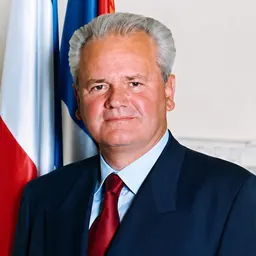
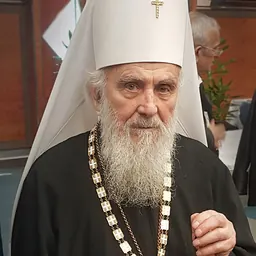




Related people
Same field, nearest in time

Contemporaries
People whose lives overlapped Dragan Vasiljković's




Frequently asked questions
Who is Dragan Vasiljković?
Serbian Paramilitary Commander
When was Dragan Vasiljković born?
Dragan Vasiljković was born on 12 December 1954 in Belgrade.
What is Dragan Vasiljković's occupation?
Dragan Vasiljković is a military personnel.
What nationality is Dragan Vasiljković?
Dragan Vasiljković is Serbian.
Sources & further reading
· Wikipedia: Dragan Vasiljković
Cite this page
APA: Biography.guide. (2026). Dragan Vasiljković. https://biography.guide/dragan-vasiljkovic/
MLA: "Dragan Vasiljković." Biography.guide, https://biography.guide/dragan-vasiljkovic/.
Chicago: "Dragan Vasiljković." Biography.guide. https://biography.guide/dragan-vasiljkovic/.
Data last updated: 2026-09-26 · Spot an error? Report a correction.
Page generated 2026-09-27 05:14 UTC