
About Dov Shmotkin
Born 1949. Dov Shmotkin is an Israeli researcher and psychologist.
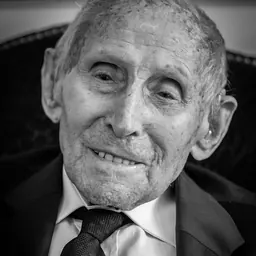
Dov Shmotkin (; born 1949) is professor emeritus in the School of Psychological Sciences and former head of the Herczeg Institute on Aging, both at Tel Aviv University.
Biography Dov Shmotkin was born in 1949 in Rishon Le-Zion, Israel. He is professor emeritus in the School of Psychological Sciences and former head of the Herczeg Institute on Aging, both at Tel Aviv University, where he received his PhD. He is a senior clinical psychologist and was formerly head of the clinical psychology graduate program in the School of Psychological Sciences. Shmotkin was visiting scholar in the Institute of Gerontology at the University of Michigan (1988–89) and honorary fellow in the Institute on Aging at the University of Wisconsin (1996–97). He served as senior researcher in the Cross-Sectional and Longitudinal Aging Study (CALAS) and Israeli branch of the Survey of Health, Ageing and Retirement in Europe (SHARE-Israel), surveys on Israel's older population. He directed a project which combined databases from these studies with others on Israel's aging populations. Shmotkin was appointed Fellow of the Gerontological Society of America.
Research
Shmotkin's scientific work focused on a dialectical approach to human happiness and suffering, primarily on adulthood and old age. His works explore psychological mechanisms through which people maintain well-being and resilience against adversity and aging processes inflicting trauma, decline and loss. In his conceptual model, The Pursuit of Happiness in a Hostile World, Shmotkin, and his associates, developed a dynamic framework on the relationship between resilience and vulnerability. His work in gerontology addressed combatting disintegration in later life through wellness, adaptational functioning and self-fulfillment. A recurring theme across his works is the study of the relationship between well-being and distress.
Shmotkin's was included in 100 top international experts in positive psychology, presented in The World Book of Happiness. Elsevier and Stanford University included him in the top 2% most impactful scientists within gerontology based on his 2022 c-score. He was ranked within the top 0.5% of scholars for his research on subjective well-being, life satisfaction, and well-being by ScholarGPS in 2022.
The pursuit of happiness in a hostile world
Happiness is achieved through two major systems: subjective well-being and meaning in life. While most approaches regard happiness as a mental outcome, Shmotkin's model considers it a process; both subjective well-being and meaning in life systems regulate personal conceptions of hostile-world scenarios. The model's concept of hostile-world scenario When under-activated, it may induce reckless behavior, and when over-activated, it may produce a sense of constant danger. Research has shown that reactions to hostile-world scenarios can influence the relationship between the scenario and mental health outcomes. The concept of hostile-world scenario exposed derivative themes, such as perceived threats of evil in individuals with traumatic backgrounds.
The model centers on the constant interaction between happiness-promoting systems and the hostile-world scenario. The pursuit of happiness allows individuals to function competently despite the presence of hostile-world scenarios.
The multiple appearances of happiness
Shmotkin's work explained multiple modules and configurations of happiness. Some of these types had imbalanced aspects, such as high life satisfaction and low positive affect. The studies observed individuals' subjective well-being in the past, present, and future, which allowed examination of how the individual's well-being evolved across their life. He investigated how people compare their well-being to anchor periods, paramount experiences in one's remembered past. The studies showed that people formed an emotional matrix of happiness and suffering of their past experiences. These reflected congruent and incongruent feelings associated with current subjective well-being, reactions to trauma, and coping with aging. These modules, within one's subjective well-being and well-being.
Holocaust survivors and long-term effects of trauma
Holocaust survivors act as a model of how extreme trauma in early life has impacts into old age. Under Shmotkin's approach, their trauma is an example of the interaction of happiness-promoting systems and intensified hostile-world scenarios. By studying Holocaust survivors in an array of community and national samples, Shmotkin and his colleagues concluded that older survivors usually manifested general resilience with specific vulnerabilities in pertinent psychosocial issues. Coping with the trauma was controlled by how survivors mentally framed their traumatization in time and their ability to incorporate the trauma into their life story.
To improve his methodology in his Holocaust survivor studies, Shmotkin carefully considered his focal and comparison groups. The question "Who is a survivor?" proved complex, and was approached by combining subjective and objective criteria. It was detailed that the precedent of a single comparison group in past studies on survivors was not methodologically suitable; several different groups were required for instructive comparison with the survivors' grouping. The team found that cumulative adversity, particularly self-oriented, was detrimental to physical and mental functioning.
Gerontological research
Shmotkin's view extends into his gerontological work, where aging reflects the interaction between resilience and vulnerability, and survival and mortality. His work focuses on epidemiological national surveysmainly CALAS and SHARE-Israelwhere he juxtaposed physical and mental health; while physical health was an increasingly dominant factor in mortality in old age,
Another focus point of Shmotkin's gerontological work was the role of individuals' time perspective in understanding their later life. At old age, people usually preserve high levels of happiness, even following harsh adversity in the past. Shmotkin's studies showed that older people organised positive and negative feelings from their past and buffered fears about their future; notions of time perspective appeared embedded in people's adjustment to aging. who were children of Holocaust survivors. These also included the continuity of adult's bonds with their deceased parents, the inconsistency between objective and subjective indicators of one's memory in old age, the disconnect between physical and mental health in very old age,
Don’t just read it —
keep it.
Full-length biographies made to live with: read them, listen on the way to work, watch them tonight.
- E-book
- Audio
- Video
Instant download · yours to keep · every purchase keeps this site free
Important facts
Related people
Same field, nearest in time




Contemporaries
People whose lives overlapped Dov Shmotkin's


Frequently asked questions
Who is Dov Shmotkin?
Israeli professor (born 1949)
When was Dov Shmotkin born?
Dov Shmotkin was born in 1949 in Rishon LeZion.
What is Dov Shmotkin's occupation?
Dov Shmotkin is a researcher and psychologist.
What nationality is Dov Shmotkin?
Dov Shmotkin is Israeli.
Sources & further reading
Cite this page
APA: Biography.guide. (2026). Dov Shmotkin. https://biography.guide/dov-shmotkin/
MLA: "Dov Shmotkin." Biography.guide, https://biography.guide/dov-shmotkin/.
Chicago: "Dov Shmotkin." Biography.guide. https://biography.guide/dov-shmotkin/.
Data last updated: 2026-09-20 · Spot an error? Report a correction.
Page generated 2026-09-27 05:19 UTC