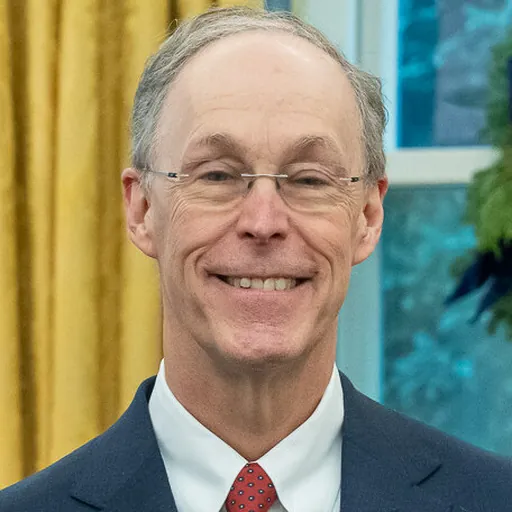
About Douglas Diamond
Born 1953. Douglas Diamond is an American economist and university teacher.
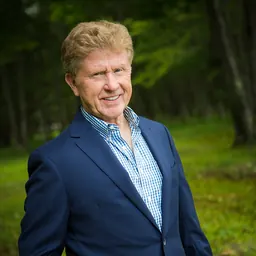
Douglas Warren Diamond (born October 25, 1953) is an American economist. He is the Merton H. Miller Distinguished Service Professor of Finance at the University of Chicago Booth School of Business, where he has taught since 1979. Diamond specializes in the study of financial intermediaries, financial crises, and liquidity. He is a former president of the American Finance Association and the Western Finance Association (2001–02).
In October 2022, Diamond was awarded the Nobel Memorial Prize in Economic Sciences jointly with Ben Bernanke and Philip H. Dybvig. The prize was awarded in recognition of the economists' "research on banks and financial crises"
Diamond is best known for his work on financial crises and bank runs, particularly the influential Diamond–Dybvig model published in 1983 and the Diamond model of delegated monitoring published in 1984.
Early life and education Douglas Warren Diamond was born on October 25, 1953.
As an adolescent, Diamond originally intended to study molecular biology. Diamond matriculated at Brown University, where he decided to study economics instead, after taking a course on Milton Friedman and Anna Schwartz's A Monetary History of the United States. The following year, and in 1977 Diamond earned master's degrees, and ultimately a PhD in economics in 1980 from Yale University.
A later version of the third chapter of Diamond's 1980 doctoral dissertation "Essays on Information and Financial Intermediation" was republished in 1984 in The Review of Economic Studies under the title "Financial Intermediation and Delegated Monitoring" This publication coined the term "delegated monitoring" and described Diamond's formal model of delegated monitoring. According to the Committee for the Nobel Memorial Prize in Economic Sciences, Diamond's model is considered "the first truly micro-founded theory of financial intermediation." Since its publication, Diamond (1984) has become a key publication in scholarship concerning financial intermediation. The model demonstrates how banks engage in liquidity transformation by using short-term deposits from savers to fund long-term lending activities. This maturity mismatch makes banks vulnerable to runs if large numbers of depositors simultaneously demand their funds. Diamond and Dybvig show that government-provided deposit insurance can prevent self-fulfilling bank runs by assuring depositors that their funds are safe.
The model has become a foundational tool for academic research in banking, macroeconomics, and financial stability. Its insights have strongly influenced governmental and central bank policy, particularly in the design and justification of deposit insurance systems and liquidity regulations around the world. Following the global financial crisis of 2008, the framework provided theoretical support for liquidity backstops, emergency lending facilities, and stricter oversight of banks’ balance sheets.
In recent years, researchers have extended the Diamond–Dybvig model to analyze runs in nonbank financial institutions, including money market mutual funds and cryptocurrency exchanges, where similar liquidity mismatches exist.
Career Since 1979, Diamond has taught at the University of Chicago Booth School of Business. He has held the Merton H. Miller Distinguished Service Professorship since July 2000, having previously held the Theodore O. Yntema Professorship. He was again named as a contender for the prize in 2013 by economist Hubert Fromlet, The Wall Street Journal, and Catherine Rampell, writing for The New York Times.
On October 10, 2022, Diamond received the Nobel Memorial Prize in Economic Sciences jointly with long-time collaborator Philip H. Dybvig and former Chair of the Federal Reserve, Ben Bernanke. Much of the work for which the prize was awarded stems from work Diamond and Dybvig published in the early and mid-1980s.
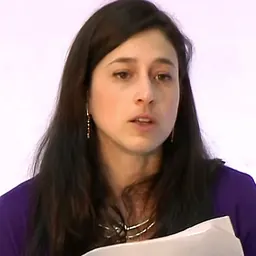
Personal life Diamond has been married to Elizabeth Cammack Diamond since 1982. The couple has two children, economist Rebecca Diamond and William Diamond, James M. Johannes Professor of Finance at the University of Wisconsin-Madison.
He is the son of Leon Diamond, a psychiatrist, and Margaret Gunkel Seehafer, a social worker and professor.
Honors and awards
Fellow, Econometric Society (since 1990) Member, American Academy of Arts and Sciences (elected 2001) Fellow, American Finance Association (selected 2004) Economic Theory Fellow, Society for the Advancement of Economic Theory (2016) Member, National Academy of Sciences (elected 2017)
Awards Morgan Stanley-American Finance Association Award for Excellence in Finance, 2012 Doctor Honoris Causa, University of Zurich, 2013 CME Group-MSRI Prize in Innovative Quantitative Applications, 2016 Nobel Memorial Prize in Economic Sciences, 2022
Publications
Articles
Don’t just read it —
keep it.
Full-length biographies made to live with: read them, listen on the way to work, watch them tonight.
- E-book
- Audio
- Video
Instant download · yours to keep · every purchase keeps this site free
Important facts
People in Douglas Diamond's life
Named in this biography and alive at the same time
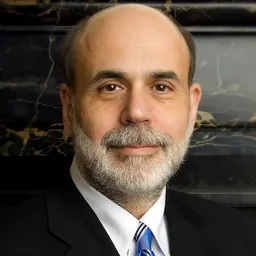


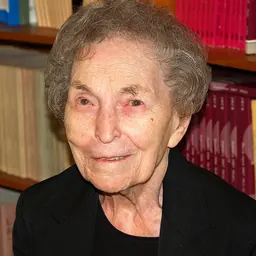
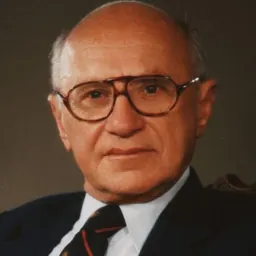

Related people
Same field, nearest in time



Contemporaries
People whose lives overlapped Douglas Diamond's


Frequently asked questions
Who is Douglas Diamond?
American economist and professor of finance
When was Douglas Diamond born?
Douglas Diamond was born on 25 October 1953 in Chicago.
What is Douglas Diamond's occupation?
Douglas Diamond is an economist and university teacher.
What nationality is Douglas Diamond?
Douglas Diamond is American.
Sources & further reading
Cite this page
APA: Biography.guide. (2026). Douglas Diamond. https://biography.guide/douglas-diamond/
MLA: "Douglas Diamond." Biography.guide, https://biography.guide/douglas-diamond/.
Chicago: "Douglas Diamond." Biography.guide. https://biography.guide/douglas-diamond/.
Data last updated: 2026-09-22 · Spot an error? Report a correction.
Portrait: Wikimedia Commons · author & licence
Page generated 2026-09-27 05:04 UTC