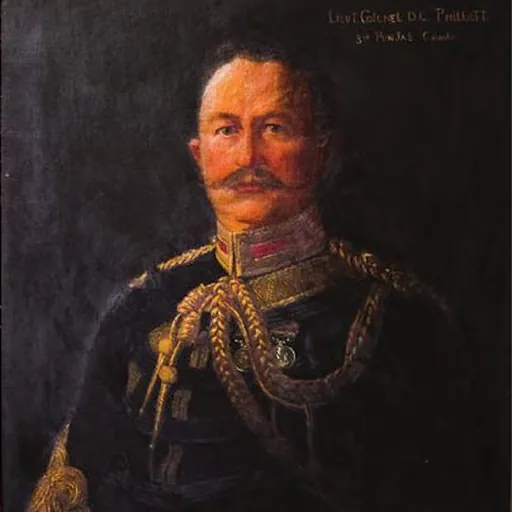
Douglas Craven Phillott
Army officer, linguist, translator
About Douglas Craven Phillott
Lived 1869 – 1930 (aged 61). Douglas Craven Phillott was a linguist, military officer and philologist.
Lieutenant-Colonel Douglas Craven Phillott (28 June 1860 - 11 September 1930 ) was a British army officer who served in India and later as Consul in Persia. A scholar of Urdu, Persian and Hindustani, he published numerous translations of literary and historical works. He was also interested in falconry and wrote a translation of a Persian treatise on the subject.
Biography Phillott, born in London, was the third son of Lt. Col. Henry Rodney Phillott of the Indian army and Lilias Syme. He went to school in Felsted School in Essex from 1874 to 1878 before received commission to the Indian army on 14 January 1880 and later trained at Sandhurst. He saw action in the campaigns in Zhob Valley, Hazara and received the General Service Medal in 1891. He also served in the Ublan Pass operation at Samana and in the Kurram valley for which he received a medal with two clasps. He became lieutenant on 1 July 1881, captain on 14 January 1891, major on 14 January 1900, and lieutenant-colonel on 14 January 1906. He retired in 1906 from the 3rd Punjab Cavalry (later 23rd) and became Secretary to the Board of Examiners in Calcutta. He served as a Consul in Persia (Iran) from around 1901 to 1903.
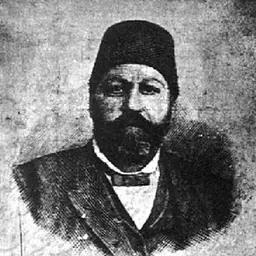
Frontispiece to Hindustani Manual (1913) showing an oriental posture of atonement and apologyDuring the First World War, he served as chief censor for prisoners in Cairo and Port Said. He then returned to England living in Maida Vale and later Felsted and was examiner in Urdu and Persian at the University of Cambridge until his death in 1930. Phillott was elected member of the Asiatic Society of Bengal in November 1889 and a fellow in 1910; and he published in its journal and served as secretary to the Philological Committee. He also served as vice president of the Hindi ek-lipi society which aimed to standardize the use of Devanagari. The translation, which was originally done by Mirza Habib Esfahani, was wrongly attributed to Sheykh Ahmad Ruhi Kermani whose image appeared as the frontispiece of the book. Research has shown that Esfahani's translation, though highly praised for its fluency and innovations, included editorial additions and modifications to suggest that Persia was backward, ruled by despots unlike the advanced culture of Constantinople. The aim of Esfahani is unclear but is thought to be politically motivated satire. Phillott received an honorary Ph.D. from the Calcutta University in 1912.
Publications Some of the books edited, translated and written by Phillott include: The Adventures of Haji Baba of Ispahan (1905) The Baz-nama-yi Nasiri, a Persian treatise on falconry (1908) Hindustani Stumbling Blocks (1909) Annotated English translation of Urdu roz-marra, or "Every-day Urdu", the text-book for the lower standard examination in Hindustani (1911) The Faras-nāma-e Rangīn : or, The book of the horse (1911) (alternate) The Faras-Nama of Hashimi (1910) (edited) Khazina-e Muhawarat; or Urdu idioms (1912) Hindustani Manual (1913 2e) (1918) Colloquial English-Persian dictionary in the Roman character, containing all English words in common use with their meanings in modern Persian, with numerous examples Higher Persian Grammar (1919) Publications in journals include those on falconry, birds and references in Persian literature:
Don’t just read it —
keep it.
Full-length biographies made to live with: read them, listen on the way to work, watch them tonight.
- E-book
- Audio
- Video
Instant download · yours to keep · every purchase keeps this site free
Important facts
People in Douglas Craven Phillott's life
Named in this biography and alive at the same time
Related people
Same field, nearest in time

Contemporaries
People whose lives overlapped Douglas Craven Phillott's



Frequently asked questions
Who was Douglas Craven Phillott?
Army officer, linguist, translator
When was Douglas Craven Phillott born?
Douglas Craven Phillott was born on 28 June 1869 in London.
When did Douglas Craven Phillott die?
Douglas Craven Phillott died on 11 September 1930.
What was Douglas Craven Phillott's occupation?
Douglas Craven Phillott was a linguist, military officer and philologist.
Sources & further reading
· Wikipedia: Douglas Craven Phillott
· DBpedia: Douglas Craven Phillott
Cite this page
APA: Biography.guide. (2026). Douglas Craven Phillott. https://biography.guide/douglas-craven-phillott/
MLA: "Douglas Craven Phillott." Biography.guide, https://biography.guide/douglas-craven-phillott/.
Chicago: "Douglas Craven Phillott." Biography.guide. https://biography.guide/douglas-craven-phillott/.
Data last updated: 2026-09-23 · Spot an error? Report a correction.
Portrait: Wikimedia Commons · author & licence
Page generated 2026-09-27 05:07 UTC