
About Douglas Carbery
Lived 1894 – 1959 (aged 65). Douglas Carbery was a British flying ace.
Brigadier Douglas Hugh Moffatt Carbery (26 March 1894 – 27 April 1959) was a British artillery officer, who became a World War I flying ace credited with six aerial victories while attached to the Royal Flying Corps and Royal Air Force. He later returned to the artillery, and commanded an anti-aircraft brigade during World War II.
Biography Carbery was the son of Hugh John Carbery of Cork, Ireland, and was born in Ambala, India. He was educated at King's School, Bruton, Somerset, before attending the Royal Military Academy, Woolwich, from where he was commissioned as a second lieutenant in the Royal Field Artillery on 12 August 1914.
World War I
Carbery served in France and Belgium with the British Expeditionary Force from 15 December 1914 to 17 May 1915, and returning to active duty between 16 July 1915 and 25 April 1916.
He first served in No. 9 Squadron, a reconnaissance and artillery-spotting unit, and by early 1917 was serving in No. 52 Squadron. His first aerial victory came on 25 January, flying a R.E.8, driving a German aircraft down over Morlancourt, which was then captured. On 14 February, flying a B.E.2e, he shot down an Albatros D.III over St. Pierre.
On 26 August 1917 he was appointed a flight commander with the temporary rank of captain, and was promoted to captain on 3 November. which later became the symbol of 59 Squadron.
On 3 December 1918 he was awarded the Distinguished Flying Cross. His citation read: Captain Douglas Hugh Moffatt Carbery, MC. (Royal Field Artillery) During recent operations this officer has displayed remarkable courage and skill in attacking hostile batteries, troops, etc., rendering valuable service in silencing the former and causing heavy casualties to the latter. In the air he is a bold and intrepid fighter. On 30 August he and his observer, attacked by seven Fokker biplanes, drove them off, shooting down one out of control.
At the end of the war Carbery was awarded the 1914–15 Star, the British War Medal, and the Victory Medal. The riots had broken out amidst a protest against a massacre in Amritsar the previous day that had killed more than 300. He dropped 8 bombs, including one in the courtyard of a high school, before commencing strafing runs with two other planes. In July 1920 he was awarded a bar to his Distinguished Flying Cross for his services in the Third Anglo-Afghan War, and was also awarded the India General Service Medal with the clasp "Waziristan 1919–1921" for his services during the Waziristan campaign. On 1 January 1921 Carbery relinquished his temporary commission in the RAF, and was restored to the establishment of the Royal Regiment of Artillery the following day.
On 26 October 1927 he was appointed adjutant, serving in that post until 8 November 1929. He received a second clasp, "N.W. Frontier of India 1930–31", to his India General Service Medal for services during the Red Shirt and Afridi Rebellions, on the Indian North-West Frontier. He was promoted to major on 29 July 1933.
World War II Carbery spent the first part of the war serving in the Royal Artillery's Coast Defence and Anti-Aircraft Branch. On 19 April 1940 he was appointed temporary lieutenant-colonel, and was confirmed in that rank on 1 February 1941. On 1 July 1942 he was appointed acting-colonel and acting-brigadier, to serve as commanding officer, 14th (West Africa) Anti-Aircraft Brigade, until 11 April 1943, seeing action in India and Burma. He was appointed a temporary brigadier on 1 January 1943, and was promoted to the rank of colonel on 1 February 1944. On 2 July 1946 Carbery retired and was granted the honorary rank of brigadier.
Brigadier Carbery died at Lanner, Cornwall, on 27 April 1959.
Personal life On 12 May 1932 Carbery married Violet Cecily Austin, the daughter of Sir William Michael Byron Austin, Bt. and Violet Irene Fraser. They had one child, Anne Irene Carbery, born in July 1935, who married Lieutenant-Commander Alexander Leonard Dominic Brown, RN, on 10 November 1956.
Don’t just read it —
keep it.
Full-length biographies made to live with: read them, listen on the way to work, watch them tonight.
- E-book
- Audio
- Video
Instant download · yours to keep · every purchase keeps this site free
Important facts
People in Douglas Carbery's life
Named in this biography and alive at the same time


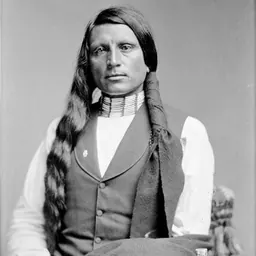
Related people
Same field, nearest in time


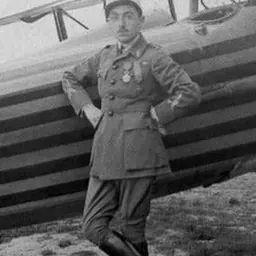
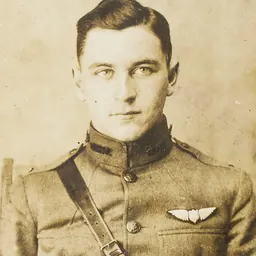
Contemporaries
People whose lives overlapped Douglas Carbery's
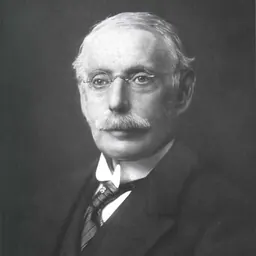


Frequently asked questions
Who was Douglas Carbery?
British flying ace and artillery officer (1894-1959)
When was Douglas Carbery born?
Douglas Carbery was born on 26 March 1894 in Ambala.
When did Douglas Carbery die?
Douglas Carbery died on 1 April 1959 in Lanner.
What was Douglas Carbery's occupation?
Douglas Carbery was a flying ace.
What nationality was Douglas Carbery?
Douglas Carbery was British.
Sources & further reading
Cite this page
APA: Biography.guide. (2026). Douglas Carbery. https://biography.guide/douglas-carbery/
MLA: "Douglas Carbery." Biography.guide, https://biography.guide/douglas-carbery/.
Chicago: "Douglas Carbery." Biography.guide. https://biography.guide/douglas-carbery/.
Data last updated: 2026-09-20 · Spot an error? Report a correction.
Page generated 2026-09-27 05:14 UTC