
About Douglas Argyll Robertson
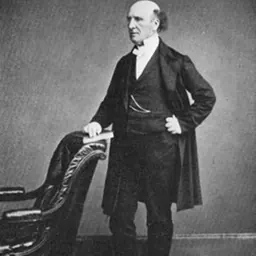
Lived 1837 – 1909 (aged 71–72). Douglas Argyll Robertson was a British ophthalmologist and surgeon.
Douglas Moray Cooper Lamb Argyll Robertson FRSE, FRCSEd LLD (1837 – 3 January 1909) was a Scottish ophthalmologist and surgeon. He introduced physostigmine into ophthalmic practice and the Argyll Robertson pupil is named after him. He was president of the Royal College of Surgeons of Edinburgh.
Early life He was born at 58 Queen Street in Edinburgh in 1837, the son of Dr John Argyll Robertson, a surgeon with an interest in surgery of the eye who had served as President of the Royal College of Surgeons of Edinburgh in 1846. His older brother, C. Lockhart Robertson was an eminent psychiatrist and Lord Chancellor's medical visitor. Argyll Robertson was educated at the Edinburgh Institution and at Neuwied in Germany going on to study medicine at the Universities of Edinburgh and St Andrews.
Career After graduating MD in 1857 from the University of St Andrews, he was appointed house surgeon at the Royal Infirmary of Edinburgh before going to Prague to study ophthalmology under Carl Ferdinand von Arlt (1812-1887) and then to Berlin to study under Albrecht von Graefe (1828–1870). On return to Edinburgh he became assistant to Professor John Hughes Bennett, Professor of the Institutes of Medicine (physiology) at Edinburgh University. He then joined the Eye Dispensary which his father had helped to found, and qualified as Fellow of the Royal College of Surgeons of Edinburgh in 1862. He then began to lecture on diseases of the eye in the Edinburgh Extramural School of Medicine at Surgeons' Hall. In 1867 he became assistant ophthalmic surgeon at Edinburgh Royal Infirmary under William Walker, and became senior surgeon in 1870 until he retired in 1897. It had used for judicial execution in Eastern Nigeria. Dr (later Sir) Thomas Richard Fraser, an Edinburgh physician, who had in 1862 been awarded the gold medal for his MD thesis on possible medical uses, drew Argyll Robertson's attention to its property of constricting the pupil of the eye. In the company of two colleagues Robertson instilled an extract of Calabar bean first in his left eye, and later at a higher concentration into both eyes. As a result of this experiment he recommended that an extract, which contained the active ingredient, the alkaloid physostigmine, be used to reverse the action of atropine, which had been used in fundoscopy to dilate the pupil since Helmholtz's introduction of the ophthalmoscope in 1851. This was the first miotic agent to be used in ophthalmic practice. He correctly predicted that physostigmine would become very important in the treatment of eye disorders and it was later used in the treatment of glaucoma with Ludwig Laqueur's discovery in 1875 that it could lower the intraocular pressure.
Argyll Robertson pupil He also described a symptom of neurosyphilis that affects the pupils of the eye, a condition subsequently known as Argyll Robertson pupil. In 1869 he published a paper giving the first description of unusual reactions of the pupils to light and accommodation in patients with tabes dorsalis (syphilis affecting the spinal cord). He describes small pupils which did not constrict response to stimulation with light but constricted normally during accommodation and convergence. The Argyll Robertson pupil became a pathognomonic sign for the diagnosis of syphilis affecting the central nervous system.
Trephine operation for glaucoma Argyll Robertson was the first to publish a description of and results following a trephine operation for the treatment of glaucoma. Creating a small hole in the sclera (anterior sclerotomy) to drain the aqueous humor, would, he reasoned, lower intraocular pressure. This principle still forms the basis for modern filtering surgical procedures for glaucoma.
Sporting achievements Argyll Robertson was a skilled golfer. He won the gold medal of The Royal and Ancient Golf Club of St Andrews on five occasions (1865,1870,1871, 1872 and 1873), and the Gold medal of the Honourable Company of Edinburgh Golfers in 1870, 1874 and 1876. He was also a keen archer and, as a member of the Royal Company of Archers, the Royal bodyguard for Scotland, took part in their archery competitions. In 1867 he was elected a member of the Harveian Society of Edinburgh. In 1872 he was elected a Fellow of the Royal Society of Edinburgh. His proposer was Peter Guthrie Tait. In 1878 he was elected a member of the Aesculapian Club.
He was President of the Ophthalmological Society of Great Britain from 1893 to 1895, and was President of the International Ophthalmological Congress when it met in Edinburgh in 1894.
Don’t just read it —
keep it.
Full-length biographies made to live with: read them, listen on the way to work, watch them tonight.
- E-book
- Audio
- Video
Instant download · yours to keep · every purchase keeps this site free
Important facts
People in Douglas Argyll Robertson's life
Named in this biography and alive at the same time

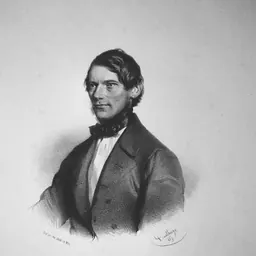
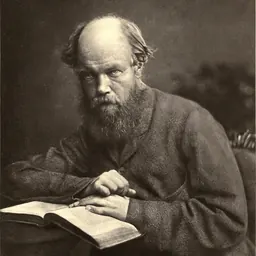


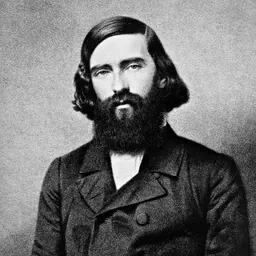

Related people
Same field, nearest in time
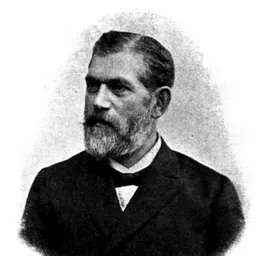

Contemporaries
People whose lives overlapped Douglas Argyll Robertson's



Frequently asked questions
Who was Douglas Argyll Robertson?
Scottish ophthalmic surgeon (1837–1909)
When was Douglas Argyll Robertson born?
Douglas Argyll Robertson was born in 1837 in Edinburgh.
When did Douglas Argyll Robertson die?
Douglas Argyll Robertson died on 3 January 1909 in Gondal.
What was Douglas Argyll Robertson's occupation?
Douglas Argyll Robertson was an ophthalmologist and surgeon.
What nationality was Douglas Argyll Robertson?
Douglas Argyll Robertson was British.
Sources & further reading
· Wikipedia: Douglas Argyll Robertson
· DBpedia: Douglas Argyll Robertson
Cite this page
APA: Biography.guide. (2026). Douglas Argyll Robertson. https://biography.guide/douglas-argyll-robertson/
MLA: "Douglas Argyll Robertson." Biography.guide, https://biography.guide/douglas-argyll-robertson/.
Chicago: "Douglas Argyll Robertson." Biography.guide. https://biography.guide/douglas-argyll-robertson/.
Data last updated: 2026-09-25 · Spot an error? Report a correction.
Page generated 2026-09-27 05:12 UTC