
About Dorothy Heyward
Lived 1890 – 1961 (aged 71). Dorothy Heyward was an American writer and playwright.
Dorothy Heyward (née Kuhns; June 6, 1890 – November 19, 1961) was an American playwright.
In addition to several works of her own, she co-authored the play Porgy (1927) with her husband DuBose Heyward, adapting it from his novel of the same name. Their work is now known best in its adaptation as the opera Porgy and Bess (1935), with music by George Gershwin.
Early life and education
She was born in Wooster, Ohio, as Dorothy Kuhns, and lived in New York, Puerto Rico, and Washington, DC, throughout her childhood years.
In 1922, Kuhns attended MacDowell Colony, where she met DuBose Heyward. They married in September 1923 and she changed her name. The Dud was later retitled to Nancy Ann,
When her husband was writing his novel Porgy, Dorothy Heyward saw dramatic possibilities in the story. She convinced him that it would work as a play. They collaborated to adapt it to the stage, making sure the play's company be cast with only black actors. This was seen as a controversial decision during its time, when black characters were almost always portrayed by white actors in blackface. Nonetheless, the play was a success and the 1927 Theatre Guild production ran for 367 performances.
Their play was later adapted as the opera Porgy and Bess (1935), with music by George Gershwin and lyrics by Ira Gershwin and DuBose Heyward. This was adapted as a film by the same name in 1959.
Throughout her career, Heyward wrote many plays, most of which did not achieve the same level of success as Porgy. Her play Jonica, co-written in 1930 with playwright Moss Hart, and her plays South Pacific, Cinderelative, and Set My People Free, were all performed on Broadway but were ultimately short-lived.
In 1939, Heyward collaborated with her husband on their play Mamba's Daughters, which was adapted from DuBose's 1929 novel of the same name.
Many of her works focused on African-American culture and often touched on subjects such as slavery and prejudice.
In the 1930s, Heyward wrote several novels, including one in 1930 titled Three-a-Day, and another in 1932 titled The Pulitzer Prize Murders. based on the Babar the Elephant stories by Jean de Brunhoff
Novels
Three-a-Day (1930) The Pulitzer Prize Murders (1932)
Don’t just read it —
keep it.
Full-length biographies made to live with: read them, listen on the way to work, watch them tonight.
- E-book
- Audio
- Video
Instant download · yours to keep · every purchase keeps this site free
Important facts
People in Dorothy Heyward's life
Named in this biography and alive at the same time
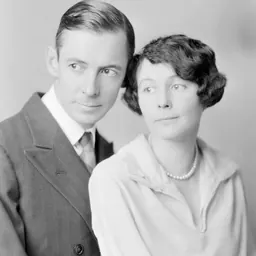


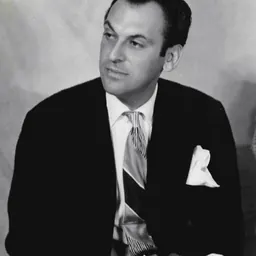

Related people
Same field, nearest in time



Contemporaries
People whose lives overlapped Dorothy Heyward's



Frequently asked questions
Who was Dorothy Heyward?
American playwright, lyricist (1890–1961)
When was Dorothy Heyward born?
Dorothy Heyward was born on 6 June 1890 in Wooster.
When did Dorothy Heyward die?
Dorothy Heyward died on 19 November 1961 in New York City.
What was Dorothy Heyward's occupation?
Dorothy Heyward was a writer and playwright.
What nationality was Dorothy Heyward?
Dorothy Heyward was American.
Sources & further reading
Cite this page
APA: Biography.guide. (2026). Dorothy Heyward. https://biography.guide/dorothy-heyward/
MLA: "Dorothy Heyward." Biography.guide, https://biography.guide/dorothy-heyward/.
Chicago: "Dorothy Heyward." Biography.guide. https://biography.guide/dorothy-heyward/.
Data last updated: 2026-09-20 · Spot an error? Report a correction.
Page generated 2026-09-27 05:25 UTC