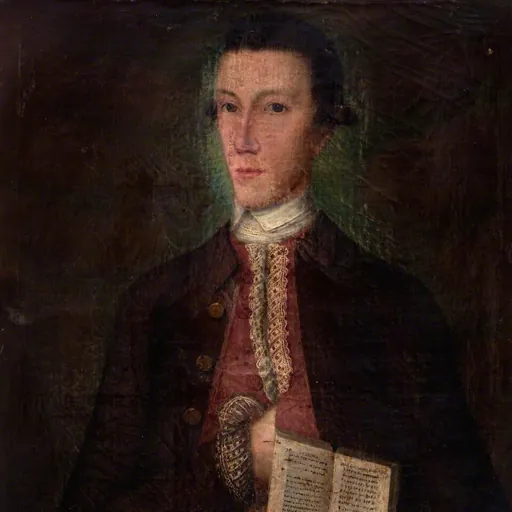
Donald Murchison
Scottish person, factor for William Mackenzie, 5th Earl of Seaforth
About Donald Murchison
Donald Murchison was a Scottish and British factor.
Donald Murchison (c.1687–1727) was a Scottish born military commander, a Jacobite and chamberlain to the exiled Earl of Seaforth. He led Jacobite forces at the Battle of Sheriffmuir, the Battle of Glen Shiel, the Battle of Glen Affric and the Battle of Coille Bhan.
Early life Murchison was born at the crofting township of Bundalloch, Loch Long, Scotland in , the eldest of four children. He was educated in the classics and then studied law in Edinburgh.
The Jacobite rising and the Battle of Sheriffmuir
When the Earl of Seaforth rallied his clansmen to the Stuart standard for the Jacobite rising of 1715 he chose Donald Murchison to be his Lieutenant Colonel and Murchison commanded Seaforth's troops during the ensuing Battle of Sheriffmuir. but the connection with the Pretender has not been substantiated. It also features on Landseer's painting "Rent-day in the Wilderness".
Soon after the Jacobite forces retreated from Sheriffmuir, Seaforth fled to France and from then until 1726 Murchison was the military leader of the Mackenzies, Maclennans, and M’Raes in the Jacobite opposition to government forces.
Eilean Donan Castle and the Battle of Glen Shiel
Murchison raised troops for Seaforth when he briefly returned to Scotland during the Jacobite rising of 1719 and he gave tactical advice for the short campaign. Murchison is said to have been "responsible for blowing up the castle of Eilean Donan" to prevent it from falling into the hands of Government forces. The wording of the ship's log does not explicitly state that the explosion was initiated by government forces but it is clear that they intended to destroy the castle so the Jacobites would have little to gain by blowing it up at this point. However, another source, in which it is simply stated that "the Castle was blown up" goes on to tell that "The Flamborough went up Loch Duich in search of another magazine which had been formed near the head of the loch, under a guard of 80 Spaniards, who blew it up as she approached" and that "this magazine was beside the small fresh-water lake called Loch nan Corr, close to where the Manse of Kintail now stands".
Murchison's roll might have involved one of these other magazines. The castle was destroyed in mid-May and on 10 June the two forces faced one another at the Battle of Glen Shiel. The Jacobites had some brief success during the initial engagements but by the end of the day they were overwhelmed and escaped the scene. Seaforth had been wounded in the knee by a musket ball and he returned to exile in France.
After the Battle of Glen Shiel, Seaforth lost his title and lands under the Crown Lands (Forfeited Estates) Act 1715. In 1720 the Commissioners appointed two men of the Clan Ross - William Ross, 6th of Easter Fearn (ex-Provost of Tain) and his brother Robert Ross (Baillie of Tain) - as factors, to serve as their estate managers on-the-ground for the estates of Mackenzie of Seaforth. The factors started by sending out notices to the various tenants, then in February 1721 officers were sent to the district but they were seized and robbed of their papers, money, and arms.
The Battle of Glen Affric
The next substantive step taken by the Ross factors involved embarking from Inverness on 13 September 1721 with a party of thirty soldiers and some armed servants of their own in order to enforce submission to their legal claims. En route, at Knockfin, near Tomich, Lieutenant Brymer from Bernera joined the party with fifty additional soldiers.
The party set out at 4:00am on Monday 2 October with Brymer's men first, and the factors in the rear. As they approached Loch Affric Ross's party was "ambushed" by men under Murchison's command, after a series of skirmishes they advanced a few miles further and reached Ath nam Muileach (anglicized as Athnamulloch), "about a hundred yards from the end of Loch Affric" where a larger party of Murchison's men were positioned along with Murchison himself. Some casualties were incurred but Murchison's party prevailed and the Rosses agreed to return home, promising never again to officiate as factors and handed their commissions to Murchison.
The Battle of Coille Bhan
After the Battle of Glen Affric a Court of Inquiry was held in Inverness in November 1721, primarily to establish, or confirm, the identities of the Jacobite perpetrators. The witnesses named several individuals and also confirmed the presence of the factor for the Earl of Seaforth who they named variously as Donald Murchison or Daniel Murchison. With this information another attempt was made to implement the forfeiture and this time it was to be a purely military operation. A force of 160 soldiers left Inverness under the command of a Captain McNeil who had previously served in the Highland Watch regiment.
Death, legacy and descendents
Murchison died in March 1727 and is buried in Urray, Scotland.
The inscription on the monument describes Roderick Murchison as the great-grandnephew of Donald Murchison but the exact relationship between the two may be more distant. which shows Donald Murchison wearing a breastplate whilst collecting rents and includes the 'snuff-mull' in which the Pretender allegedly enclosed Murchison's commission as Colonel.
Don’t just read it —
keep it.
Full-length biographies made to live with: read them, listen on the way to work, watch them tonight.
- E-book
- Audio
- Video
Instant download · yours to keep · every purchase keeps this site free
Important facts
Related people
Same field, nearest in time



Frequently asked questions
Who was Donald Murchison?
Scottish person, factor for William Mackenzie, 5th Earl of Seaforth
When did Donald Murchison die?
Donald Murchison died in 1727.
What was Donald Murchison's occupation?
Donald Murchison was a factor.
What nationality was Donald Murchison?
Donald Murchison was Scottish and British.
Sources & further reading
Cite this page
APA: Biography.guide. (2026). Donald Murchison. https://biography.guide/donald-murchison/
MLA: "Donald Murchison." Biography.guide, https://biography.guide/donald-murchison/.
Chicago: "Donald Murchison." Biography.guide. https://biography.guide/donald-murchison/.
Data last updated: 2026-09-22 · Spot an error? Report a correction.
Portrait: Wikimedia Commons · author & licence
Page generated 2026-09-27 05:02 UTC