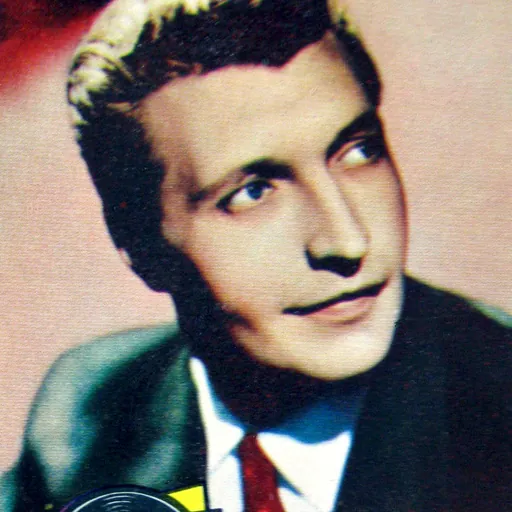
About Don Rondo
Lived 1930 – 2011 (aged 81). Don Rondo was an American singer.
Don Rondo (born Donald T. Rondeau; January 5, 1930 – January 27, 2011) was an American singer of popular music ballads during the mid-1950s, known for his distinctive baritone voice.
Early life Rondo was the son of Oliver and Elmira Rondeau, and grew up on a dairy farm near Ware, Massachusetts. He had five brothers and one sister. It eventually sold more than a million copies, and established Rondo at a time when music of his genre was facing strong competition from rock and roll. Among his television appearances was a 1957 appearance on the TV game show, To Tell the Truth.
Jubilee quickly followed the success of "Two Different Worlds" with another release, a double A-side, "The Love I Never Had" and "Don't", which was an entirely different song from the Elvis Presley song of the same name. However, this release fared less well, and a third single, "On Forgotten Street", also failed to make an impact.
Changing tempo in 1957, Rondo's next release was a cheerful number, "White Silver Sands", written by Red Matthews, which provided Rondo with a #7 chart hit. but the gold disc-winning "White Silver Sands" was to be Rondo's last major hit. On the B-side of this record was the jazz standard "Stars Fell on Alabama". Other releases followed, including "There's Only You" and "Forsaking All Others", but these barely made it into the charts.
Rondo appeared on the February 5, 1957, broadcast of the CBS game show To Tell the Truth. Nearly stumping the entire panel, Rondo received only one vote, from panelist Glenn Ford. New York Yankees baseball player Jerry Coleman appeared as one of the other two imposters, receiving two votes.
After leaving Jubilee, Rondo signed with Atlantic Records, where he released another double A-side, "Malibu" / "So Did I". He also recorded songs for Carlton Records, Roulette and Decca. Among his Carlton releases was "A Hoot 'n A Holler", while his Roulette recordings included "The Golden Rule". Among his Decca recordings are "Beyond The Mighty River" and "Evening Star". None of these achieved the success of his early Jubilee material, however, and musical tastes had, by then, dramatically shifted.
By the mid-1960s, Rondo had moved into broadcasting. He did a number of voiceovers for radio and television commercials, including the popular jingles "Where the Rubber Meets the Road" for Firestone and "It's Us , Or Rust" for Ziebart.
In his later years, he became a radio presenter in New Hampshire.
Personal life and death Rondo was married to the former Ida Mae Bousquet for 61 years. The couple had three children: Deborah, Gary, and Ronald.
Don’t just read it —
keep it.
Full-length biographies made to live with: read them, listen on the way to work, watch them tonight.
- E-book
- Audio
- Video
Instant download · yours to keep · every purchase keeps this site free
Important facts
People in Don Rondo's life
Named in this biography and alive at the same time



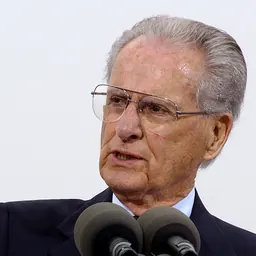
Related people
Same field, nearest in time


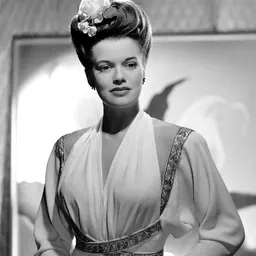
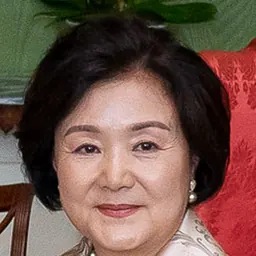


Contemporaries
People whose lives overlapped Don Rondo's


Frequently asked questions
Who was Don Rondo?
American singer (1930–2011)
When was Don Rondo born?
Don Rondo was born on 5 January 1930.
When did Don Rondo die?
Don Rondo died on 27 January 2011.
What was Don Rondo's occupation?
Don Rondo was a singer.
What nationality was Don Rondo?
Don Rondo was American.
Sources & further reading
Cite this page
APA: Biography.guide. (2026). Don Rondo. https://biography.guide/don-rondo/
MLA: "Don Rondo." Biography.guide, https://biography.guide/don-rondo/.
Chicago: "Don Rondo." Biography.guide. https://biography.guide/don-rondo/.
Data last updated: 2026-09-23 · Spot an error? Report a correction.
Portrait: Wikimedia Commons · author & licence
Page generated 2026-09-27 05:07 UTC