
About Don Murray
Lived 1904 – 1929 (aged 24). Don Murray was an American clarinetist, jazz musician, saxophonist and musician.
Don Murray (June 7, 1904 – June 2, 1929) was an American jazz clarinet and saxophone player.
Early life Murray was born in Joliet, Illinois, and attended high school in Chicago. In his teens, he made a name for himself as one of the best young jazz clarinetists and saxophonists in the city.
Career In 1923, Murray recorded with the New Orleans Rhythm Kings; according to Rhythm Kings leader Paul Mares, Murray was not a regular member of the band, but was a friend who sometimes sat in with them. Murray also made early recordings with Muggsy Spanier. He then joined the Detroit, Michigan based band of Jean Goldkette, with whom he remained until 1927. It was here that he mentored the young Jimmy Dorsey. He also played baritone saxophone on some recordings with Joe Venuti and Eddie Lang, under the band name “Joe Venuti’s Blue Four” playing the baritone saxophone very much like Adrian Rollini’s bass saxophone style.
After a brief stint with Adrian Rollini's band, during which he contributed to several highly regarded recordings by Bix Beiderbecke, Murray was hired by Ted Lewis. Ted Lewis said that Murray was the greatest clarinetist he ever had in his band. Murray can be heard on the soundtrack of the Ted Lewis film Is Everybody Happy? (1929), which is considered a "lost film."
In 2021, the Bix Beiderbecke Museum and World Archives in Davenport, Iowa, announced that it would raise $12,000 to renovate its permanent exhibit, including Murray's saxophone.
Death Murray died in 1929 at a Los Angeles hospital after injuries sustained in an automobile accident. Apparently, he was standing on the running board of a moving roadster and fell; he struck the back of his head on the pavement and was then hospitalized with serious head injury. Murray is buried at the Memorial Park Cemetery in Skokie, Illinois.
Major recordings Murray worked exclusively as a sideman, and appeared on some 240 recordings between 1923 and 1929.
With Bix and His Rhythm Jugglers "Toddlin' Blues" / "Davenport Blues", recorded on January 26, 1925, in Richmond, Indiana, and released as Gennett 5654
With Bix Beiderbecke and His Gang (OKeh) "At the Jazz Band Ball" / "Jazz Me Blues", recorded on October 5, 1927, in New York, and released as OKeh 40923 "Royal Garden Blues" / "Goose Pimples", recorded on October 5 and 25, 1927, in New York, and released as OKeh 8544 "Sorry" / "Since My Best Girl Turned Me Down", recorded on October 25, 1927, in New York, and released as OKeh 41001
With the Jean Goldkette Orchestra (Victor) "I Want to See My Tennessee" / "Remember", recorded on November 24, 1924, and released as Victor 19548 "I Didn't Know", recorded on November 24, 1924 "Play Me Slow" / "What's the Use of Dreamin'", recorded on November 25, 1924, and released as Victor 19664 "Honest and Truly", recorded on November 25, 1924, and released as Victor 19528 "Adoration", recorded on November 25, 1924 "Idolizing" / "Hush-a-Bye", recorded on October 12, 1926, and released as Victor 20270 "I'd Rather Be the Girl in Your Arms", recorded on October 12, 1926, and released as Victor 20273 "Sunday", recorded on October 15, 1926, and released as Victor 20273 "Cover Me Up with Sunshine", recorded on October 15, 1926, and released as Victor 20588 "Just One More Kiss", recorded on October 15, 1926, and released as Victor 20300 "Proud of a Baby Like You", recorded on January 28, 1927, and released as Victor 20469 "I'm Looking Over a Four Leaf Clover", recorded on January 28, 1927, and released as Victor 20466 "I'm Gonna Meet My Sweetie Now", recorded on January 31, 1927, and released as Victor 20675 "Slow River", recorded on May 6, 1927, and released as Victor 20926 "Blue River", recorded on September 15, 1927, and released as Victor 20981 "Clementine" (arr. Murray), recorded on September 15, 1927, and released as Victor 20994
With Frankie Trumbauer and His Orchestra (OKeh) "Ostrich Walk" / "Riverboat Shuffle", recorded on May 9, 1927, in New York, and released as OKeh 40822 "I'm Coming Virginia" / "Way Down Yonder in New Orleans" (arr. Murray), recorded on May 13, 1927, in New York, and released as OKeh 40843 "Three Blind Mice", recorded on August 25, 1927, in New York "Krazy Kat" (arr. Murray), recorded on September 28, 1927, in New York, and released as OKeh 40903
With Joe Venuti's Blue Four (OKeh) "Dinah" / "The Wild Dog", recorded on March 28, 1928, with Murray on baritone saxophone, and released as OKeh 41025
Don’t just read it —
keep it.
Full-length biographies made to live with: read them, listen on the way to work, watch them tonight.
- E-book
- Audio
- Video
Instant download · yours to keep · every purchase keeps this site free
Important facts
People in Don Murray's life
Named in this biography and alive at the same time



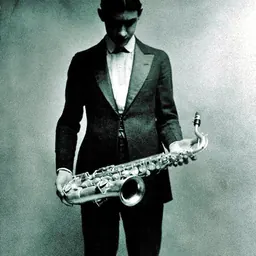
Related people
Same field, nearest in time

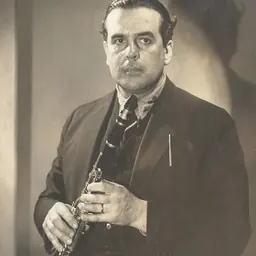


Contemporaries
People whose lives overlapped Don Murray's
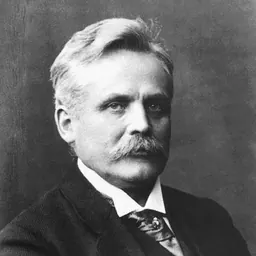


Frequently asked questions
Who was Don Murray?
American musician (1904–1929)
When was Don Murray born?
Don Murray was born on 7 June 1904 in Illinois, Joliet.
When did Don Murray die?
Don Murray died on 2 June 1929 in Los Angeles.
What was Don Murray's occupation?
Don Murray was a clarinetist, jazz musician, saxophonist and musician.
What nationality was Don Murray?
Don Murray was American.
Sources & further reading
· DBpedia: Don Murray (clarinetist)
Cite this page
APA: Biography.guide. (2026). Don Murray. https://biography.guide/don-murray-clarinetist/
MLA: "Don Murray." Biography.guide, https://biography.guide/don-murray-clarinetist/.
Chicago: "Don Murray." Biography.guide. https://biography.guide/don-murray-clarinetist/.
Data last updated: 2026-09-20 · Spot an error? Report a correction.
Page generated 2026-09-27 05:18 UTC