
About Don Buford
Born 1937. Don Buford is an American baseball player.
Donald Alvin Buford (born February 2, 1937) is an American former professional baseball player scout, coach and manager. He played in Major League Baseball as an outfielder from through , most notably as the leadoff hitter for the Baltimore Orioles dynasty that won three consecutive American League pennants from 1969 to 1971 and won the 1970 World Series over the Cincinnati Reds. He also played for the Chicago White Sox and played in the Nippon Professional Baseball league from 1973 to 1976. Buford also played as an infielder and was a switch hitter who threw right-handed. In 1993, Buford was inducted into the Baltimore Orioles Hall of Fame.
Early life Buford was born on February 2, 1937, in Linden, Texas. His father was killed in a shooting accident when he was a young child. His mother, Sedalia Buford, then moved the family to Southern California to be closer to her family. He was a football and baseball star at Susan Miller Dorsey High School in Los Angeles, graduating in 1955.
College career At 5 ft 7 in (1.70 m) and 160 pounds (72.6 kg), he was not heavily recruited by colleges because of his size. He attended three semesters at Los Angeles City College, where he won All-Conference honors at quarterback in 1955 and at halfback in 1956. He received honorable mention as a Junior College All-American. He transferred to the University of Southern California (USC) in the city, on a football scholarship, because he was able to play baseball in addition to football there.
Buford's sons Don Buford, Jr. (who played in the Orioles minor league system, before becoming an orthopedic surgeon) and Damon Buford (who played 2½ years for the Orioles) also played for the USC Trojans. A third son, Daryl, went to USC's Gould School of Law and became an attorney. Buford's wife, Alescia (Jackson) Buford graduated from USC rival UCLA with a law degree.
Professional playing career
Minor league career In 1960, Buford began his professional career with the San Diego Padres of the Triple-A Pacific Coast League. After two weeks he was sent to the Triple-I League for the rest of the year, suffering a knee injury that never fully healed and required three future surgeries. In 1961 and 1962, he played chiefly in the Sally League and Florida Instructional League. In 1963, he joined Indianapolis of the Triple A International League where he finally proved himself worthy of the major leagues. He led the league with a .336 average, was named Most Valuable Player and Rookie of the Year, and named The Sporting News minor league Player of the Year, all while helping his team to a championship. The White Sox called him up to the major league (American League) on September 14, 1963 for 12 games, and he hit .286.
Major league career Chicago White Sox A rookie at age 27 in 1964, Buford broke into the majors as an infielder. He had played third base his last year in the minor leagues, but was behind Pete Ward (the 1963 Sporting News Rookie of the year ) at third base in Chicago, so the team planned to move him to second base. This proved a difficult transition, and he would be moved to third base whenever Ward rested. In 1966, manager Eddie Stanky moved Ward to the outfield, and Buford went to third, but he led the league with 26 errors. after sharing the position in 1964 with Al Weis who played 116 games.
As a rookie he hit .262, and in 1965 he hit .283, had 67 walks, and scored 93 runs to go along with 10 home runs, while hitting second in the White Sox batting order. scored 85 runs, and led the AL in sacrifice hits with 17, though his average fell to .244, on a White Sox team that battled the Boston Red Sox, Detroit Tigers and Minnesota Twins for the American League pennant, which the Red Sox won on the final day of the regular season. The White Sox were eliminated from pennant contention (perhaps due, in large part, to faulty offense; they led the majors with a 2.45 earned run average, but batted only .225
Baltimore Orioles Buford was traded along with Bruce Howard and Roger Nelson to the Baltimore Orioles for Luis Aparicio, Russ Snyder and John Matias on November 29, 1967. In 1968 he batted .282 with 15 home runs in a lineup that also featured the likes of Frank Robinson, Brooks Robinson, Boog Powell, Davey Johnson and Paul Blair. In 1968, Oriole manage Hank Bauer used Buford as a backup at second base for Davey Johnson, or a starter when Johnson played shortstop. First base coach, and future hall of fame manager, Earl Weaver loved Buford's playing style and knew Buford had been a star outfielder in the minor leagues before being moved to the infield. When Weaver replaced Bauer in mid-1968, he immediately put Buford in the starting lineup as his leadoff hitter (Buford hitting a home run in his first game under Weaver); and moved Buford to the outfield. After hitting a meager .234 under Bauer, in the final 82 games under Weaver, Buford had a .298 batting average, with 11 home runs, 45 walks and 45 runs. —the first home run to lead off a World Series. ) Buford also drove in another run with a double as the Orioles won 4-1. However, he went 0-for-16 over the next four games, all won by the Mets for a seemingly impossible Series victory.
In 1970 Buford batted .272 with 17 home runs and a career high 109 walks. In 1971 Buford batted .290 with a career-high 19 home runs. Again the Orioles went to the World Series; this time, however, the Pittsburgh Pirates defeated them in seven games. Buford collected six hits in this Series; two of them were home runs.
In each of the Orioles’ three pennant-winning seasons Buford scored 99 runs, He hit .318, with two home runs, five runs scored and four RBIs in the 1970 post-season against the Minnesota Twins and the Reds, and .300, with two home runs, four runs scored, and four RBIs in the 1971 post-season against the Oakland Athletics and Pirates. He was fined by “Judge” Frank Robinson of the Orioles Kangaroo Court for his performance. After slumping to .206 in 1972, the Orioles asked Buford to take a $10,000 pay cut, which he refused. His contract rights were sold to the Taiheiyo Club Lions in Japan, who doubled his salary. In 1973 and 1974 he was voted to the top 9 Best Players in Japan. Former American baseball major leaguers Roger Repoz (1973), Matty Alou (1974-1975) and Frank Howard (1974) were Lions teammates. and 316 fewer than Cal Ripken's career record mark of 350 GIDPs.
Buford remains one of the most respected individuals to teach the game of baseball. His number 9 was retired by the Daytona Cubs after the 2006 season.thumb
Manager, coach and executive In 2006, Buford was the manager of the Daytona Cubs of the Florida State League. He was hired as a coach by Frank Robinson in 1981, and continued to serve on Robinson's coaching staff with the Orioles, San Francisco Giants and Washington Nationals. He managed the Orioles' Single-A team (Aberdeen IronBirds), Buford was assistant director of player development for five years, and farm director, all for the Orioles.
Personal life After retiring from Japanese ball, he worked as a personnel manager for Sears Roebuck until 1981.
Buford's son Damon Buford also played in the major leagues, playing with the Orioles, Mets, Texas Rangers, Boston Red Sox and Chicago Cubs from 1993 to 2001. Buford’s oldest son Don Buford, Jr. also played professional baseball in the Baltimore Orioles organization for four years. He is now an internationally recognized orthopedic surgeon specializing in sports medicine and shoulder surgery.
In October of 2012, Don Buford, Sr. accepted a new position managing Major League Baseball's Urban Youth Academy in Compton, California. The academy focuses on baseball and softball training and education and is free to participants. He is now working on his own Community Organization, Educational Sports Institute, which is based in Watts.
Honors Buford has received the following awards and honors, among others:
Inducted into the Baltimore Orioles Hall of Fame (1993) Most Valuable Player, International League (1963) Rookie of the Year, International League (1963) Sporting News minor league player of the year (1963) American League All-Star (1971) Nippon Professional Baseball All Star (1973-1974)
Don’t just read it —
keep it.
Full-length biographies made to live with: read them, listen on the way to work, watch them tonight.
- E-book
- Audio
- Video
Instant download · yours to keep · every purchase keeps this site free
Important facts
People in Don Buford's life
Named in this biography and alive at the same time




Related people
Same field, nearest in time
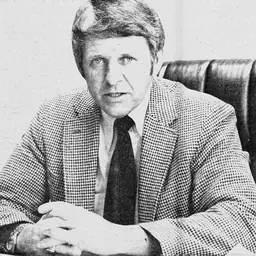
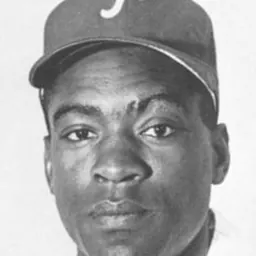
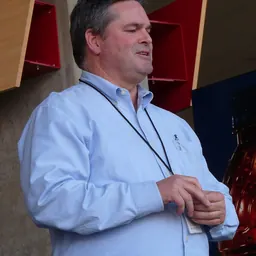

Contemporaries
People whose lives overlapped Don Buford's

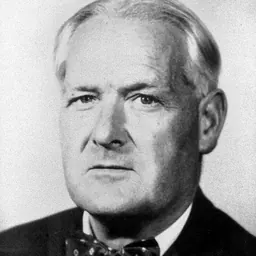


Frequently asked questions
Who is Don Buford?
American baseball player and coach
When was Don Buford born?
Don Buford was born on 2 February 1937 in Cass County.
What is Don Buford's occupation?
Don Buford is a baseball player.
What nationality is Don Buford?
Don Buford is American.
Sources & further reading
Cite this page
APA: Biography.guide. (2026). Don Buford. https://biography.guide/don-buford/
MLA: "Don Buford." Biography.guide, https://biography.guide/don-buford/.
Chicago: "Don Buford." Biography.guide. https://biography.guide/don-buford/.
Data last updated: 2026-09-20 · Spot an error? Report a correction.
Page generated 2026-09-27 05:20 UTC