
About Dolores
Lived 1894 – 1934 (aged 40). Dolores was a British singer, dancer, model and artists' models.
Norine Fournier Lattimore (née Schofield; 11 March 1894 – 8 August 1934 The Hearst Press in America, who sensationally serialised her life story, called her The "Fatal Woman' of the London Studios".
Norine's father, George Edwin Schofield, had a career as a professional dancer, had sung at the opera and was said to have provided the finance for several stage productions. Her mother was Vicomtesse Marie Honorine Melfredine de Fournier who was half French and half Spanish, Norine being the diminutive of Honorine. Dolores married Second Lieutenant William Frank Amsden of the Rangers at St Pancras Church, Ipswich, in which town he was stationed. They later divorced but she returned to him after her second marriage ended. He subsequently killed himself.
Harry Sadler In 1918, Dolores married her second husband, Captain Richard Harry Farwell Peckover Sadler in Kensington.
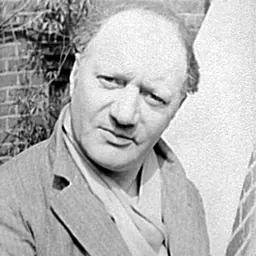
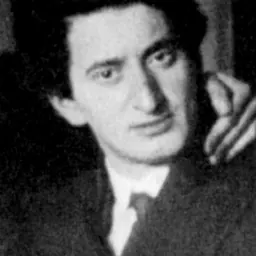
Bohemian London Roy and Mary Campbell (left), Jacob Kramer and Dolores (right). 1920s. Dolores was a fixture in the inter-war years in London's bohemian circles. She sang and danced at Madame Strindberg's The Cave of the Golden Calf (1912–14), was a regular at the Fitzroy Tavern and knew Betty May, Lilian Shelley and the artistic group that they mixed with. Dolores was of striking appearance, noted for her black hair and white skin and the black dress that she usually wore. She also sat for Nina Hamnett, C. R. W. Nevinson (1924), John Flanagan (1925) and Jacob Kramer.
Another place that Dolores knew well was the Harlequin Club, at 55 Beak Street, off Regent Street. It became a popular haunt of the poorer bohemians around the 1920s. William Roberts remembered in his posthumously published (1990) memoirs the Harlequin's female customers "whose vocal talents turned the place at times into a sort of Café Chantant, when the dark-skinned Helene sang the 'Raggle-Taggle Gypsies, O!' or Gypsy Lang sang Casey Jones the engine-driver's lament; with the vivacious Betty May, called the Tiger Woman, together with Dolores and the Snake Charmer (so called from her habit of carrying around a small basket of snakes) joining in the chorus."
Jacob Epstein
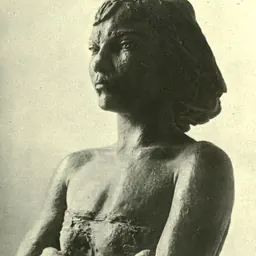
Dolores first modelled for Jacob Epstein in 1921, and moved in with him and his wife Margaret at Guilford Street in 1922. She stayed until 1925 and Epstein made six studies of her. Margaret Epstein was trying to end her husband's affair with Kathleen Garman, who eventually became his second wife, by encouraging him into affairs with other women but although Epstein found Dolores beautiful, he apparently had no romantic interest in her. The Epsteins were generous to Dolores, paying for everything, to keep her from leaving. She became, in her own words, "a happy prisoner in Guilford Street" and it was the association with Epstein, who was frequently in the papers, combined with her own talent for self-promotion, that made Dolores famous.
Epstein thought his first study of Dolores a failure but later came to appreciate it and cast it in bronze, after which it entered the Tate Gallery, London. Of the second bust, he said: "Dolores was a model who was extremely suggestible, and after I made this bust, she always strutted about, keeping her arms folded in the pose of the bust, and with the same tragic and aloof expression fixed upon her face, and she took great care that she never relaxed into those careless smiles of the first head. In the studio she was the devoted model, never allowing anything to interfere with posing, taking it seriously; a religious rite. She became the High Priestess of Beauty". Dolores was the model for Rima, and Anita was the sister of Sunita Devi, another of Epstein's models. Dolores was also the model for The Weeping Woman. The later show had a sketch specially written for her titled "The Empty Easel" in which Dolores posed as famous women in art, including the Mona Lisa, Venus from Titian's Venus and Adonis, Sarah Siddons and herself.
No stockings In fashion, Dolores modelled for Norman Hartnell's first show in 1924. It was the first time she had appeared as a fashion model.
The 'Daily Express reported that "She made a sensational entry ... a chocolate-coloured page dressed in a glittering suit of gold brocade announced that she had arrived. Grey curtains were parted for her, and as she came between them she dazzled the eyes of the audience for she wore no fewer than £25,000 worth of diamonds and pearls lent by a Bond Street jeweller. Two detectives stood by ... she was attired in a wonderful steel coloured brocade evening-wrap lined with vivid rose, an excellent contrast to her dark olive skin and pansy brown eyes. When she shed her cloak she showed a simple white satin gown draped around her. She wore gold shoes but no stockings, for she never wears stockings."
George Lattimore
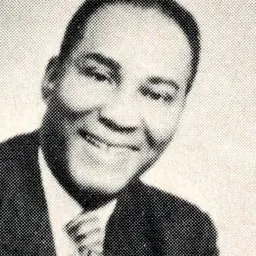
Dolores' third marriage was to the American lawyer, orchestra manager, and film and theatrical producer George Lattimore in London in 1926. The marriage was described as "secret" in more than one American newspaper. Lattimore had come to Britain in 1919 as the manager of the Southern Syncopated Orchestra which was one of the first orchestras to introduce jazz to Britain. He toured with the orchestra and was responsible for several films and musical events at the Philharmonic Hall in the early 1920s. Dolores lost her British nationality with the marriage which subsequently caused her minor difficulties with the law. The couple quickly separated but never divorced.
Also in 1926, Dolores had a minor role in Riki Tiki at the Gaiety Theatre in London. She followed this with a dancing act with a partner in the music halls.
According to Mabel Fredericke, however, Dolores was already living with another artist and once she had spent all of Atkinson's money (£150-200), returned to that man. When Dolores was reproached by Fredericke for ruining Atkinson, she supposedly said "I had to leave him, he was so melodramatic, and was always threatening to take his life." Atkinson was said to have worshipped Dolores and to have written a book of poetry for her. According to Fredericke, Atkinson could not cope with the news that Dolores was living with another man.
After the inquest, at which she did not give evidence, Dolores defended her conduct, saying "I am not a heartless vampire, I wanted to save him". She was interviewed by reporters at about the same time at her lodgings, an attic room in Pelham Street, South Kensington. She was dressed entirely in black and wore a small leather purse around her neck which she apparently told reporters contained her most cherished item, a love poem from Atkinson which began "O Dolores, fatal one". Dolores opined: "If only I could communicate with him tonight ... I am a spiritualist. My father is a confirmed spiritualist. Atkinson, too, was a spiritualist ... Soon I am going to get him to come back." She held the role for over six months and the production took in Mexborough and the Theatre Royal, Sheffield.
Drew had been implicated in the murder of Alfred Oliver, a tobacconist, in Reading, Berkshire, in 1929. The police had strongly suspected Drew of the offence and the coroner's enquiry into the death had been widely seen as amounting to a murder trial with Drew as the accused. In the verdict, the jury foreman said they were unable "to definitely establish the guilt of any particular person" and so Drew was cleared of a murder with which he had never been charged. He was not subsequently charged with any offence by the police. The inappropriateness of a trial by coroner's inquest led to calls for changes to the law.
On 7 March, it was announced in the Daily Mail that Drew and Dolores were engaged to be married. Dolores declared that she was "certain we are going to be wonderfully happy" while Drew pronounced that Dolores "has a great big heart. She is as temperamental as a leaf in a wind." Just days later the Daily Mail printed a letter from a former landlady complaining that Drew and Dolores, who had rented rooms from her as a married couple, had left without paying the bill. After inquiries by reporters at 35 Devonshire Street, Islington, where the couple were living as Mr & Mrs Drew, Dolores paid the amount due, claiming to have thought it had already been settled. It was not the first or the last time that Drew would face charges of failing to pay his debts and he appeared in court several times on similar matters. The couple had enough money at first for Dolores to have a maid and Drew a valet but soon they were short again and they moved to rooms above a shop at 202 King's Road, Chelsea. From there they moved to rooms at 44 Cathcart Road, Fulham. Dolores wrote from there to one of the police officers with whom Drew was in contact, asking the officer to visit her as she had something to tell him. When the officer arrived, however, she was unable to talk as Drew was there, managing only a whisper "I can't tell you now, he's here." She never did tell the police what she knew and soon after, the couple separated.
Hearst press In 1930, Dolores' life story was told in the Hearst Press in America in a series of sensational articles that appeared in newspapers throughout the country. The death of Frederick Atkinson was covered as well as life in the Epstein household. Epstein later described the articles as "packed full of inventions conceived by the not very scrupulous brains of the scribblers who seized on her notoriety and exploited it." who was in a similar desperate financial situation. She graduated to a small raised dais where she would strike artistic poses when a sufficient crowd had gathered. She underwent two operations for cancer during the last year of her life but by October 1933 knew that she would not recover. She died in St Mary Abbots Hospital, Marloes Road, Kensington, London on 8 August 1934
Biographical confusion Dolores was the name of a number of well known women at this time, such as actress Dolores del Río, and Kathleen Wilkinson (stage name Dolores), an English woman who made a name as a Ziegfeld girl and mannequin in New York. It was said that, in their obituary of Epstein's Dolores, published 20 August 1934, The New York Times confused three different women by that name.
Don’t just read it —
keep it.
Full-length biographies made to live with: read them, listen on the way to work, watch them tonight.
- E-book
- Audio
- Video
Instant download · yours to keep · every purchase keeps this site free
Important facts
People in Dolores's life
Named in this biography and alive at the same time



Related people
Same field, nearest in time

Contemporaries
People whose lives overlapped Dolores's

Frequently asked questions
Who was Dolores?
artists' model
When was Dolores born?
Dolores was born on 11 March 1894 in Doughty Street.
When did Dolores die?
Dolores died on 8 August 1934 in St Mary Abbot's Hospital.
What was Dolores's occupation?
Dolores was a singer, dancer, model and artists' models.
What nationality was Dolores?
Dolores was British.
Sources & further reading
· DBpedia: Dolores (artists' model)
Cite this page
APA: Biography.guide. (2026). Dolores. https://biography.guide/dolores/
MLA: "Dolores." Biography.guide, https://biography.guide/dolores/.
Chicago: "Dolores." Biography.guide. https://biography.guide/dolores/.
Data last updated: 2026-09-22 · Spot an error? Report a correction.
Page generated 2026-09-27 05:08 UTC