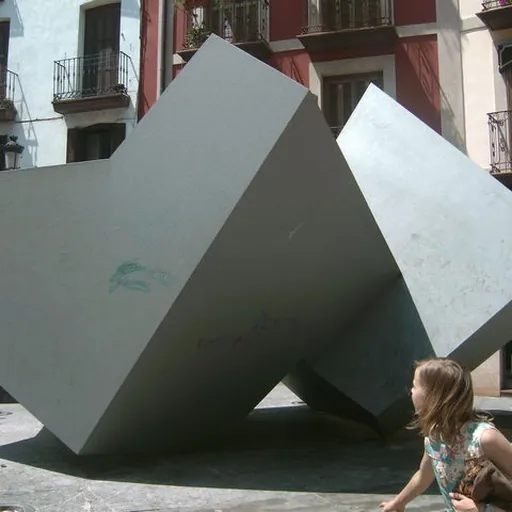
Dolores González Katarain
Spanish political activist
About Dolores González Katarain
Lived 1954 – 1986 (aged 32). Dolores González Katarain was a Spanish.
María Dolores González Katarain (14 May 1954 – 10 September 1986), also known as Yoyes, was an iconic female leader of armed Basque separatist group ETA (Euskadi Ta Askatasuna), who became a symbol because of the tragic circumstances of her life.
Yoyes was the first woman to enter the senior ETA leadership, but she decided to leave the organization to start a new life. Her former comrades regarded her as a traitor, and she was killed by ETA in 1986 in her hometown of Ordizia, during a local festival, in front of her three-year-old son. The killing led to unprecedented criticism of ETA in the Basque Country.
Early life
Dolores González Katarain was born in Ordizia, Gipuzkoa, on 14 May 1954. Her parents were Luis González and Angelita Katarain; she was the second of nine children. Her paternal grandfather, who moved to Ordizia from León, a Castillian province, owned the grocery store in the town, where Yoyes would sometimes help out on breaks from school. Her family lived on the outskirts of Ordizia in a house called Goitine.
According to her school friend, Elixabete Garmendia, Yoyes always had a sense of responsibility. "She was pretty reserved but she had a way of making deep connections with people. She wanted to talk about books and ideas - she was very curious about the world around her."
Yoyes had to overcome sexism within ETA, which, according to Elixabete Garmendia, was very much a "man's world" even though it was supposed to be a revolutionary movement. She was expected to play a subordinate role but was determined to take part in the same activities as men. Eventually, Yoyes rose to become the first woman in the ETA leadership and was considered an iconic figure in ETA circles because of her toughness and intelligence. In 1979, she was one of two ETA members who gave an interview to the BBC. There was also violence committed by death squads linked to the Spanish state. The unrest continued after the death of General Franco in 1975 and throughout Spain's subsequent transition to democracy, during which the organization vastly increased the number of people it killed every year as a way to put pressure on Basque nationalist parties not to participate in the democratization process.
In the late 1970s, Yoyes went through a crisis, which included bouts of depression. Her mentor within ETA, José Miguel Beñaran Ordeñana, was killed by a death squad and hardliners took over the ETA leadership. Based on the theory that they needed to elicit a more repressive response from the state to attain their goals, these leaders carried out a number of bloody attacks on civilian targets, whereas Yoyes argued there was a place for political negotiation with the Spanish government and Basque political parties and social movements. She felt ETA was only interested in killing and had lost its original revolutionary ideals. In addition, Yoyes had found love and wanted a new life outside a clandestine organisation.
Yoyes' friend, Elixabete Garmendia, believes there was also a sexist element to the killing. She believes ETA thought it owned Yoyes because she was a woman and acted "like a spurned husband" when she chose to start a new life.
Impact and legacy
In 1986 and 1989, Imanol Larzabal, who also left ETA, performed at concerts in honor of Yoyes and against ETA intimidation; as a result Imanol suffered boycotts, graffiti, vandalism, and death threats. In 2000, Imanol announced that he was leaving the Basque Country, fed up with ETA's repeated death threats and the "suffocating atmosphere of fear and repression in the Basque region" that ETA had created over the years since he participated in the tribute concert in 1986 to Yoyes.
The 1997 motion picture The Jackal makes critical use of a female Basque separatist to assist the scenario in its development and to reach its conclusion. It might be taken that Yoyes greatly influenced the model for this character.
In 2000, a Spanish film, Yoyes, was made about her life.
Don’t just read it —
keep it.
Full-length biographies made to live with: read them, listen on the way to work, watch them tonight.
- E-book
- Audio
- Video
Instant download · yours to keep · every purchase keeps this site free
Important facts
People in Dolores González Katarain's life
Named in this biography and alive at the same time


Contemporaries
People whose lives overlapped Dolores González Katarain's



Frequently asked questions
Who was Dolores González Katarain?
Spanish political activist (1954-1986)
When was Dolores González Katarain born?
Dolores González Katarain was born on 14 May 1954 in Ordizia.
When did Dolores González Katarain die?
Dolores González Katarain died on 10 September 1986 in Ordizia.
What nationality was Dolores González Katarain?
Dolores González Katarain was Spanish.
Sources & further reading
· Wikipedia: Dolores González Katarain
· DBpedia: María Dolores Katarain
Cite this page
APA: Biography.guide. (2026). Dolores González Katarain. https://biography.guide/dolores-gonzalez-katarain/
MLA: "Dolores González Katarain." Biography.guide, https://biography.guide/dolores-gonzalez-katarain/.
Chicago: "Dolores González Katarain." Biography.guide. https://biography.guide/dolores-gonzalez-katarain/.
Data last updated: 2026-09-20 · Spot an error? Report a correction.
Portrait: Wikimedia Commons · author & licence
Page generated 2026-09-27 04:57 UTC