
About Dodo Marmarosa
Lived 1925 – 2002 (aged 77). Dodo Marmarosa was an American pianist, jazz musician, piano and musician.
Michael "Dodo" Marmarosa (December 12, 1925 – September 17, 2002) was an American jazz pianist, composer, and arranger.
Originating in Pittsburgh, Pennsylvania, Marmarosa became a professional musician in his mid-teens, and toured with several major big bands, including those led by Tommy Dorsey, Gene Krupa, and Artie Shaw into the mid-1940s. He moved to Los Angeles in 1945, where he became increasingly interested and involved in the emerging bebop scene. During his time on the West Coast, he recorded in small groups with leading bebop and swing musicians, including Howard McGhee, Charlie Parker, and Lester Young, as well as leading his own bands.
Marmarosa returned to Pittsburgh for health reasons in 1948. He began performing much less frequently, and had a presence only locally for around a decade. Friends and fellow musicians had commented from an early stage that Marmarosa was an unusual character. His mental stability was probably affected by being beaten into a coma when in his teens, by a short-lived marriage followed by permanent separation from his children, and by a traumatic period in the army. He made comeback recordings in the early 1960s, but soon retreated to Pittsburgh, where he played occasionally into the early 1970s. From then until his death three decades later, he lived with family and in veterans' hospitals.
Early life Marmarosa was born in Pittsburgh, Pennsylvania on December 12, 1925. He had "Italian working-class parents" – Joseph and Carmella. He was the middle of three children, between sisters Audrey and Doris, He received classical music lessons, but was influenced by the jazz playing of Art Tatum, Teddy Wilson, and others after fellow pianist Erroll Garner, four years Marmarosa's elder, introduced him to their music.
Later life and career
1941–50 Marmarosa began his professional career around 1941, joining the Johnnie "Scat" Davis orchestra at the age of 15 or 16. He was first mentioned in the national jazz press the following year, appearing in Down Beat magazine for his playing at a jam session.
After Krupa's orchestra broke up in the middle of 1943, Marmarosa played in Ted Fio Rito's band for at least a month that summer. Marmarosa recorded some trio tracks with Krupa and DeFranco in 1944. Two of the tracks recorded, "Ornithology" and "Yardbird Suite", have been included in the Grammy Hall of Fame.
Marmarosa recorded extensively as a sideman in the period 1945–47, in both bebop and swing contexts. these were the first pizzicato jazz cello recordings. In the same year, he featured in some of Gene Norman's Just Jazz concerts, Shaw reported that Marmarosa "was gentle and fragile, [...and] never learned to deal with the world of a musician." and recorded four trio sides for them in July, but the quality did not match his earlier playing. The other, in a quartet with trumpeter Bill Hardman, was released in 1988. Segal commented that Marmarosa "didn't talk much, was very mild-mannered. He just drank an awful lot, shot and a beer all day long. It would've put nine out of ten people under the table, but he was still walking around." The pianist shuttled between Chicago and Pittsburgh for a time, then settled again in the latter. or the early-to-mid 1970s. Diabetes contributed to his permanent retirement. He sometimes played piano in the family's basement or for other residents at the hospital. He was survived by his two sisters.
In some of his 1944 playing, Marmarosa was progressively bebop-directed, employing melodies derived from the harmony and varying the rhythmic positioning of accents; soon after, he added more space to his playing, using shorter sequences of notes than typical in bebop.
Critic and musician Brian Priestley wrote that "What was so distinctive about Dodo's work was partly his harmonic sense and knowledge of the additional notes [...in bebop.] Many pianists were trying to find ways to voice these satisfactorily in full chording, but none did so as pleasingly or as fluently as Marmarosa. Partly it was also the way he alternated between employing his hands together and in opposition to each other, and allied to this was his unusual time feeling."
By the time of his 1960s recordings, Marmarosa had a more relaxed playing style. Biographers commented that "his even, classically derived articulation had given way to a more rhythmically pronounced, jazz-oriented playing, and, above all, his musical personality seemed still more determined and coherent." Marmarosa also encouraged DeFranco to take up bebop.
Discography Compilations of previously released material, and recordings from or for radio broadcasts, are not listed.
Albums as leader/co-leader
Albums as sideman
Singles as leader/co-leader
Singles as sideman Tracks recorded but not released as singles are not listed.
Main sources:
Filmography Thrill of a Romance (made 1944; released 1945)
Don’t just read it —
keep it.
Full-length biographies made to live with: read them, listen on the way to work, watch them tonight.
- E-book
- Audio
- Video
Instant download · yours to keep · every purchase keeps this site free
Important facts
People in Dodo Marmarosa's life
Named in this biography and alive at the same time




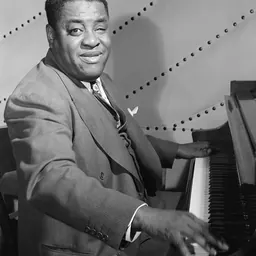
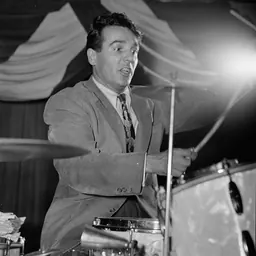


Related people
Same field, nearest in time
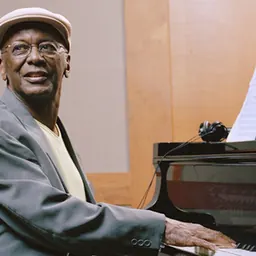
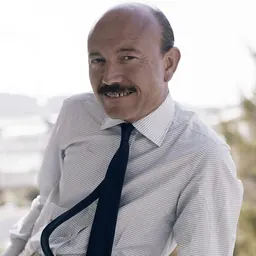

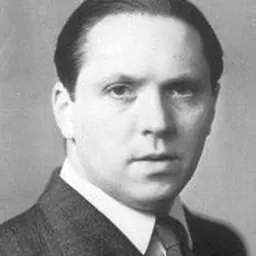
Contemporaries
People whose lives overlapped Dodo Marmarosa's



Frequently asked questions
Who was Dodo Marmarosa?
American musician (1925–2002)
When was Dodo Marmarosa born?
Dodo Marmarosa was born on 12 January 1925 in Pittsburgh.
When did Dodo Marmarosa die?
Dodo Marmarosa died on 17 September 2002 in Pittsburgh.
What was Dodo Marmarosa's occupation?
Dodo Marmarosa was a pianist, jazz musician, piano and musician.
What nationality was Dodo Marmarosa?
Dodo Marmarosa was American.
Sources & further reading
Cite this page
APA: Biography.guide. (2026). Dodo Marmarosa. https://biography.guide/dodo-marmarosa/
MLA: "Dodo Marmarosa." Biography.guide, https://biography.guide/dodo-marmarosa/.
Chicago: "Dodo Marmarosa." Biography.guide. https://biography.guide/dodo-marmarosa/.
Data last updated: 2026-09-20 · Spot an error? Report a correction.
Page generated 2026-09-27 05:13 UTC