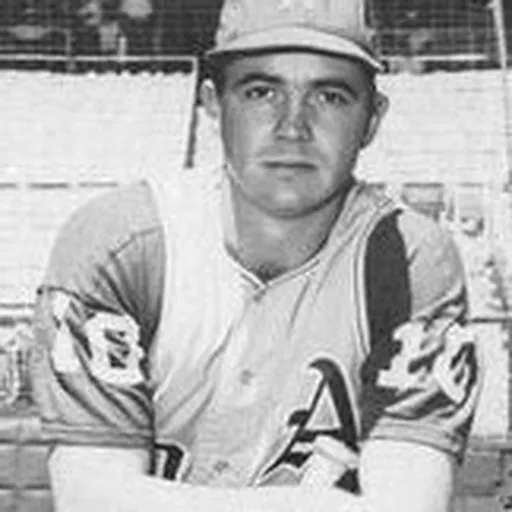
About Doc Edwards
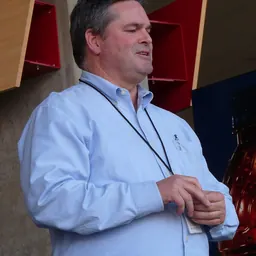
Lived 1936 – 2018 (aged 81). Doc Edwards was an American baseball player.
Howard Rodney "Doc" Edwards (December 10, 1936 – August 20, 2018) was an American professional baseball catcher, manager, coach, and scout who played in Major League Baseball (MLB) with the Cleveland Indians, Kansas City Athletics, New York Yankees, and Philadelphia Phillies, over parts of five seasons, spanning nine years. Edwards also managed the Indians, for parts of three seasons (1987 to 1989). He played in Minor League Baseball (MiLB) and was an MiLB and independent league manager for over 30 years. Edwards was named Manager of the Year in at least six different leagues. Edwards was the Rochester Red Wings manager in 1981 when they played in the longest game in professional baseball history in the United States and Canada. Overall, he spent 57 years in professional baseball.
Early life Edwards was born on December 10, 1936, in Red Jacket, West Virginia, a coal mining town near the Kentucky border. His father worked in coal mines. He was raised in Varney and/or Pigeon Creek, West Virginia. He played high school baseball in West Virginia, as a catcher. The Pittsburgh Pirates scouted Edwards, but he was 5 ft 10 in (1.78 m) 155 lb (70.3 kg) in high school, and the Pirates decided he was too small to recruit.
After his discharge, Edwards resided in Carlsbad, California. He received a football scholarship to MiraCosta Junior College (now MiraCosta College). He played "town baseball", and played winter league baseball for Ryan Aeronautics.
Playing career In 1958, Edwards had a tryout with the San Diego Padres of the Pacific Coast League, the Triple-A affiliate of the MLB Cleveland Indians. It is also reported that Edwards was given a tryout with the Padres in 1959, on the recommendation of an umpire who saw Edwards play at MiraCosta and asked Edwards if he would be interested in playing professional baseball. Future Baseball Hall of Famer Ralph Kiner was the Padres' general manager. Kiner signed Edwards to a $500 minor league contract with the Cleveland organization. Kiner required that Edwards lose substantial weight, and after six months of reducing his diet and running five miles a day on the beach, Edwards was down to 200 lb (90.7 kg).
Minor league playing career (1958 to 1961) Edwards played his first four professional seasons solely in MiLB, as a catcher. In 1958, the Indians assigned him to their short season Class D affiliate in Nebraska, where he batted .359 in 42 games, and helped lead the North Platte Indians to the Nebraska State League pennant. Over the next three seasons, Edwards continued to produce as a hitter, progressing up the Indians farm system, batting .337.279, and .331 for the Selma Cloverleafs (Class D/Alabama-Florida League), Alamance Indians (Class B/Carolina League), and the Salt Lake City Bees (Triple-A/Pacific Coast League) respectively, before earning his call up to the major league club in 1962. He had a .990 fielding percentage as a catcher for the Bees,
Major league playing career (1962 to 1965) Edwards' first MLB game came on April 12, 1962, against the New York Yankees and their future Hall of Fame pitcher Whitey Ford. In his first at bat, Edwards had a base on balls against Ford. Edwards started 34 games at catcher that season, appearing in 53 games. He hit .273 in 143 at bats, with three home runs and nine runs batted in (RBIs), and had a .992 fielding percentage. In late-May 1963, the Indians traded Edwards, along with a substantial sum of money (reported as $100,000), to the Kansas City Athletics for Dick Howser and catcher Joe Azcue. In 1963 with the A's, he started 58 games (the most of any catcher on the team), batting .250, with six home runs and 35 RBIs in 240 at bats.
He spent the full 1964 season with Kansas City, starting 78 games; again more than any catcher on the team. He hit .224, with five home runs, and 28 RBIs in 294 at bats. The Yankees' twelve-time All-Star catcher Elston Howard had hurt his elbow in early April that season. Howard eventually needed surgery to address a bone chip in his elbow a month later and was going to be out for at least two months. The Yankees believed they needed a new catcher until Howard's return. This was the 19th trade between the Yankees and A's since 1955.
Before the May 1965 trade, Edwards started six games and was hitting .150 in 20 at bats for the A's. He started 32 of the 43 games in which he appeared for the Yankees, catching 284 innings. Jake Gibbs and Bob Schmidt also started 26 games between them at catcher that season for the Yankees. After his return, Howard started the majority of the Yankees' 1965 season, and made the All-Star team again. Edwards hit only .190 for the Yankees, in 100 at bats with one home run and nine RBIs. He started 14 games with Toledo, batting .317 in 63 at bats. In January 1966, the Yankees traded Edwards to Cleveland for Lou Clinton. Going into Cleveland's 1966 training camp, Edwards was listed on the Portland Beavers' roster, Cleveland's Triple-A affiliate in the Pacific Coach League.
Cuban born Joe Azcue (for whom Edwards had been traded in 1963) was considered Cleveland's No. 1 catcher going into the 1966 season. Before the season, Cleveland had acquired 36-year old veteran catcher Del Crandall from the Pittsburgh Pirates to serve as Azcue's backup. Entering his 16th (and final) MLB season, Crandall had been an All-Star in eight different seasons and started in two World Series. In training camp, Edwards was competing for third string catcher with Duke Sims, whom Cleveland manager Birdie Tebbetts (himself a former MLB catcher ) considered the most improved player in training camp. Edwards played over 100 games at catcher for the Beavers, batting .261, with four home runs and 38 RBIs in 376 at bats. Edwards played the entire season with the Astros' affiliate in the Pacific Coast League, the Oklahoma City 89ers. He had a .218 batting average in 95 games.
In late November 1967, the Philadelphia Phillies selected Edwards from the 89ers in the Triple-A draft. He played two more seasons in the Pacific Coast League with Phillies' Triple-A affiliates, the San Diego Padres (1968) and the Eugene Emeralds (1969). He hit .259 in 83 games at San Diego and .266 in 73 games with Eugene. These were his final years in MiLB as a player. On May 2, 1970, in a game against the San Francisco Giants, Phillies' catchers Tim McCarver and then Mike Ryan suffered broken hands in the same inning. The Phillies called up catcher Mike Compton from Eugene, but then he suffered a back injury a month later; and another Eugene call-up, Del Bates, suffered a hand injury, and eventually was sent back to Eugene.
The Phillies activated Edwards from coach to player on June 6, to fill in as a catcher during this injury crisis. In his third game, on June 9 against the Atlanta Braves, he had two hits in three at bats, and caught a Jim Bunning–Dick Selma two-hitter. Edwards's two RBIs in the second inning were decisive in the Phillies 2–1 victory; and he picked off Braves' runner Sonny Jackson at first base in the ninth inning in helping to secure the victory. In Edward's unlikely return for his final MLB season, he played catcher in 34 games, starting 23, and batted .269. Danny Ozark replaced Lucchesi as Phillies' manager after the 1972 season ended, and Ozark replaced Edwards with Carroll Berringer in November 1972.
Overall during his managerial career, Edwards had a 173–207 record as a manager with the Cleveland Indians (1987 to 1989), won over 1,000 games as an MiLB manager, and had an over .500 winning percentage as an independent league manager for 15 seasons.
Edwards was next hired in 1975 by the Chicago Cubs, who assigned him to manage their Double-A affiliate in Midland, Texas in the Texas League. Under Edwards, the Midland Cubs won the Texas League pennant in 1975, and Edwards was selected Manager of the Year. The Cubs promoted Edwards to manage the Triple-A Wichita Aeros of the American Association in 1976. Witchita was 56–70 that season under Edwards.
In 1977, he coached winter baseball in Venezuela. Later that year, Edwards was hired to manage the Montreal Expos’ Double-A affiliate in the Eastern League, the Quebec Metros, who had a 65–70 record under Edwards. He was managing Caguas of the Puerto Rican Winter League in November 1977, when he was hired by the Triple-A Denver Bears of the American Association to manage the team in the 1978 season. From 1979 to 1981 he managed the Rochester Red Wings, the Baltimore Orioles' affiliate in the Triple-A International League. The Red Wings were 53–86 in 1979, but improved to 74–65 in 1980. In 1980, the team reached the playoffs for the first time in four years. The 1981 Red Wings went 69–70.
In April 1981, Edwards managed in one of the most memorable games in baseball history, which among other things has been the subject of an ESPN 30 for 30 documentary. Beginning on the evening of April 18, 1981 at 8:02 p.m., the Red Wings and Pawtucket Red Sox played in a 33-inning marathon, which remains the longest game in professional baseball history. The game took over eight hours to play in total. Play was suspended the following morning (Easter Day) a little after 4:00 a.m., after 32 innings, with the score tied, 2–2. The game was continued on June 23, with the Red Sox winning in the 33rd inning. The teams' third basemen were future Hall of Fame players Wade Boggs (Pawtucket) and Cal Ripken Jr. (Rochester).
At the end of the 1981 season, Carl Steinfeldt, general manager of the Charleston (West Virginia) Charlies of the International League sought permission from Orioles' farm system director Tom Giordano to discuss hiring Edwards as the Charlies' manager in 1982; and within days Edwards became the Charlies new manager. He replaced interim manager Frank Lucchesi. The Charlies were the International League affiliate of the Cleveland Indians. The team was located in the state capital of Charleston, West Virginia, only two hours from his mother's home in Matewan, West Virginia, which was a factor in Edwards' deciding to join the Charlies. The Guides were 76–63 the following season (1985), finishing in second place.
Cleveland Indians (1986 to 1989) In 1986, Edwards was promoted to bullpen coach of the Cleveland Indians. Cleveland finished 84–78 under manager Pat Corrales. It was only the team's sixth winning season over the preceding 30 years, and their best record in 18 years. Despite Cleveland's having the American League's worst record (61–101.377) and Edward's 30–45 record (.400), Edwards still received a third-place vote for the American League Manager of the Year Award. In his only full season managing in Cleveland (1988), the team had a 17-game improvement over the previous season, finishing the season 78–84. They were sixth in the American League East Division, with all five teams ahead of them having records over .500.
Edwards began the season as Cleveland's manager. On August 4, the team was in second place with a 54–54 record, 1 games out of first place. By September 10 they were 65–78, in sixth place and 14 games out of first place, after losing 24 of their next 35 games. He was replaced by special assignment scout John Hart as interim manager; who had managed nearly 800 minor league games earlier in his career. Edwards was considered an even-keeled "players manager" who did not berate his players or give motivational speeches, and was generally well-liked and respected; but team president Hank Peters believed the team had become too complacent about losing.
New York Mets and Arizona Diamondbacks Edwards was associated with two more MLB teams over the remainder of his career. He worked as a bench coach for the New York Mets (1990 to 1991), after being offered the position by Mets' manager Davey Johnson. He was retained under subsequent Mets' manager Bud Harrelson, but with some issues arising among the players, Edwards, and Harrelson as to the degree of control Edwards had over players. In March 1996, Edwards was hired as a scout for the expansion Arizona Diamondbacks, working on the 1997 draft. He was part of a Diamondbacks core group including, among others, manager Buck Showalter, general manager Joe Garagiola Jr., and fellow scouts Ron Hassey, Ted Uhlaender, Ed Durkin, and Sandy Johnson, who played important roles in assembling the original Diamonbacks' team for its inaugural season in 1998. In 2001, the Diamonbacks won the World Series in only their fourth year of existence, the fastest expansion team to win a World Series.
Minor league and independent league manager (1992 to 2012) The Pittsburgh Pirates originally hired Edwards as a hitting instructor for the Buffalo Bisons in 1992, and later named him manager. The Bisons were the Pirates' Triple-A affiliate in the American Association. In December 1992, Edwards suffered a heart attack and had quadruple bypass surgery. He was still able to manage the Bison in 1993, and had a 71–73 record. In 1994, he managed the Bisons to a 55–89 record. He was fired after the end of the season. Edwards later considered the time in Buffalo as manager wasted because he was focused on regaining his health, and lacked the energy to give the team what it needed from a manager.
Edwards' final 15 (or 16) seasons as a manager were spent in independent leagues. In 1995, Edwards managed the Albany-Colonie Diamond Dogs of the new independent Northeast League; with a record of 52–18. The new league was a blend of rookie league and Class A level players, and the teams were not affiliated with MLB franchises. Edwards was selected Manager of the Year. In February 1996, he was hired by the Evansville Otters of the independent Frontier League. It was contemporaneously reported, however, that while Edwards was hired to manage the Otters, he left the team in March 1996 to serve as a scout for the expansion Arizona Diamondbacks (as permitted under his contract with the Otters), and it was Fernando Arroyo who managed the Otters to a 34–40 record in 1996.
In 1998, Edwards managed the independent Atlantic City Surf to a 60–40 regular season record and playoff championship during the inaugural season of the Atlantic League of Professional Baseball in 1998. The Surf were 61–58 the following season (1999) under Edwards. Edwards managed the Sioux Falls Canaries in the independent Northern League Central from 2000 to 2004; winning the South Division title in 2001 and reaching the playoffs for the first time in team history. He was named Manager of the Year in 2001. He was the manager for the San Angelo Colts, a team in the independent United League Baseball and later North American Baseball League, from 2006 through 2012, and was Manager of the Year in 2009.
Legacy and honors Edwards spent 57 years in professional baseball. He was a Manager of the Year numerous times: Eastern League (1973),
Personal life and death After his discharge from the Navy in 1957, Edwards lived in Carlsbad, California for the next 14 years.
Don’t just read it —
keep it.
Full-length biographies made to live with: read them, listen on the way to work, watch them tonight.
- E-book
- Audio
- Video
Instant download · yours to keep · every purchase keeps this site free
Important facts
People in Doc Edwards's life
Named in this biography and alive at the same time



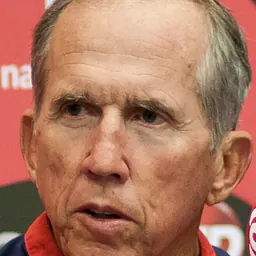
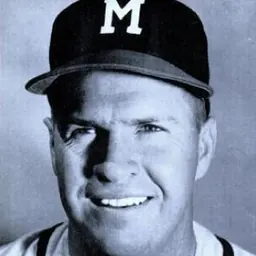
Related people
Same field, nearest in time
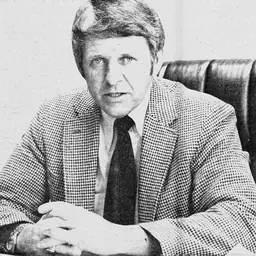
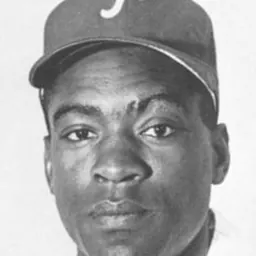

Contemporaries
People whose lives overlapped Doc Edwards's






Frequently asked questions
Who was Doc Edwards?
American baseball player and coach
When was Doc Edwards born?
Doc Edwards was born on 10 December 1936 in Red Jacket.
When did Doc Edwards die?
Doc Edwards died on 20 August 2018 in Texas.
What was Doc Edwards's occupation?
Doc Edwards was a baseball player.
What nationality was Doc Edwards?
Doc Edwards was American.
Sources & further reading
Cite this page
APA: Biography.guide. (2026). Doc Edwards. https://biography.guide/doc-edwards/
MLA: "Doc Edwards." Biography.guide, https://biography.guide/doc-edwards/.
Chicago: "Doc Edwards." Biography.guide. https://biography.guide/doc-edwards/.
Data last updated: 2026-09-23 · Spot an error? Report a correction.
Portrait: Wikimedia Commons · author & licence
Page generated 2026-09-27 05:05 UTC