
About Ditta Pásztory-Bartók
Lived 1903 – 1982 (aged 79). Ditta Pásztory-Bartók was a Hungarian pianist.
Ditta Pásztory-Bartók (31 October 190321 November 1982) was a Hungarian pianist and the second wife of the composer Béla Bartók. She was the dedicatee of a number of his works, including Out of Doors in 1903, the daughter of a piano teacher and high school teacher. She studied piano at the Budapest Conservatory, gaining her diploma in 1921, and in 1922 went to the Royal Academy of Music for more studies, where she became a private pupil of Béla Bartók.
Bartók divorced his then wife Márta Ziegler (1893-1967) In Ditta's case, she was 19 and he 42. He walked her home after a lesson one day, then out of the blue he proposed to her, giving her three days to make her decision. In 1924 she gave birth to Peter Bartók, her only child but her husband's second son (after Bela Bartók III in 1910). In 1926, Béla Bartók dedicated his suite Out of Doors to Ditta.
She abandoned her own solo career, but became her husband's piano duo partner. Along with the percussionists Saul Goodman and Henry Deneke, Béla and Ditta Pásztory-Bartók jointly premiered his Sonata for Two Pianos and Percussion on 16 January 1938 at the ISCM anniversary concert in Basel, Switzerland. They undertook further duo-piano concerts throughout Europe. In 1940 he made a two-piano arrangement of seven of the pieces from Mikrokosmos, to provide some additional repertoire for him and Ditta to play. That year they emigrated to the United States to escape Nazism. Their final concert was in Budapest on 8 October 1940.
In the United States
In America, their life was characterised by financial hardship, cultural and social isolation, and lack of artistic satisfaction. In contrast to Béla, who was fluent in English, German, Russian, and other languages, Ditta could not speak or understand any English and had to rely on her husband to act as her translator.
As a widow
After Bartók's death, Ditta returned to Budapest in 1946, where she remained for the rest of her life, devoted to promoting the memory of her late husband. She gave concerts of his works, frequently with Erzsébet Tusa. She also recorded some excerpts from Mikrokosmos.
Ditta Pásztory-Bartók outlived Béla Bartók by 37 years, dying in Budapest in 1982, aged 79. Her husband's centenary had been celebrated the previous year. She is buried next to him in Budapest, after he was moved from the USA to Hungary.
The Béla Bartók-Ditta Pásztory Prize is named in their honour.
Don’t just read it —
keep it.
Full-length biographies made to live with: read them, listen on the way to work, watch them tonight.
- E-book
- Audio
- Video
Instant download · yours to keep · every purchase keeps this site free
Important facts
People in Ditta Pásztory-Bartók's life
Named in this biography and alive at the same time
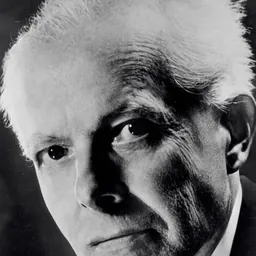

Related people
Same field, nearest in time
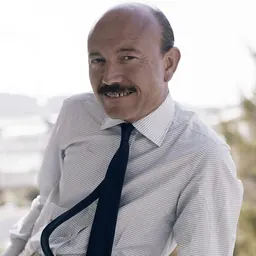

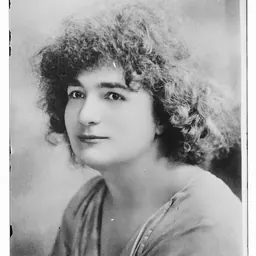
Contemporaries
People whose lives overlapped Ditta Pásztory-Bartók's

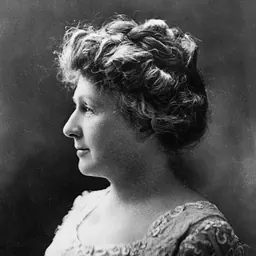
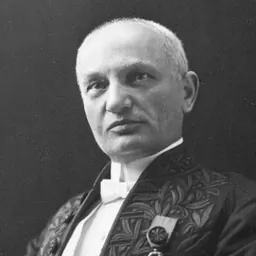
Frequently asked questions
Who was Ditta Pásztory-Bartók?
Hungarian pianist (1903–1982)
When was Ditta Pásztory-Bartók born?
Ditta Pásztory-Bartók was born on 31 October 1903 in Rimavská Sobota.
When did Ditta Pásztory-Bartók die?
Ditta Pásztory-Bartók died on 21 November 1982 in Budapest.
What was Ditta Pásztory-Bartók's occupation?
Ditta Pásztory-Bartók was a pianist.
What nationality was Ditta Pásztory-Bartók?
Ditta Pásztory-Bartók was Hungarian.
Sources & further reading
· Wikipedia: Ditta Pásztory-Bartók
· DBpedia: Ditta Pásztory-Bartók
Cite this page
APA: Biography.guide. (2026). Ditta Pásztory-Bartók. https://biography.guide/ditta-pasztory-bartok/
MLA: "Ditta Pásztory-Bartók." Biography.guide, https://biography.guide/ditta-pasztory-bartok/.
Chicago: "Ditta Pásztory-Bartók." Biography.guide. https://biography.guide/ditta-pasztory-bartok/.
Data last updated: 2026-09-25 · Spot an error? Report a correction.
Page generated 2026-09-27 05:10 UTC